
The man came with his family to the U.S. in 2019 to escape a constant threat of violence in Venezuela, where his wife worked for a local police department.
They arrived during Donald Trump’s first term, applied for asylum here and then felt like the Biden administration had all but invited them to stay by granting them temporary protected status.
Now, that measure of safety may be gone.
“It’s quite frustrating,” the man said in Spanish recently in an interview at his home. “I can’t stay. I can’t go back. I have nothing. We have already tried to make our life here.”
The family is among thousands of Venezuelans in Colorado — many of whom were sent here from Texas by order of the Republican governor there — who are now a step closer to removal with the loss of temporary protection.
They include a manager at a prominent Colorado factory who is studying for a master’s degree and has two American-born children, a wife and a home he owns. A former human resources executive who now works at a restaurant and whose son was granted a full-ride scholarship to the University of Colorado thanks to his outstanding grades. And her husband, who followed his wife to the United States because of fears for her safety, but saved enough money to buy the family a home in the outer Denver suburbs.
Trump was the first president in 35 years to decide to “de-document” a group of people with legal status in this country. Roughly 300,000 of them nationally lost status on Nov. 7, 2025, while another group, 300,000 or 400,000 people who arrived later, lost status earlier this year.
The timing is curious. Trump is eliminating protections for people here at the same time tensions are increasing with Venezuela and he declared the nation a “no-fly zone.” That would seem to make it difficult to send people back, but the Venezuelan government has continued to negotiate repatriation flights on a case-by-case basis. A non-profit organization tracked 20 removal flights to Venezuela between February and August.
Even without that, the loss of protected status, or TPS, is not an automatic step toward removal. The Colorado immigrants interviewed for this article all have pending asylum claims, which grants them temporary work authorization and some process to follow before being deported. That means for now, much of their daily lives have yet to change: they are continuing to work, pay rent or mortgages and raise their kids.
But there is a lurking uncertainty: They’re now subject to detention without warning, even if they continue to follow all the rules. CPR News agreed to not use their names.
“That’s what keeps us awake at night,” said the man, sitting in his kitchen with his wife.
Even though the couple both held professional jobs back in their home country, they now work in restaurants in metro Denver. They bought a suburban home, and their kids are in school. The oldest attends CU Denver.
“You come fleeing from a place where you can’t be, and then you arrive in a country where it seems you can’t stay either and you don’t have a country you can safely go back to,” the man said.
What is TPS, and why does it matter
Congress created the TPS program in 1990 to bring coherence and predictability to a practice that presidents dating back to the 1950s employed.
It was designed to be insulated from politics and was a mechanism for the State Department to allow non-criminals from countries to work and live in the United States temporarily for humanitarian reasons.
Haiti, Nepal, South Sudan and El Salvador, among other places, are all countries where TPS has been granted over the last 30 years. The status, granted by the president through the U.S. Department of Homeland Security, is given to people from countries with an ongoing problem, like an armed conflict, a civil war, an environmental disaster or an epidemic.
In the past, presidents have both granted the protection and allowed those protections to expire; former presidents George W. Bush and Bill Clinton did that with El Salvador.

But immigration historians say that no president has ever ended the legal status of hundreds of thousands of people living in the United States overnight.
“It’s abnormal what’s happening,” said Jessica Bansal, a lawyer with the National Day Laborer Organizing Network, a group based in California that is among a collaboration legally challenging the Trump administration’s decision to end TPS for Venezuelans and other nationalities. “The law is pretty clear that they can’t take away what they’ve already granted.”
By definition and requirements, TPS holders can’t have a criminal record and are granted work authorizations so they can get jobs and buy homes and start bank accounts while they’re living in the United States. They are fingerprinted annually and have to pay for background checks for their TPS cards.
There are some former TPS holders from El Salvador who arrived here decades ago to work as janitors and in food service at the University of Colorado Boulder. They were such stalwart employees that the university decided to sponsor them, and they are here now legally.
As of March, there were 1.2 million TPS holders in the United States. Almost half of them were Venezuelans. Another 330,000 were Haitians. And Salvadorans made up 170,000, according to a Congressional report.
‘What am I going to do now?’
Contrary to the current administration’s claims about the Venezuelan new arrivals, several of the attorneys representing those interviewed for the story said their clients have never had a day on American soil without legal status. That’s because when the United States announces a TPS designation, it actually draws people to the United States from foreign lands to come and apply for TPS and work in the United States.
The industrial engineer at a food company, for example, said he always had a lingering fear that his status was going to be eliminated, so he tried to make himself indispensable.
He graduated in Venezuela with an engineering degree in 2015. He arrived on a visitor visa to the United States in 2019 after he said he was beaten for protesting against the current Venezuelan president Nicolas Maduro's government.
Once he got here, he timely filed for asylum with U.S. Citizenship and Immigration Services due to the persecution and torture he said he experienced in Venezuela. He then also successfully applied for TPS once Venezuela was designated. Since then, his asylum claim was denied by the federal government, and he is now in deportation proceedings, but he is asking a judge to review that denial, said Conor Gleason, his attorney from the Meyer Law Firm.
In his current job at a factory in Denver, he has worked his way up to a supervisor level and is studying at a local university to get a master’s degree. He owns a house and has two American-born children.
“It’s the psychological part, what am I going to do now?” he said, in an interview in Spanish. “What am I going to do with my job if I lose it? What about my kids if I’m deported at any moment?”
The Colorado Department of Local Affairs has no exact estimate on how many Venezuelans live in Colorado currently. Back in January 2022, it was less than 10,000, but then roughly 40,000 of them arrived later that year and the following to Denver from Texas when the governor sent buses of migrants to Democratic-controlled states across the country.
A hollow victory against the Trump administration
Trump initially announced he was ending TPS for Venezuelans shortly after his inauguration in late January. This past year, his administration also revoked TPS for Hondurans, Nicaraguans and the Nepalese.
Attorneys, including Bansal, immediately sought relief in a federal court in Northern California on behalf of the hundreds of thousands of Venezuelans living across the country, who arrived with a promise from the federal government that, at least temporarily, they would be immune both from detention and deportation if they followed laws.
A federal judge agreed with the group and temporarily blocked the administration, giving the Venezuelans status again. The Trump administration appealed that decision to the U.S. 9th Circuit Court of Appeals, which upheld that ruling.
The immigrants rejoiced, lawyers said.
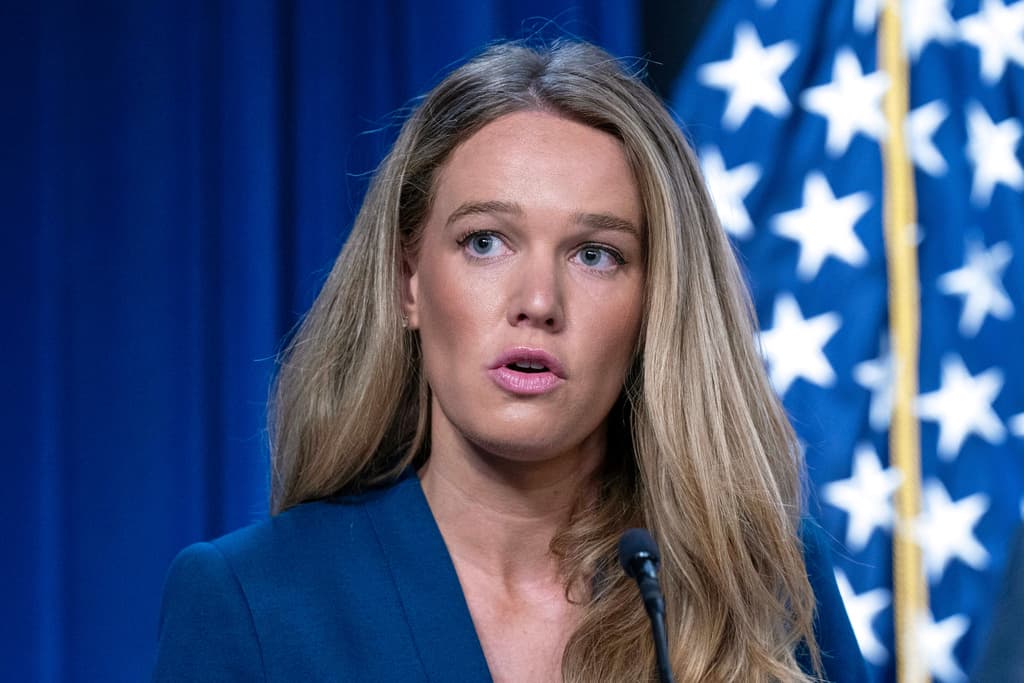
Then, in October, the U.S. Supreme Court issued a one-paragraph stay from its so-called shadow docket, saying that it would cause harm for the federal government to be bound by this ruling. Legal status was revoked again until the court likely reviews the case next year and hears the arguments fully.
“It’s a very weird time, and it’s hard to explain this to our clients. We won. We won at the district court and we won in the 9th Circuit and then we have a one paragraph order,” Bansal said. “The case isn’t over! But you have no protection.”
The Department of Homeland Security didn’t respond to requests for comment on this story, but when the U.S. Supreme Court sided with them in October, Assistant Secretary Tricia McLaughlin called TPS “a de facto amnesty program.”
“President Trump is restoring America’s immigration system so that it actually benefits the U.S. citizen, and today’s Supreme Court victory is a win for the American people,” she said in a statement. “Temporary Protected Status was always supposed to be just that: Temporary.”
‘If I have to leave, I will leave grateful to this country’
President Trump didn’t always have a desire to root out Venezuelans from the United States.
At the end of his first term, Trump issued a memorandum to defer the removal of any Venezuelan for 18 months, except those who would be disqualified under TPS anyway, like felons and those who were removed before 2021.
“That’s why many Venezuelans in the second election, they thought President Trump gave us this: he will kick Maduro out, and he’ll give us immigration protection,” said Jose Palma, the national coordinator for the National TPS Alliance. “So in that sense, you’ll find people who came in 2019, 2015, they qualified for TPS and they qualified to stay for longer under Trump’s first term.”
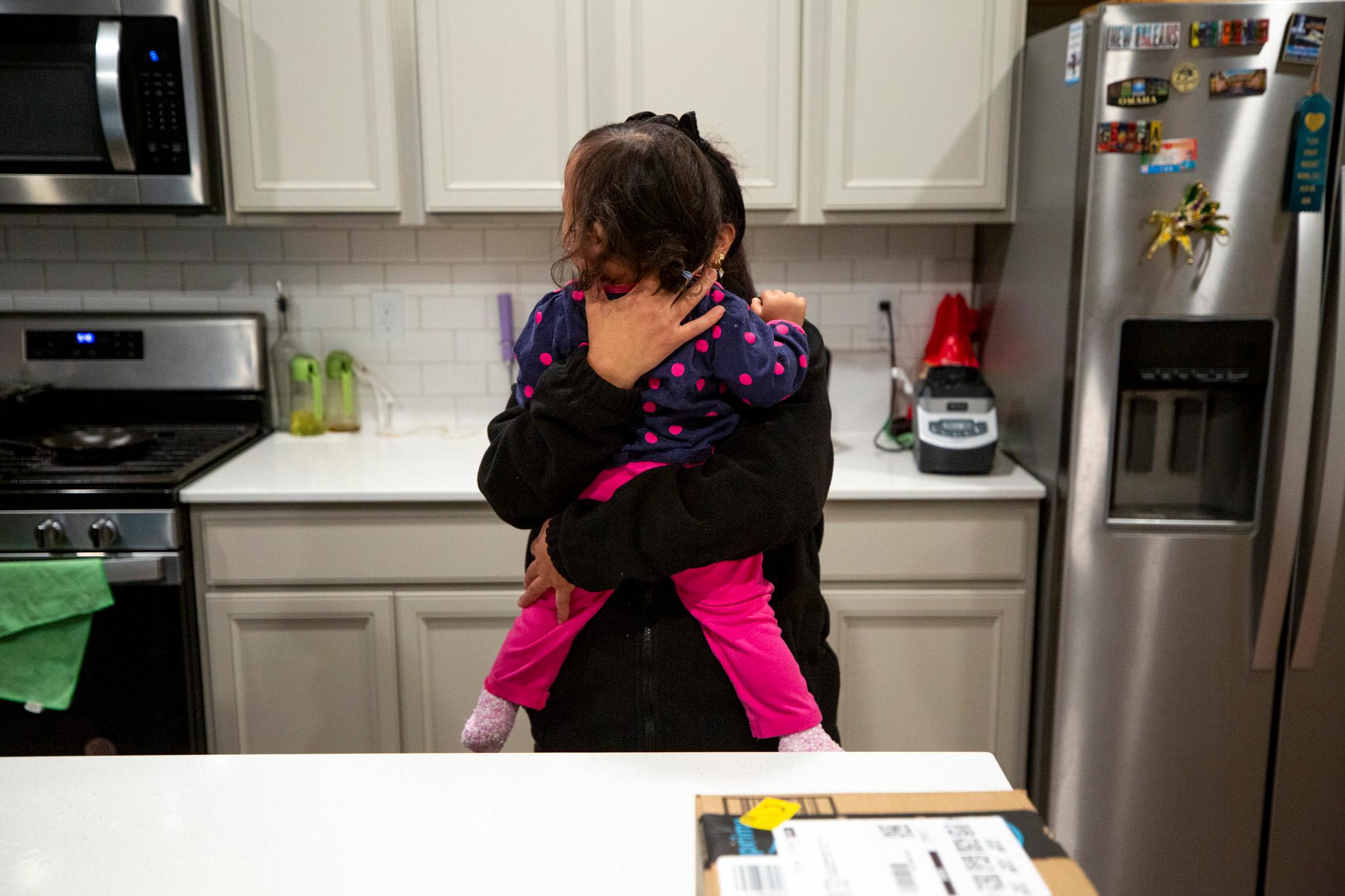
The former human resources executive and her husband said they know there is a chance this all ends for them. Like the industrial engineer, they, too, arrived in 2019 after she was threatened doing her job working in human resources for a municipal police department, she said. Her supervisors told her they were going to place a bomb in her office and that they knew where her daughter lived and studied, she said.
Her asylum was initially denied, but her lawyer is appealing that.
They also came to the United States on a tourist visa and then quickly applied for asylum, allowing them a path to stay and work authorization. When Biden granted TPS in 2021, they applied and received that additional protection.
They’ve paid for the background checks, the cards and attended all of their court dates since then, all while raising their kids and buying a house.
“Look how we are,” she said in Spanish, gesturing around a large living room with a black leather couch, a high-top dining room table and a large, modern kitchen, the smells of steaming hot cocoa coming off the stove. “We arrived here in a friend’s house and we already have our own house and that’s achieved with the work and the opportunities this country gives you.”
She stopped to check her emotions.
“We are very grateful to this country since we arrived because we’ve had many good people who have supported us. Our leaders have been magnificent. I’m truly grateful,” she said. “If I have to leave, I will leave grateful to this country … and grateful to God for allowing me to be here as long as I’ve been here.”
| This story is part of a collection tracking the impacts of President Donald Trump’s second administration on the lives of everyday Coloradans. Since taking office, Trump has overhauled nearly every aspect of the federal government; journalists from CPR News, KRCC and Denverite are staying on top of what that means for you. Read more here. |