

Updated at 2:20 p.m. on Dec. 12, 2025
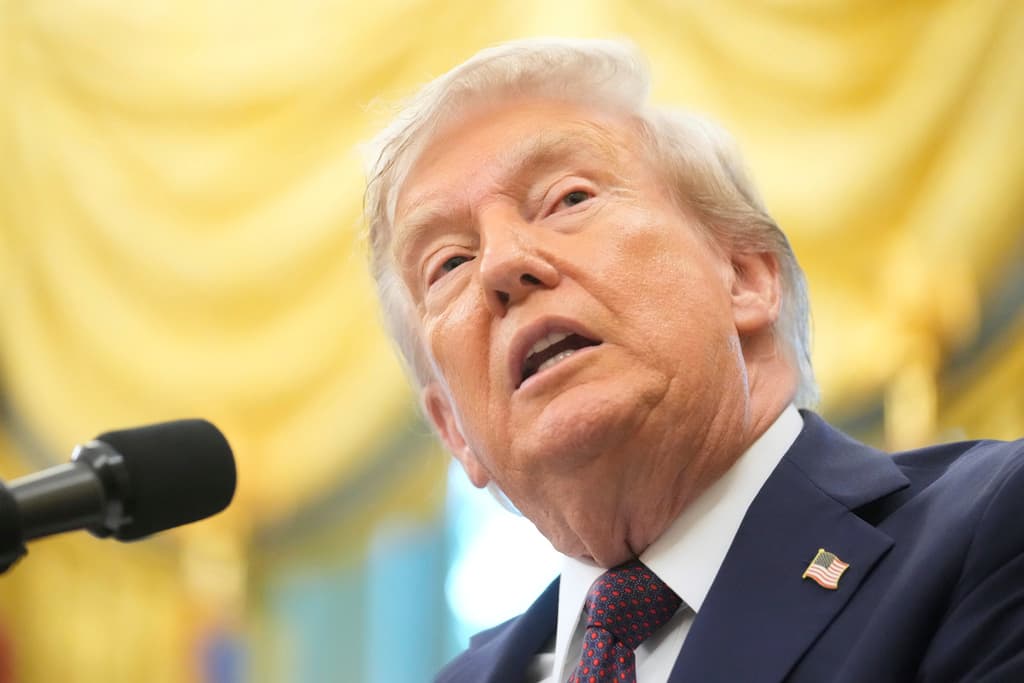
President Donald Trump claimed Thursday to have pardoned former Mesa County Clerk Tina Peters, but for now, the declaration seems only to exist on social media.
Trump posted this message, awash in random capitalizations and trumpeting the discredited argument that the 2020 election was unfair, at 4:49 p.m.:
“Democrats have been relentless in their targeting of TINA PETERS, a Patriot who simply wanted to make sure our elections were fair and honest,” read the post on Truth Social. “Tina is sitting in a Colorado prison for the “crime” of demanding Honest Elections. Today I am granting Tina a full pardon for her attempts to expose voter fraud in the rigged 2020 Presidential Election.”
Multiple reviews have determined that the 2020 election was conducted fairly across the country, with only minor incidents that would not have changed the outcome.
A Mesa County jury found that Peters assisted an unauthorized person in gaining access to voting equipment and records months after the election, in an effort to provide support for the theories Trump allies were espousing about the election being rigged. She produced no credible evidence, was charged with four felonies and other crimes, convicted and sentenced to more than eight years in prison.
Since then, she has become a cause celebre for some, but because she was convicted in state court of state crimes, Trump’s presidential pardon power — which applies to federal cases — would not seem to have any historical legal basis for altering her convictions or sentence. That power rests with Gov. Jared Polis.
Nonetheless, her attorney, Peter Ticktin of Florida, sent Trump a letter on Dec. 7 requesting a pardon for her. In it, Ticktin cites the U.S. Constitution’s grant of pardon power to the president, in Article II, Section 2, Clause 1: “he shall have Power to grant Reprieves and Pardons for Offences against the United States, except in Cases of Impeachment.”
But Ticktin went to lengths to argue in the letter to Trump that “offenses against the United States” include offenses against the individual states, as well as the federal government. It is a novel idea that he said has not been fully litigated.
“The issue which needs to be answered (is) whether our founders understood or intended that the President had the Power to Pardon offenses against the United States, if it meant the states or only the federal government,” Ticktin wrote, according to a copy of his letter first posted by Colorado Newsline.
By 6:30 Mountain Time Thursday evening, the Department of Justice’s Office of the Pardon Attorney website displayed no document signed by Trump pardoning Peters. Trump has typically posted all pardons and commutations in the same manner as previous modern presidents, though the Constitution does not require any specific procedure for offering a pardon, verbal or written.
The following day, a direction from Trump to the office telling them to grant Peters a pardon with his full authorization. It is dated Dec. 5, two days before Ticktin sent his letter to Trump.
But the social media post was enough to send politicians scrambling to respond. Polis said he did not believe the post had any force of law, but he would wait and see whether courts intervened.
“Tina Peters was convicted by a jury of her peers, prosecuted by a Republican District Attorney and in a Republican county of Colorado and found guilty of violating Colorado state laws including criminal impersonation,” Polis said in a statement. “No President has jurisdiction over state law nor the power to pardon a person for state convictions. This is a matter for the courts to decide, and we will abide by court orders.”
Secretary of State Jena Griswold flatly declared any such pardon would be invalid.
"Trump has no constitutional authority to pardon her,” read Griswold’s statement. “His assault is not just on our democracy, but on states' rights and the American constitution."
Editor's note: This story was updated Dec. 12 to note that a direction to pardon Peters was eventually posted by the Department of Justice.