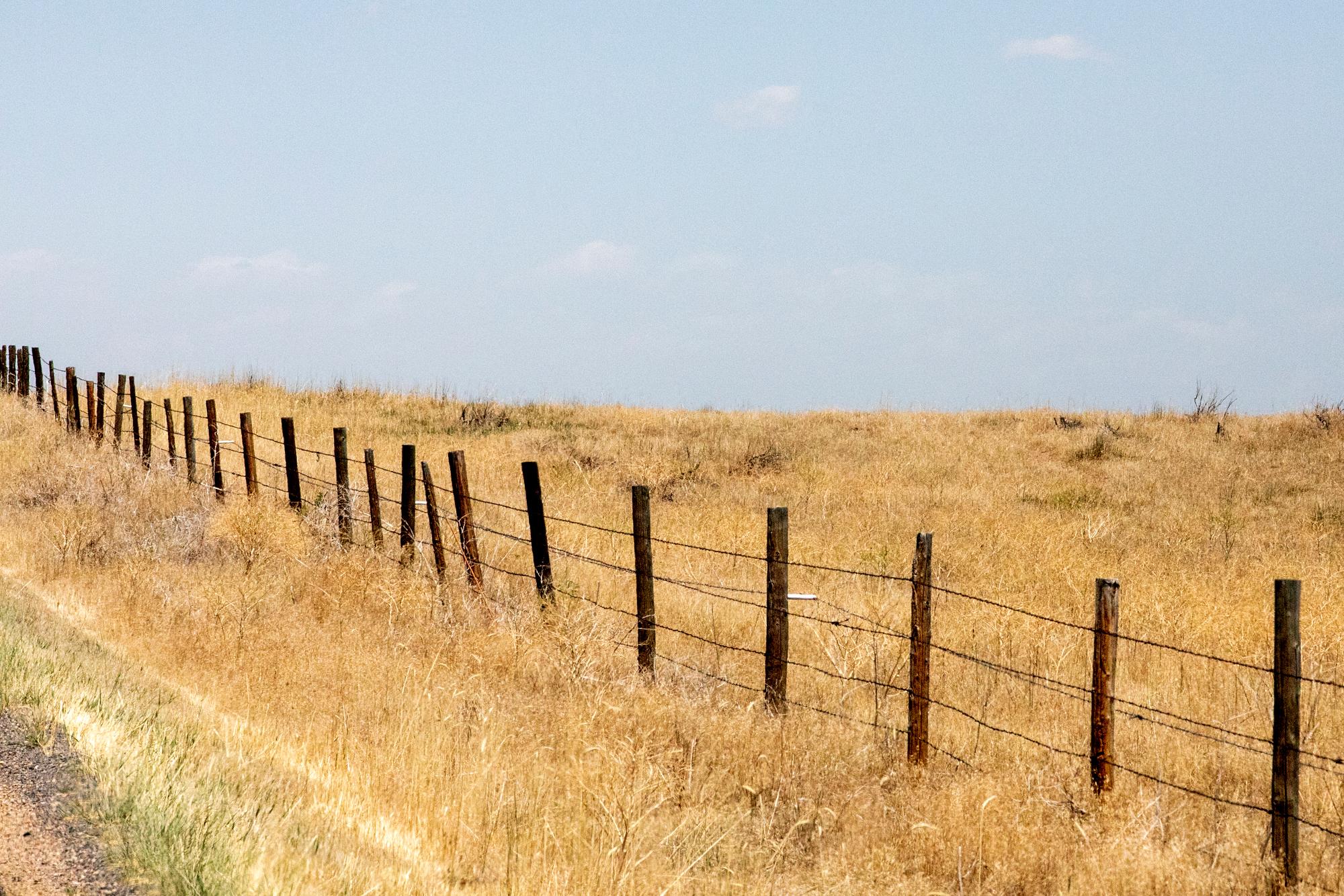
Over the course of several weeks beginning in early November, seven different Weld County ranchers have reported a total of 23 missing cattle, many of them calves. Investigators with the state brand board and local law enforcement say the cluster of reports, all in a relatively concentrated area, is unusual and likely means they’ve been stolen.
“These kinds [of cases] are important for the sheriff's office to solve because a good portion of our community do make a living through ranching, farming or some kind of agricultural means,” said Melissa Chesmore, public relations officer for the Weld County Sheriff’s Office. “If you look at the big picture, crimes like these can impact not only the ranchers in our community, they can also potentially take away food from consumers.”
Sorting out whether cattle are truly stolen or just missing is the job of the Colorado Board of Stock Inspection, often called the brand board.
“That’s one of our big charges,” said Todd Inglee, Colorado’s brand commissioner. “One of the reasons we're here is to protect against loss by theft or illegal butchering or straying of livestock.”
Inglee said reports of missing livestock are common in Colorado, and have been climbing as cattle become more valuable. He expects roughly 500 will have been reported missing by year’s end, up significantly after a drop during the pandemic. But, the brand board doesn’t always know how many of those reports are confirmed theft versus animals that simply turn up later.
“Sometimes they've wandered away, they're critters. They don't know any boundaries. They just like to go where the grass is,” he said. “A lot of times they can wander and they'll be found. When those producers get those animals back, they go on about their day. They don't always notify us that they've been found.”
Still, he said, it’s no coincidence that as cattle become more valuable, more people call in missing or stolen animals. The spike in reports tracks closely with the economics of beef.
When there are a lot of cattle and beef demand stays steady, prices drop and fewer cattle go missing. But when demand is high and there are fewer animals, the price increases and the case numbers go up.
Inglee said that since 2020, demand for beef has increased and has remained at higher levels than anything the industry has seen in 35 years. Culturally, people returned to comfort foods in the pandemic. Since then, a focus of protein in adult diets has become front and center in American food culture.
“One of the big drivers is that the industry has been really good at communicating the protein value. There's more protein per ounce in a piece of beef than there is a lot of other meats,” Inglee said. “So that's what they go for and that's where they wanna spend their money.”
That means each missing animal is a much bigger financial hit than it might have been a decade ago.
“Anytime a livestock producer loses an animal, it's a big economic hardship,” Inglee said. “These animals are their livelihood. It's their product.” And they don’t come to fruition overnight. Inglee noted it can take about two years from breeding a cow to raising it to market weight before it can be sold.
In today’s market, one adult animal, whether it's a steer or a cow, is worth between $2,300 to $3,000 each. On top of that, producers also lose the years of genetics, breeding and animal husbandry it took to build their herds when cattle go missing.
Where do stolen cattle go?
One possibility is that they’re hauled out of state to be sold where brand laws are weaker. That practice goes back to Colorado’s earliest days of statehood.
“When cattle were stolen back when Colorado was first formed, the deal was: get them to the Kansas state line,” Inglee said. That goal, he said, holds true today because Kansas doesn’t have mandatory brand laws like Colorado does, meaning buyers and sellers are not required to prove prior ownership the way they are here. “Once you get past the border, you're able to sell them, buy them, there’s your ready market for those animals,” he said.
A second route is illegal butchering. “Some of these animals could be stolen, put on trucks and taken out of state, or they could be taken somewhere and butchered,” Inglee said. “Once the hide is off the animal, it's hard to identify where it came from.” However, strict inspection standards mean stolen meat can’t end up for sale in local grocery stores.
“There are very strict laws preventing that,” he said. If it is happening, it’s likely being done in an underground market.
A third option is that stolen cattle are hidden and kept for breeding in other herds either in or out of state.
Branding acts as security for cattle
A big part of preventing cattle theft — and catching it when it happens — is Colorado’s brand system.
The State Board of Stock Inspection administers more than 32,000 unique livestock brands in Colorado. Ranchers register a specific combination of letters, numbers or symbols, then mark it on their animals with a hot iron that burns the skin and leaves a permanent scar.
“People that are stealing animals have a hard time getting rid of a permanent mark on an animal,” Inglee said.
Brands act both as a legal tool and a cultural touchstone. State law requires brand inspections at key moments in an animal’s life: any time there is a change of ownership, any time animals are moved 75 miles or more from their home range, and any time animals are shipped out of state. During an inspection, owners have to show they actually own the animal they’re selling or moving. That’s documented on a certificate that follows the animal through the system, much like the title of a car. Culturally, a brand often represents a particular ranch or family, passed down over generations.
In the Weld County case, the sheriff’s office released brands from several of the ranches in hopes that ranchers, law enforcement and brand inspectors in other regions might recognize the marks if the animals surface elsewhere.
A race against the clock
Once cattle go missing, time is the biggest enemy.
“We only have a matter of a few hours before those animals could be out of the state of Colorado,” Inglee said. “And then, we often lose sight of them from there.”
When a missing or stolen cattle report is filed, the brand board sends it to all ports of entry, State Patrol offices, every sheriff’s office in Colorado, all brand inspectors and every public livestock market in the state and neighboring states. The reports include descriptions of the animals, their brands and other identifying marks, so people along major livestock routes can keep an eye out.
After a few weeks, if no one spots the animals, the trail gets much colder. At that point, the brand board relies heavily on partners like the Weld County Sheriff’s Office to pursue other leads like potential insurance fraud or vehicles that might be connected or tips from the public.
In 2024, more than 180 cows and calves went missing from the Western Slope at the end of grazing season. Inglee said the brand board is still getting tips about that case, but it’s still unclear what happened to them.
In this ongoing Weld County case, Inglee is hopeful the ranchers will get justice.
“It’s my hope as the brand commissioner that we find every single one of these animals and reunite them with the owners,” he said. “We will leave no stone unturned, and it's our responsibility that we try to track this down and find every single animal that we can and get 'em back to their owner.”
If you know something about the Weld county case or saw something suspicious, you’re asked to email Deputy Lase at [email protected] and reference case number 25W006326.