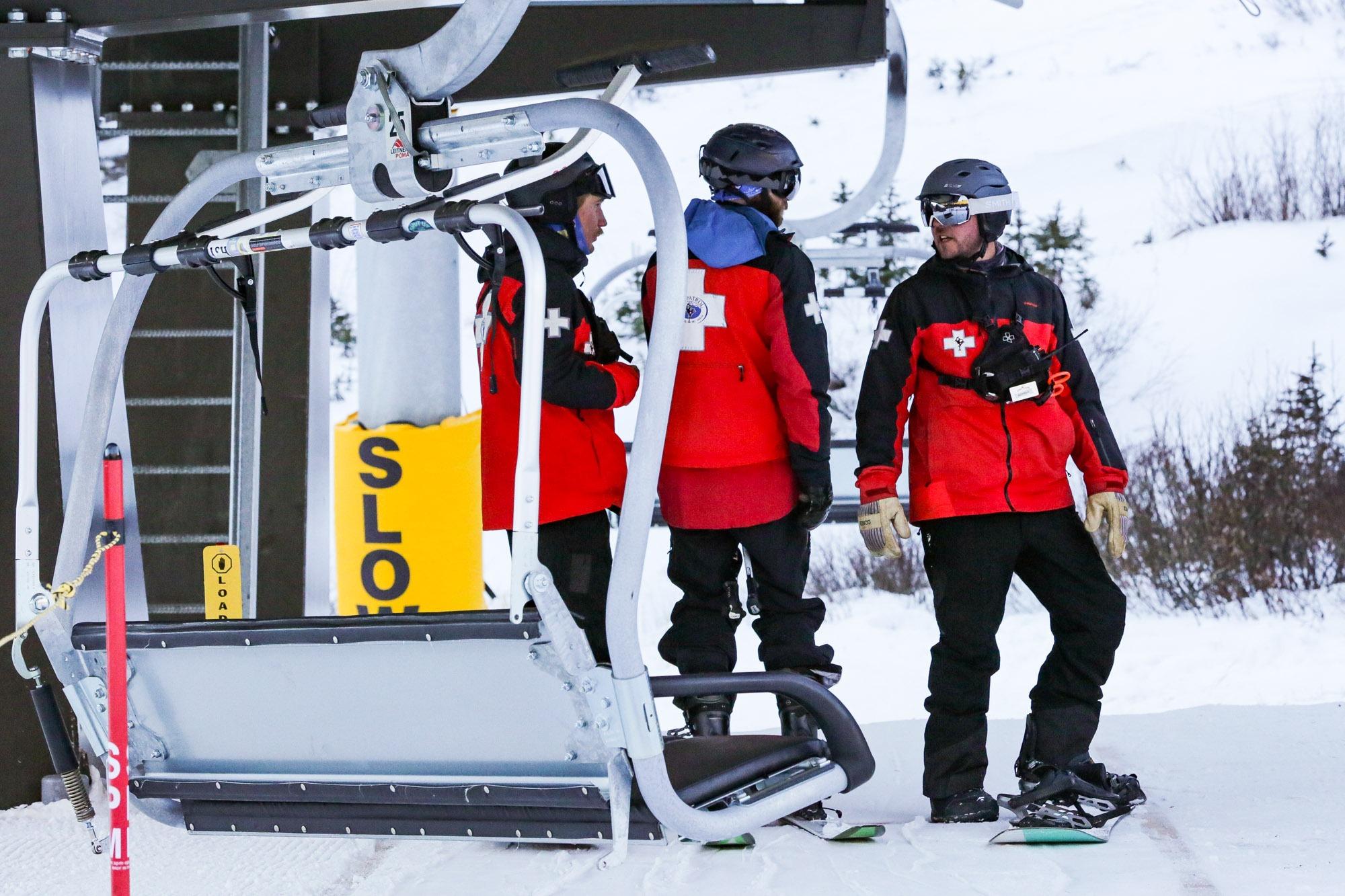
Ski patrollers are vital to the multi-billion-dollar ski resort industry, and Stephanie Cox, head of the National Ski Patrol, says more is being asked of them every season.
“The year-round operations, the multi passes of ownership groups, climate change, varying conditions, we have more skier visits than we ever had. I think the ‘24/25 season was like a blockbuster year. And so all of these things absolutely put pressure on the patrollers,” Cox said.
The National Ski Patrol provides training and resources for its more than 30,000 members, more than half of whom work on a volunteer basis. The NSP has been around since 1938 and, in 1980, received a Congressional charter that federally recognized the mission and activities of ski patrol. Other organizations to receive the designation include the American Red Cross and the United States Olympic Committee.
In recent years, Cox said, the work of patrollers has grown more difficult as resorts have grown in size and scope. The increased popularity of summer mountain biking led NSP to add an entirely new line of programming. At the same time, mountains have added greater and more challenging terrain to their offerings, increasing the expertise required to patrol them.
“But honestly, our budget for the most part hasn't changed. And so we are actually doing more with less now,” Cox said.
The National Ski Patrol estimates that patrollers provide around $400 million in value to the ski industry. However, the organization itself is still largely funded by membership dues, and patrollers are often paying for much of their own training and equipment out of pocket, to the tune of an estimated $4,500 a year, the NSP says.
“We do prop up the industry. I mean, without patrol and our outdoor emergency care standards, very few ski areas could actually operate,” Cox said. “ And so we have a couple initiatives underway this year and talking with all the ski areas to make them sort of program partners so that they also invest in this education and in return they get more and better education for their patrollers. They get more and better scholarships, they get more and better instructors.”
Cox said the push to get resorts more involved may take a couple of forms, but the goal is to get them to “invest in the national organization that is the backbone of helping the industry to operate.” Thus far, she said, resorts have been receptive.
On changing demographics
National Ski Patrol members skew older and male, Cox said. But, she added, they share other personality traits suited for the job.
“I like to say I have 30,000 type-A members, and so you could call that a demographic maybe,” Cox said.
Based on a recent survey, Cox said the average member age is around 60. The volunteer ranks tend to pull heavily from retired doctors, lawyers and educators.
“We're definitely above 50 years old, and mostly 75 percent are males, but that's changing. About 23, growing to 25 percent, are female, which I'm really happy to see. And I'm starting to see also more of those female members go into leadership positions. So that's something I'm personally passionate about,” Cox said.
In an effort to buttress those leadership ranks, Cox said the NSP is launching a leadership course to help patrollers develop skills for on and off-mountain leadership efforts. Cox said the aim of the course is both to give ski patrollers options to move up in their role but also to find skills that will translate to their communities, since many patrollers spend decades in the industry.
The average NSP patroller wears the red jacket for 22 years. In Colorado, unlike the country as a whole, that ski patroller is more likely to be a paid professional than a volunteer. That’s prompted friction with resorts in recent years as ski patrols have moved to unionize and have clashed with resort management over contracts. Cox said the NSP keeps an eye on such cases, but doesn’t comment on them one way or another.
“We support patrollers, and that's what we're here to do. We also support our ski area partners, and we just stay in our lane and let them work that out,” Cox said.
Editor's Note: This story has been updated to clarify Cox's thoughts on the personality traits of National Ski Patrol members.