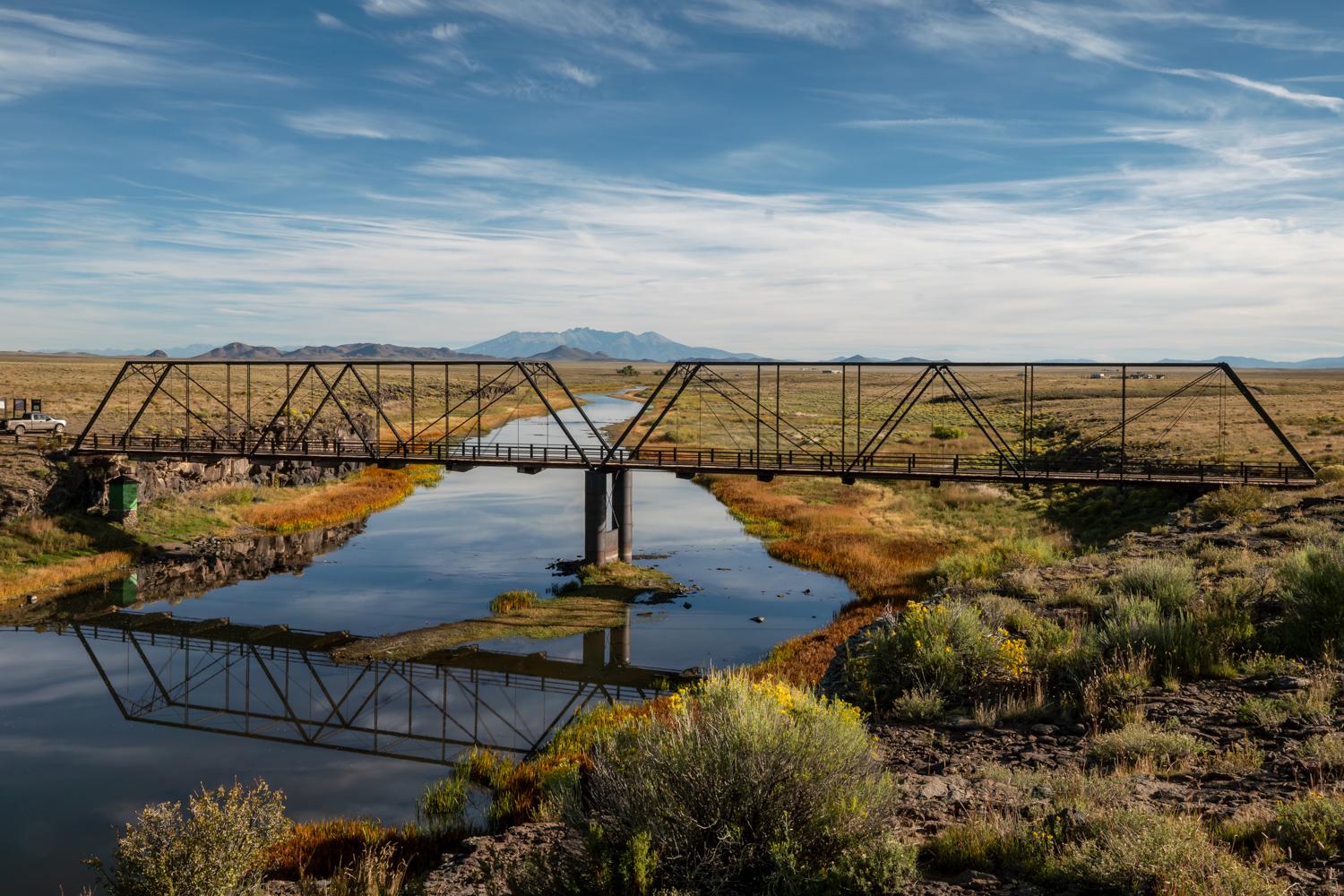
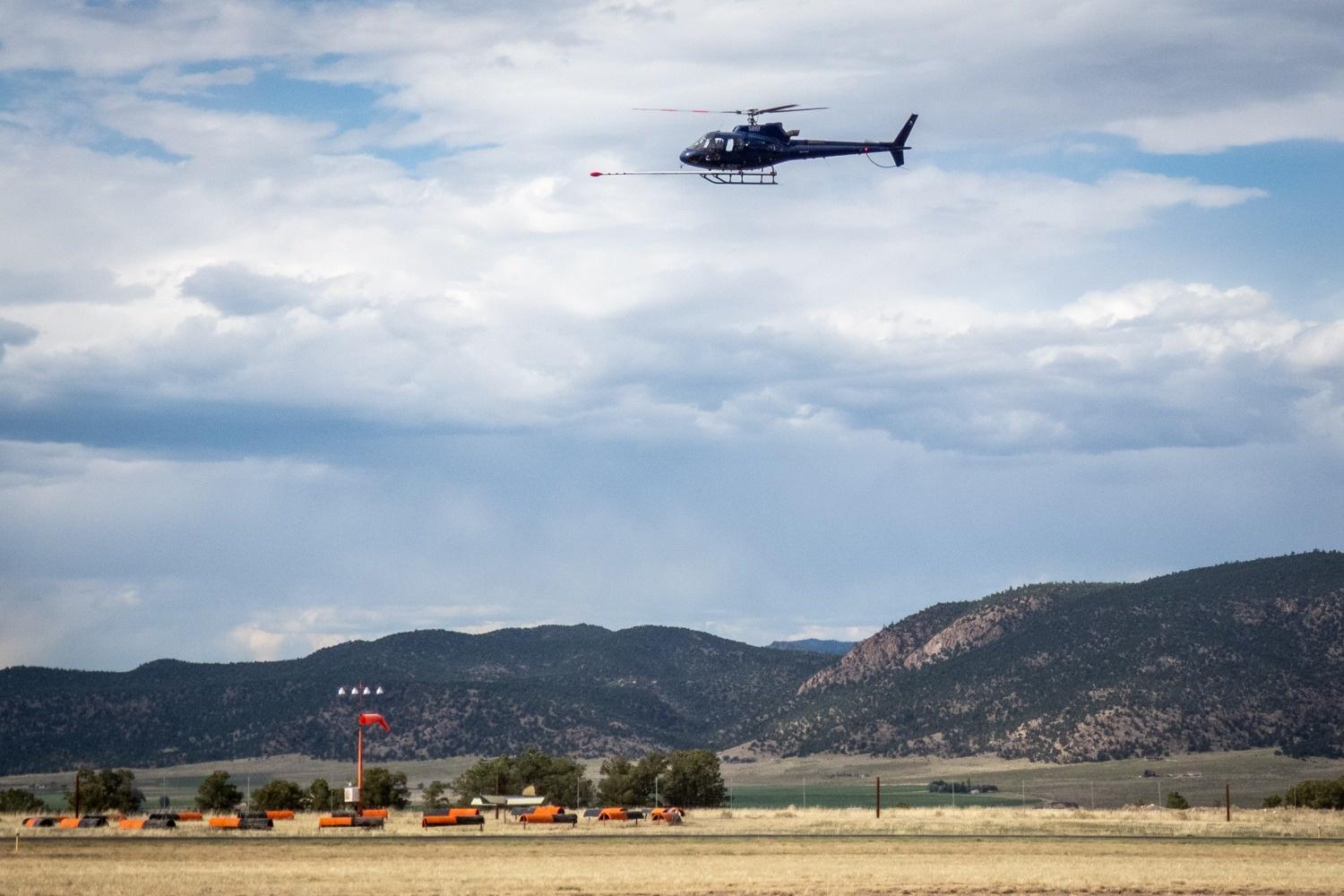
There’s a long history of hard rock mining in Southern Colorado. Now the federal government is updating the region’s geological maps to expand the search for critical minerals and rare earth elements.
KRCC’s Shanna Lewis wondered what happens when this search turns up something valuable underneath private property. She spoke with University of Colorado Natural Resources Law professor Mark Squillace to find out more about the subsurface rights known as the mineral estate, as it relates to hard rock mining.
This interview has been edited for length and clarity.
Private property owners may not own the rights to minerals underneath their property
A lot of the land which was acquired through various homesteading laws, or at least certain homesteading laws, only included the surface estate. There'd be what we call a split estate. One thing to bear in mind about these split estates is that under property law, the mineral estate is deemed to be the dominant estate. That means if somebody wants to develop the minerals that they own and you own the surface, they take priority. Now, they may have to pay you damages if they're harming your surface, but they probably have a right to develop those minerals if they so choose.
How to find out if you own the minerals underneath your land
Pretty much every county throughout the United States has records of land ownership in their county recorder's office. Usually, there are helpful people in the office who can show you how to look up your property. Theoretically, you should be able to trace your title back to when the federal government originally owned that property. Then you should be able to trace every transfer of that property from that particular time. You'll learn pretty quickly, I think, whether you own the mineral estate or not. It can be a little tedious to go through all those records, but once you do that, you should know exactly what it is you own.
The federal government probably still owns most of them.

Mining is more likely to affect large swaths of rural land than small individual parcels
If you're looking at your property being used for mining, yours is probably not the only property that the mining company is going to be consolidating for their mining operation. They're probably looking at multiple properties in your area. They're going to try to get a bunch together. Now, you might own 10,000 acres of land, maybe that would be enough for the mining operation. But, if you own a homestead of 640 acres? They're going to probably go beyond that in terms of the mining operation.
Heavy equipment doesn't just show up to dig out valuable minerals under private land
You would almost certainly be notified first, so I wouldn't worry about that so much. And it's going to depend again on what the mineral developer owns. Typically, here in Colorado and really throughout the country, you'd have to get some kind of permit to engage in mining operations, and it's usually a public process or there'd be an opportunity for the landowner to weigh in on the appropriateness of the development scheme. You typically need some kind of plan of mining operations that shows how you're going to do the mining. There could be objections. There would be environmental standards that would be imposed. So I would not expect a private landowner to face an imminent backhoe coming into their property and starting to develop the minerals.
It doesn’t happen often, but you may have to negotiate with a mineral developer
I would say that it happens, but probably not frequently. I think that there are certainly situations where somebody discovers valuable minerals under a private surface estate and then they want to develop it. I think the typical thing would be for the mining company to approach the private landowner and explain that they think there's some valuable minerals under the property. They would probably negotiate with the private landowner. They probably would make some payment to the private landowner to basically secure access.
Technically, the mineral estate owner has the right to develop those minerals. They don't have to pay the surface owner, but certainly, the surface owner is going to have a lot of say in whether development occurs and how it occurs if it's going to occur. So it would be wise for the mineral owner to approach the surface owner and work out an arrangement, which would probably include a payment of money might include, for example, having the surface owner agree to move off the property for a period of time. A substantial payment that would help the surface owner do that. Then the development could occur. Presumably, after reclamation, the surface owner could go back to the property.
Getting a fair price from mining companies
It largely depends on how much development of that particular mineral has occurred, particularly in that area, but even nationally or even globally. Sometimes, though, there aren't comparables, so it can be hard to know what a fair price is. You can certainly find out the market price for the mineral that is being developed and you can learn something about the cost of developing those minerals. It's challenging.
You may need to hire an expert to help you figure out what the costs are going to be to develop the mineral because you might not trust the information you're getting from the mineral developer and what their costs are. They may say the costs are so high that they can only afford to pay you a tiny amount of money. You probably want somebody on your side who can evaluate that information and maybe make a counteroffer to the mineral developers. It's a tricky issue because every situation is going to be different.
The other thing that's really important to remember here is that mineral prices are very volatile. They fluctuate a lot, and that's going to affect the interest in developing that mineral. If a project started at a time when there's a high price and then the price crashed, they might want to stop the development. The landowner needs to be protected in that situation. You don't want the land to just sit half upended with then no reclamation because they're hoping for the price to go back up. These are all things that a good lawyer would want to negotiate.

Dealing with mine waste is a big deal
For most metal mining, the amount of the metal in the ore is going to be tiny; it could be less than 1 percent. So you could be looking at a huge amount of waste, known as tailings, generated as a result of this kind of mining. You need to know where that waste is going to be put. It's a very challenging kind of problem for the mining industry. The mining industry has not been very progressive about finding good ways to address tailings.
Mine tailings can be vast, and they have to somewhere
A major mining operation proposal in southern Arizona for a new copper mine would have a massive waste pile. They want to use US Forest Service land for their tailings - a land mass of about four square miles to dump tailings. There's a lot of litigation over this, as you might imagine. But the point is that the impact from the tailings can be much greater than the impact from the actual mining. So it's really important that you have a plan and have some understanding of what's going to happen to the tailings pile.
The other related issue is what happens to the pit. In open-pit mining, you're digging a hole in the ground and taking the ore out. Best practices, although practices that are rarely followed throughout the world, are to reclaim the pit, that is to fill it back in. You can use some of the tailings, for example, to do that. But it's rarely done because it's very expensive. I would say the largest expense of any mining operation is essentially moving dirt. There needs to be really careful planning about how you're handling that massive material.
Indeed, many of these mining companies are foreign-based companies. They're not even American companies. So, this is a pretty controversial area, but it is maybe one of the most important environmental issues that comes up in mining, and particularly in large-scale mining.
- The search to identify underground resources is often done from the sky. Here’s how that scientific magic happens
- Why is the federal government spending millions on aerial geological mapping in Southern Colorado?
- Aquifers: The groundwater in Colorado’s wells and how it gets there
- Want to drill a well for your home? Some rules in Colorado might surprise you