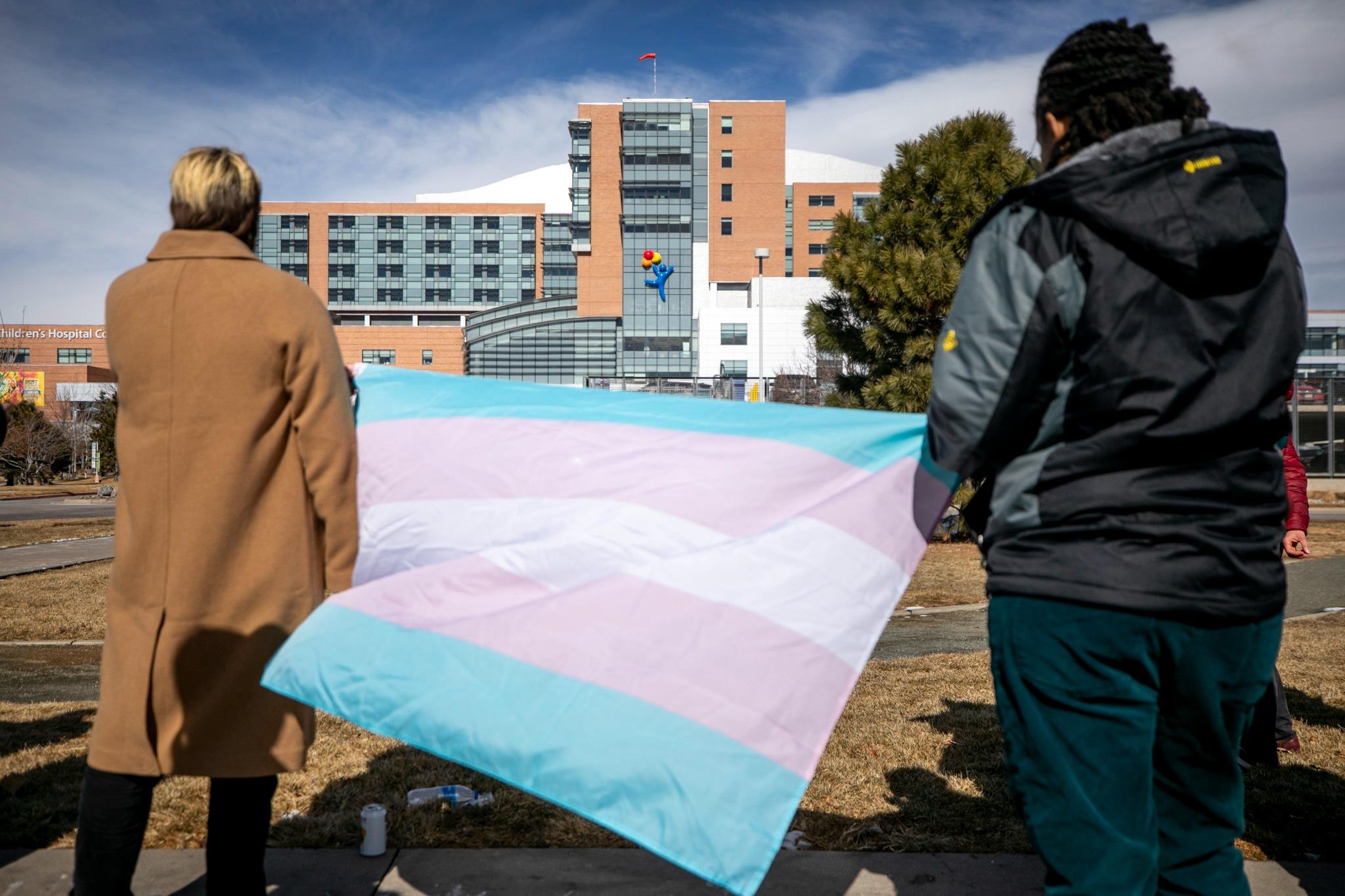
The Trump Administration’s attempt to obtain records from Children’s Hospital Colorado regarding gender-affirming care hit a major legal obstacle.
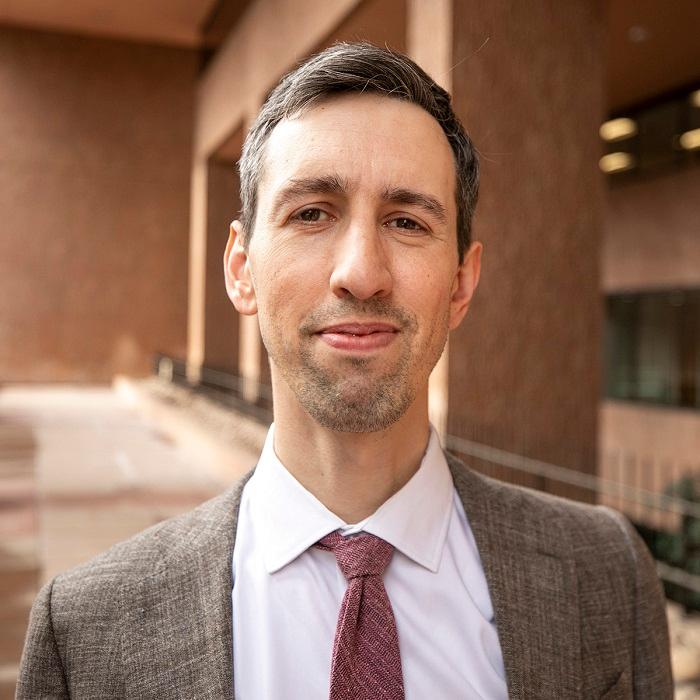
A federal magistrate judge sided with the hospital in recommending that the Justice Department's subpoena be quashed, noting that the government has not demonstrated that the request for records is “reasonably relevant” to their authority.
The subpoena appears to target the hospital, not for investigation of unlawful acts, but merely for providing care the administration deems “barbaric,” wrote magistrate Cyrus Y. Chung in a recommendation filed on Monday.
Chung noted that so far, no court has sided with the government in their broad requests for similar information from hospitals around the country.
“The Court joins the chorus. Notwithstanding the government’s relatively light burden, the government’s meager attempt to carry it falls short,” reads the judicial recommendation.
The government has two weeks to file an objection. A federal District Court judge will eventually issue a final ruling.
In the meantime, Children’s Hospital Colorado and Denver Health have paused gender-affirming care for minors. The providers will not write new prescriptions or renew existing ones for puberty blockers or hormones.
Chung, in his recommendation to quash the subpoena for gender-affirming care records, noted that the government has broad powers to gather information. “But that power is not unlimited.”
The U.S. Department of Justice served Children’s Hospital Colorado with a subpoena for records on July 14, 2025, demanding employee personnel files, billing data, and patient data related to gender-affirming care at the hospital’s TRUE Center for Gender Diversity.
The hospital met with representatives at the Justice Department, but the government was unwilling to strike a compromise that would have included, among other things, de-identified patient records. Children’s Hospital then moved to quash the subpoena.
Magistrate Chung found that while the government has the statutory authority to issue the subpoena, their subpoena in this case should have been limited in scope and related to evidence of violations of federal law.
Instead, the requests for documents create “a dragnet designed to sweep in all patient data related to any prescription of puberty blockers or hormone therapy,” wrote Chung.
The government’s stated purpose in legal filings of investigating unlawful off-label drug treatment or fraud is “pretextual,” according to Chung, who noted that the subpoena “had little to do with off-label drug distribution and everything to do with targeting the TRUE Center.”
In fact, wrote Chung, “the government twice made clear that there was no suspicion of any wrongdoing by the petitioner or anyone affiliated with the petitioner.”
Gender-affirming care is legal in Colorado, and Congress has made no law authorizing an investigation of the practice, wrote Chung.
“The Executive Branch cannot engage in new lawmaking on its own and, thus, until and unless Congress creates a statute justifying it, a purpose of investigating the legal activity of gender-affirming care — let alone ending it — cannot ground a legitimate investigation. The Subpoena must therefore be quashed.”