
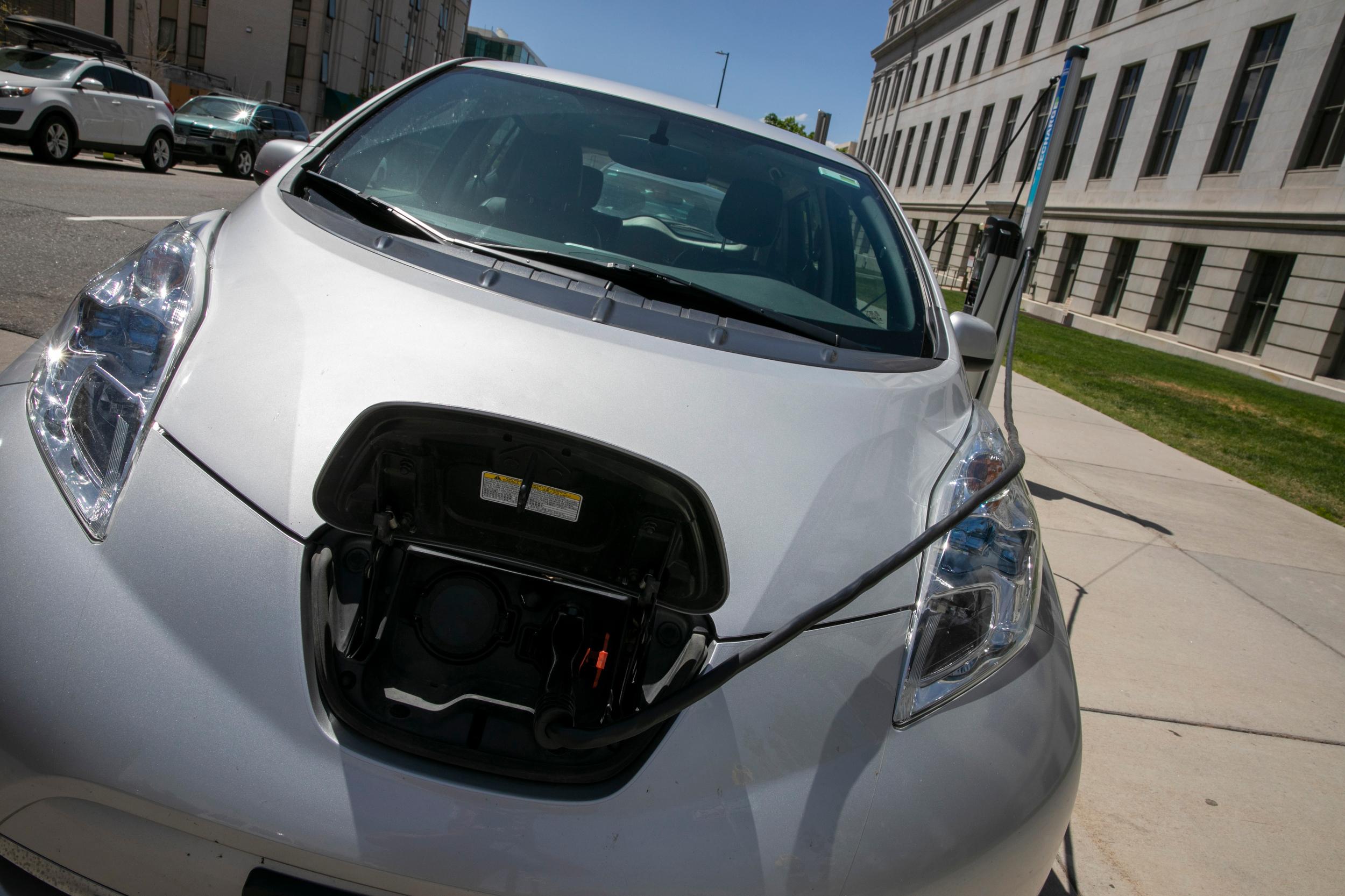
As more electric vehicles hit the road in Colorado, state lawmakers are considering new legislation to ensure their massive batteries end up reused or recycled.
Hours after the state’s 2026 legislative session opened on Wednesday, Democratic state lawmakers introduced a bill to make automakers responsible for safely recycling EV batteries. If signed into law, it would require companies to either recycle batteries themselves or task other organizations with the responsibility. Those rules would take full effect on August 1, 2028.
It’s a plan designed to make green cars even greener. While all-electric vehicles lack a tailpipe, making an EV battery requires mining large tracts of land and heavy manufacturing. The whole process leaves behind a bigger carbon footprint than building a gas car. EVs only become more climate-friendly after a few years of driving, according to multiple studies.
By recovering materials from existing batteries, carmakers could avoid importing critical minerals, create local jobs and keep fire-prone EV batteries out of scrapyards. It’d also make future EVs even more climate-friendly, according to State Sen. Katie Wallace, a bill co-sponsor and a Democrat representing Longmont.
“Colorado is leading in electric vehicle sales, which is great for climate change, but that only matters if they can be responsibly disposed of,” Wallace said.
Timing is also critical to limit the impact of a broader shift to EVs. In 2025, the Union of Concerned Scientists analyzed ways to reduce the amount of newly mined lithium necessary to supply an EV transition in the U.S. Through proper recycling and transit-oriented transportation, the organization found that those strategies could reduce total demand between 2025 and 2050 by nearly 50%.
Colorado has set the pace for EV adoption nationwide, briefly surpassing California as the state with the top market share for battery-powered cars in late 2024. Nearly 211,000 plug-in vehicles are now registered in Colorado, according to a state dashboard.
The proposal adopts a model similar to Colorado's recently approved producer responsibility program. Rather than charging residents or consumers for recycling, the system requires the companies making aluminum cans or paper packaging to fund municipal recycling programs.
Last year, Gov. Jared Polis also signed a law requiring retailers and manufacturers to recycle smaller batteries often found in consumer electronics or other devices.
Colorado would be one of the first states to extend those requirements to EV batteries. New Jersey adopted the first law to require carmakers to recycle batteries in 2024. That same year, California lawmakers passed their own version, but Gov. Gavin Newsom vetoed it, saying lawmakers should have adopted a market-based approach with greater flexibility.
Colorado’s legislation is also designed to give carmakers time to adjust to the requirements, said Aaron Kressig, a transportation electrification manager at Western Resource Advocates, an environmental advocacy group pushing the proposal. He noted some automakers are already setting up programs to reuse materials inside EV batteries.
“A lot of the manufacturers are putting these types of systems in place, but we want to make sure that we aren’t allowing batteries to slip through the cracks,” Kressig said.