By Rae Solomon
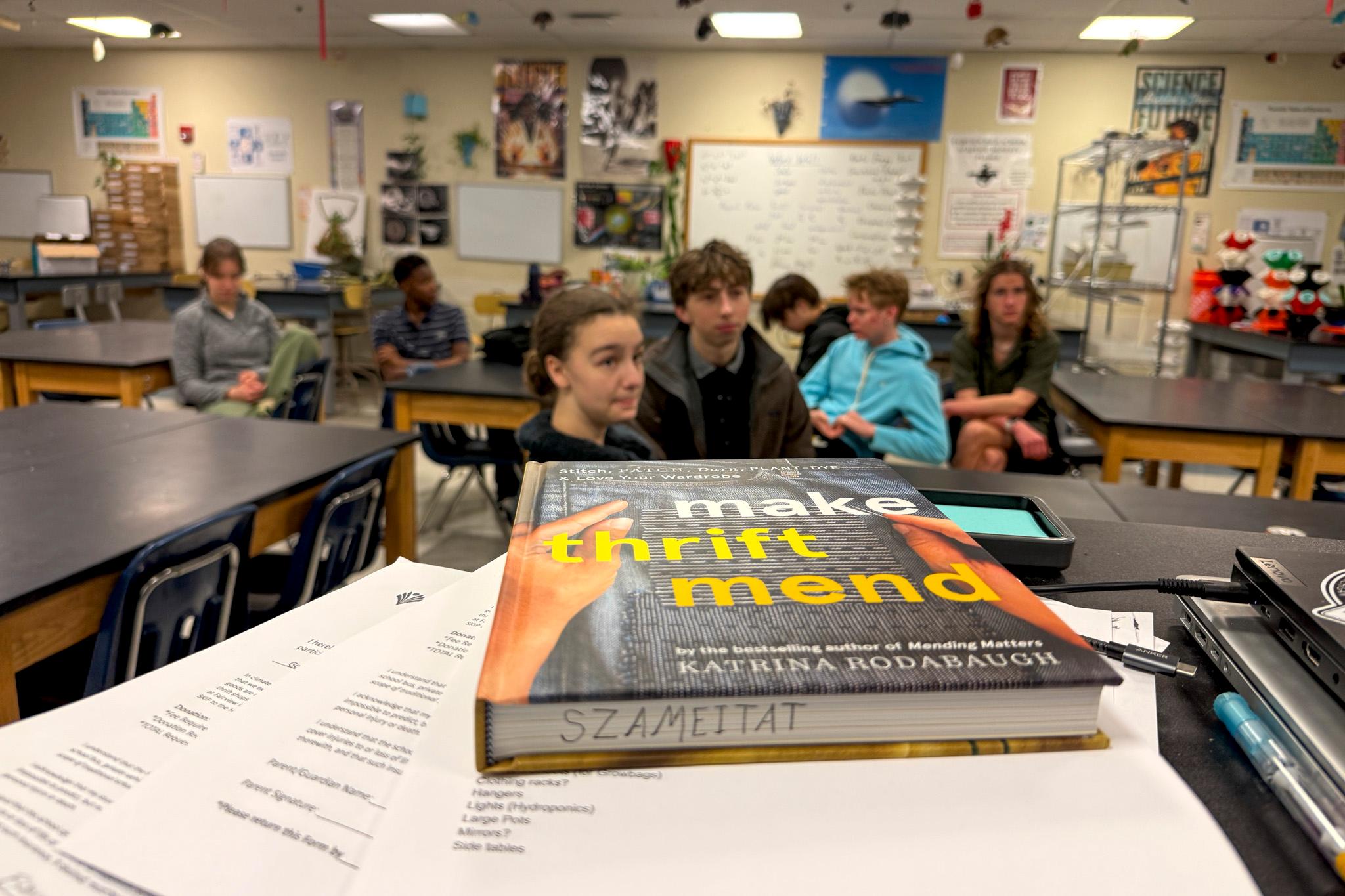
The Climate Literacy class at Boulder Valley School District’s Fairview High School had a most unusual final assignment at the end of last semester: a field trip to the thrift store.
As part of the final climate action project for the year-long class, students tallied up the materials they’d need — a key part of the curriculum. They decided to “walk the walk” of sustainability and reuse second-hand things instead of buying new.
“We decided we would go thrifting,” said senior Eloise Dombrowsky.
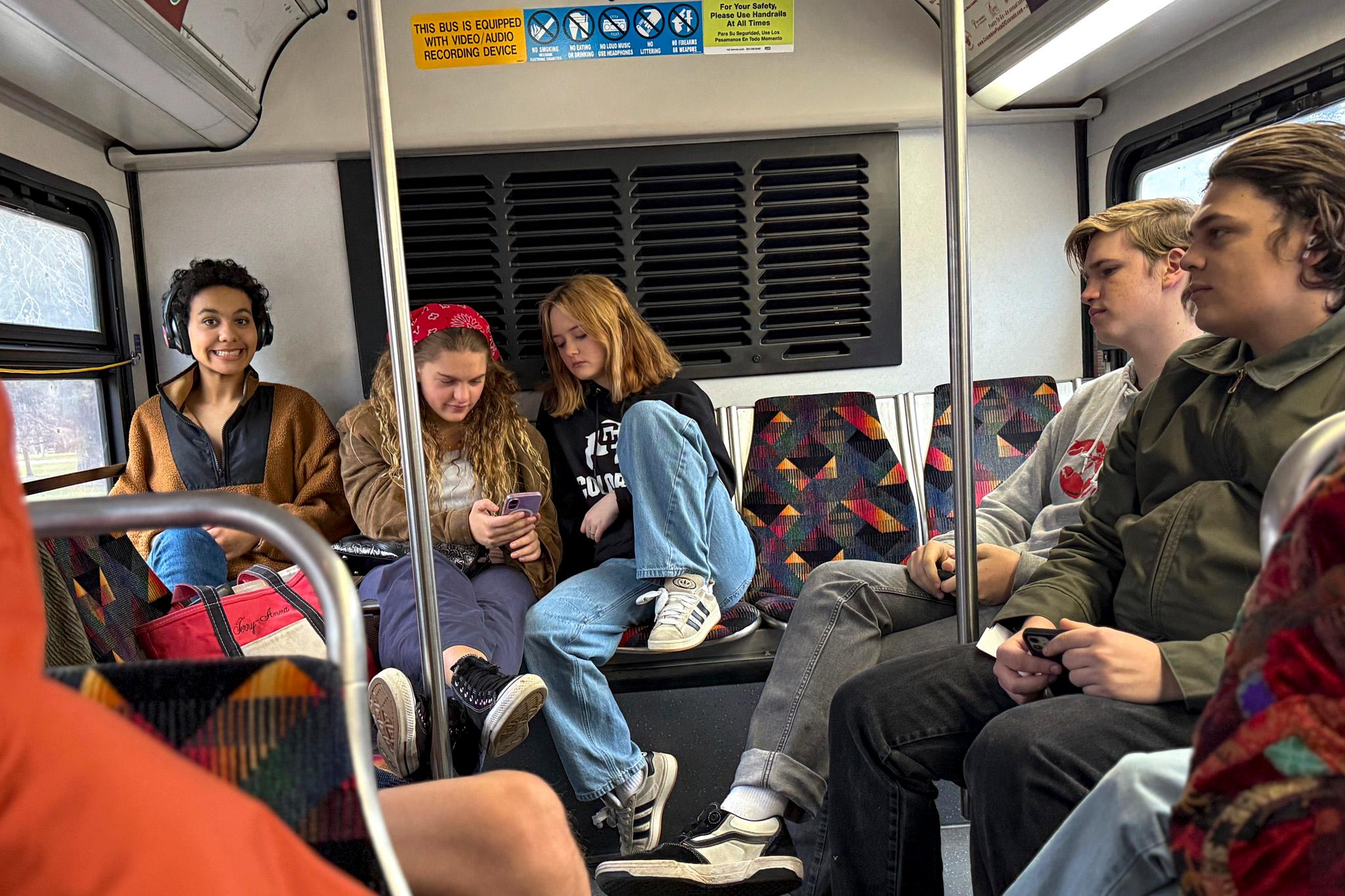
On an eerily warm December morning, the entire class caught the bus out in the front of the school (nothing but public transportation for these kids) for the trip north to the Salvation Army store off of Arapahoe Avenue.
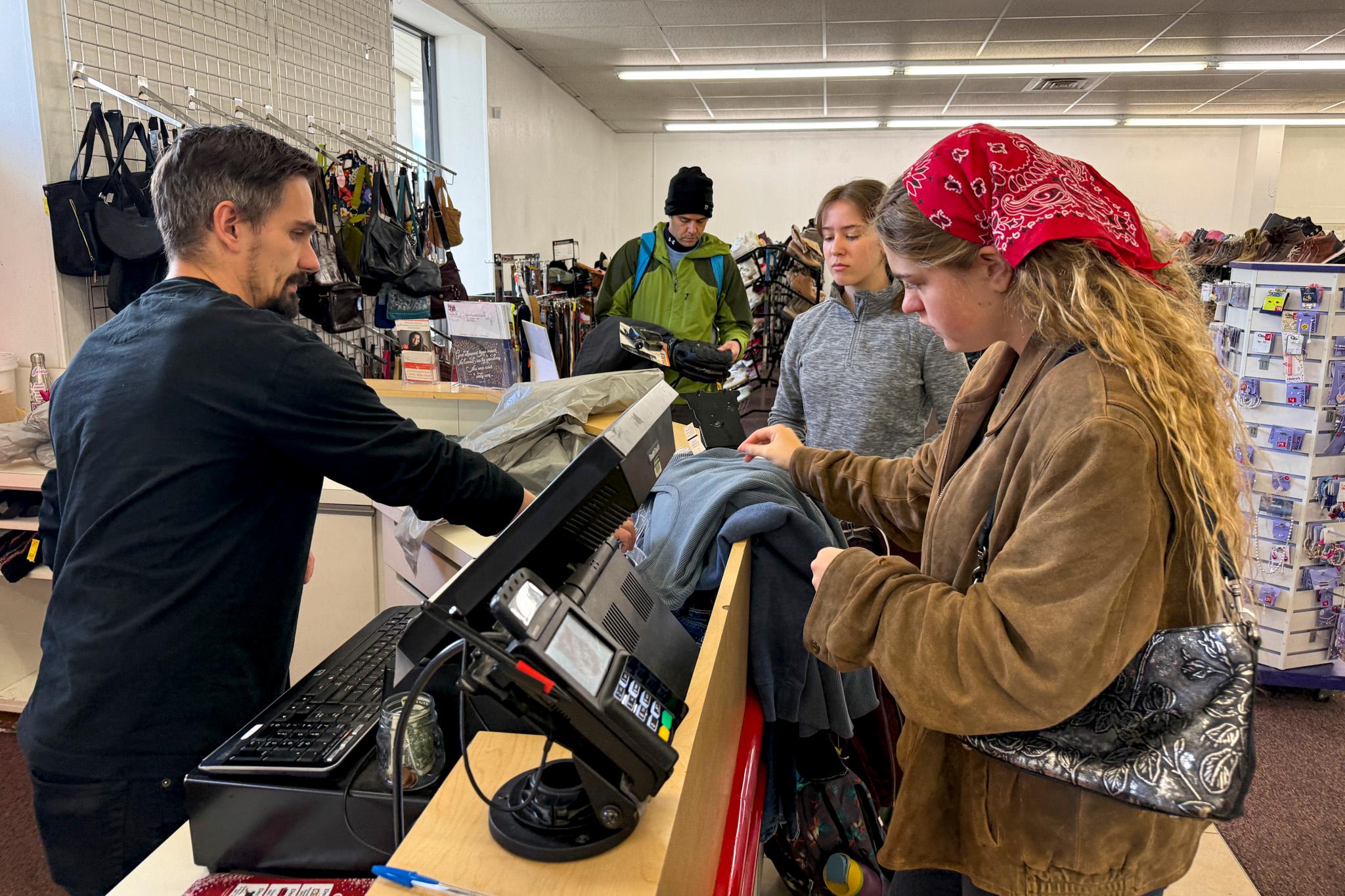
Dombrowsky was flipping through racks of used denim, looking for the perfect pair of jeans — nice color, not too stretchy — to work with. She was looking for fabric to make tote bags and sturdy cloth planters for the school garden.
“And extra mending fabric,” she said, pulling a pair off the rack. “ Oh, here we go. Yeah, it's perfect.”
Dombrowsky is planning a community clothes mending workshop for fellow students — a response to the climate impacts of the wasteful fast fashion industry that she learned about earlier in the semester. The jeans would be cut up and used for patches to repair damaged clothes.
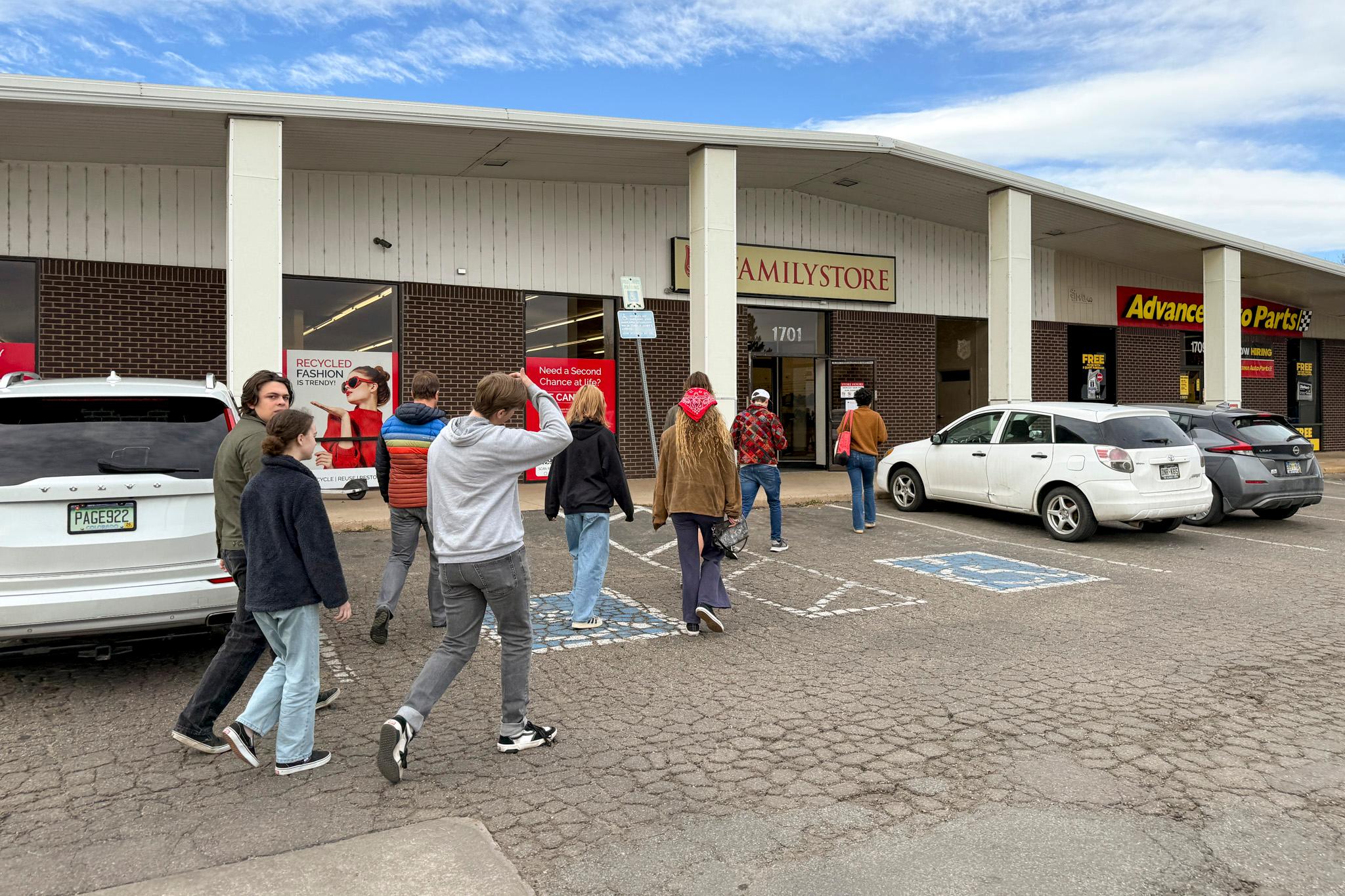
Every student had a project. Some were looking for lights and tables for a hydroponics installation at the school. Others were collecting metal forks to replace disposable plastics in the cafeteria.
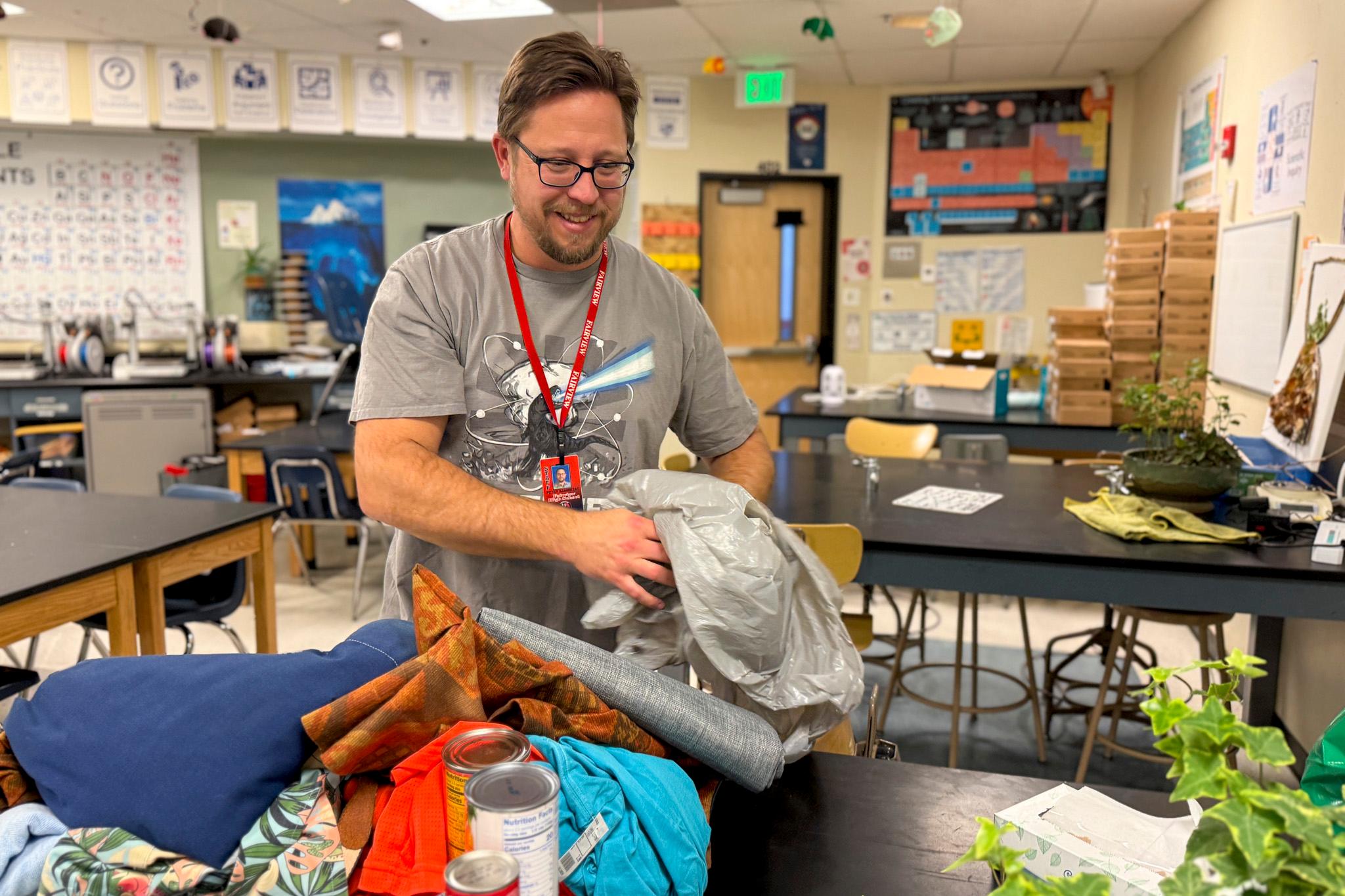
”We want to look at thrift and reuse,” said their teacher, Peter Szameitat. “How do we encourage people to shift from shopping for new things and thinking of reuse as the first viable option ?”
Szameitat usually teaches standard science courses, like chemistry and biology. The Climate Literacy class, which is funded by the local nonprofit Classrooms for Climate Action, is something new — not just about theory or climate science. According to Szameitat, it's about empowering kids to take climate action and lighting a lifelong spark that will guide them in the future.
“My hope is that all the students take sustainability into account when they're choosing their careers,” Szameitat said. “Whether they become engineers or lawyers or in the medical field, they're thinking about climate, climate justice — what they can do within those fields that moves the world forward.”
Szemeitat's class is the first of its kind at Fairview, and it could become a model for other schools around Colorado, because the state has plans to expand climate education in the K-12 school system as a tactic to inspire more interest in climate careers.
It's part of a new state plan to shore up anticipated gaps in the climate workforce that were outlined in the state’s recent Climate Workforce Analysis and Plan, which found thousands of so-called “climate critical” jobs — from electricians to urban planners — could go unfilled over the next decade without a concerted effort to cultivate that workforce. Unless addressed, the analysis found, those gaps would interfere with Colorado’s climate goal to end planet warming emission by 2050.
“The state continues to be invested in making sure that we have the workforce to meet our climate change goals,” said Renise Walker, assistant director of systems innovation with the Colorado Workforce Development Council. “If we're going to have adequate workers to meet our climate change goals, we've got to expand the number of people who are aware of those jobs and the number of people who are skilled.”
While current state budget challenges mean there's currently no money attached to the climate workforce plan’s recommendations, state officials are banking on embedding their programs into existing — and funded — initiatives, like the state’s registered apprenticeship program and the new Seal of Climate Literacy for graduating high school students.
“The Polis Administration is committed to developing a climate workforce to serve the needs of Coloradans today and in the future,” a spokesperson for the Colorado Workforce Development Council wrote to CPR in an email. “We plan to advance these efforts to train Colorado’s workforce in climate-critical occupations through robust interagency collaboration and partnerships with community organizations, using existing and private funding sources.”
One of the best ways to get today's students interested in those careers is to plant the idea as early as possible, according to Dan Hinderliter, director of state policy with the national career education group Advance CTE.
“That means reaching down to younger grades for career exploration,” Hinderliter said. “And to really think about the way that any career can be classified as a green career.”
Climate career education in the K-12 school system is only just getting off the ground in progressive states like Colorado and Delaware, which recently revamped its entire career education curriculum to more deeply integrate climate literacy in all subjects.
But Hinderliter expects it will eventually catch on at the national level. Workers with the skills to adapt to changing climate conditions will become an economic necessity even in red states. And schools, after all, have a mandate to prepare students for the jobs of tomorrow.
The students themselves are starting to demand that change.
“It's really on the top of mind for a lot of young people as they enter into their future careers,” Hinderliter said. “Thinking about what the impact that career is going to have on the environment.”
The subject remains top of mind for Fairview High School 12th-grader Danny Bernard, another student in Szameitat’s Climate Literacy class. He was 14 years old in 2021 when his family was forced to evacuate their South Boulder home during the Marshall Fire, which was fueled by strong winds and unusually hot, dry weather to become the most destructive wildfire in Colorado history.
“ I'm a newly minted adult,” Bernard said. “It’s a frustrating thing to watch. We are living in a climate that's getting warmer and drier and we're not doing enough to mitigate that risk. That's what's making things like the Marshall Fire far more common.”
His project for the class has him channeling that frustration productively, working on a bond measure proposal that would fund solar panels at all Boulder Valley School District buildings. Eventually, he wants to build a career in climate law and said this class is setting him up early to get there.
“A lot of school is not actually applicable to life,” he said. “This class totally breaks that mold and is extremely applicable. These are functional, practical skills that I'm going to use in my real life. I wish that more of my education was like that.”