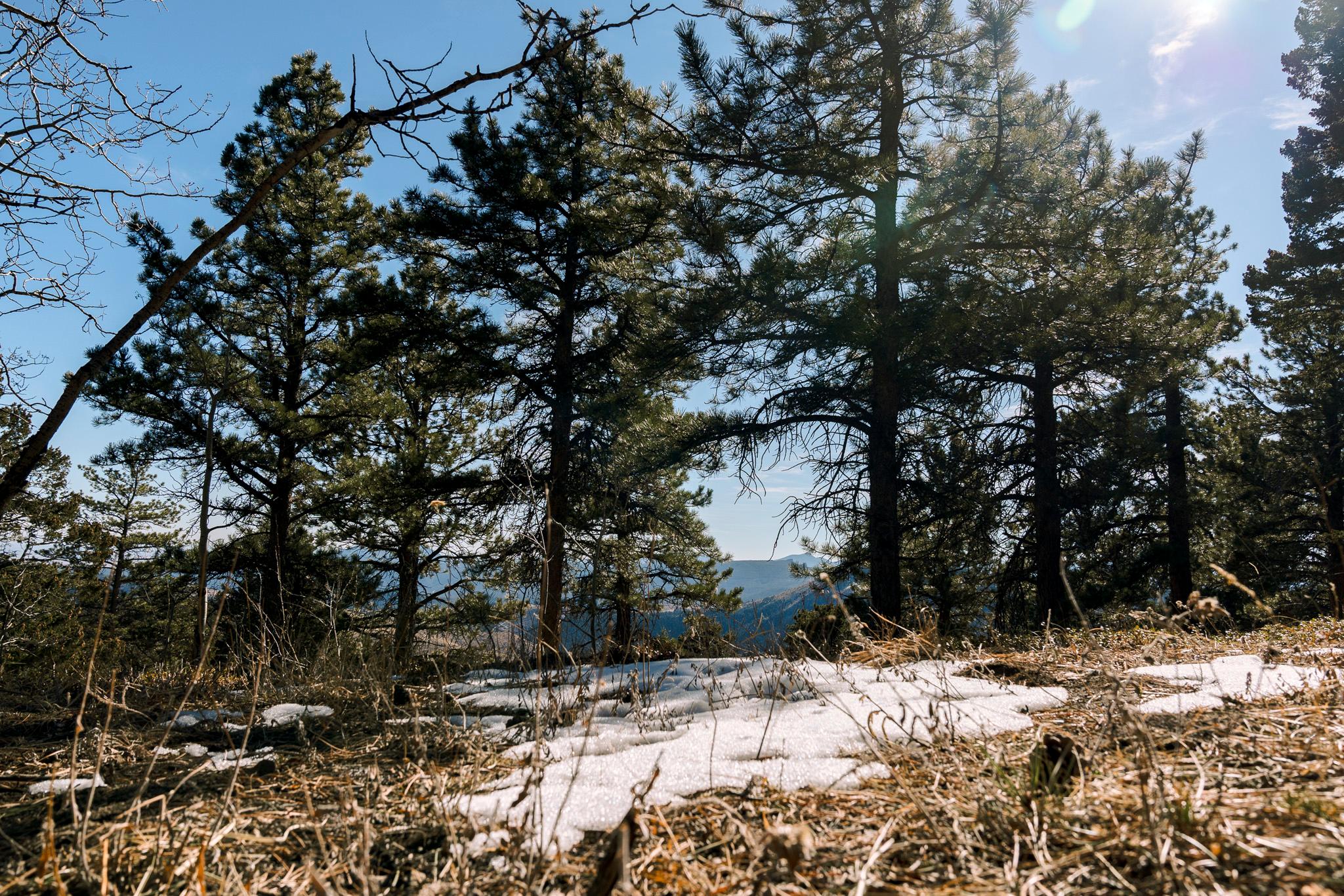

The entire state is in a snow drought, with conditions expected to deepen due to record-breaking warm winter temperatures. Colorado’s snowpack is the lowest on record for this time of year, and major river basins are running at about 50 percent to 75 percent of normal.
Much of the northwestern part of the state, including Pitkin, Eagle, Grand and Summit counties are in deep drought, according to the U.S. Drought Monitor, which forecasts the dry spell to deepen across the Western Slope in the coming weeks.
The “snow drought” is already deeply affecting the winter outdoor industry, with some ski resorts taking extreme measures, like carrying buckets of snow from other areas and dumping them, to keep their slopes open. Snow cover across the West on January 4 was the lowest in recorded NASA satellite history, which started keeping such records in 2001.
The last three months of 2025 were by far the warmest winter period on record. And calendar year 2025 ended up as the 4th-warmest on record for Colorado, behind only 2012, 2017, and 1934.
December 2025 was also the warmest ever on record, with over 1,000 daily high temperature records set across the state, according to the Colorado Climate Center. Their latest report called it “Exceptional. Record-smashing. Disturbingly warm.”
All five states in the Intermountain West region had their warmest December on record.
Just over halfway through January, Denver has already broken one daily record for highest temperature — on January 4. Models forecast above-normal temperatures for the next three months, which is likely to continue impacting snowpack.
The National Weather Service continues to issue frequent critical fire weather warnings due to warm, dry conditions.
”It looks like we’re gonna be in for a hell of a year if this winter continues to be dry,” said Brad Udall, water and climate research scientist at the Colorado Water Center at Colorado State University.
Still, the state is faring better than surrounding states when it comes to winter precipitation. Nevada, Arizona and New Mexico have received only about 20-30 percent of the average snowfall by this time in January.
More rain than snow has fallen in many areas in the West, especially in Oregon, with near-record warmth or record-breaking warmth preventing snow accumulation across the region.
Jason Gerlich, regional drought information coordinator with the National Integrated Drought Information System, said “the depth of this year's lack of snow accumulation is largely unprecedented for a lot of these states.”
Peter Goble, assistant state climatologist with the Colorado Climate Center at CSU, said this magnitude of snow deficits is unlikely to be made up for with more rain in the coming months. He warned of potential spring and summer fire risk, saying, “historically most of our worst fire seasons are following very poor snow pack years.”
Colorado River flow impacts
“It’s as grim as it gets right now,” said Udall, pointing to a Colorado River flow forecast of less than 60 percent of normal.
This unseasonably warm weather is likely to have long-term impacts on the state and the region, worrying meteorologists. Snowpack plays an important role in spring runoff and water supply by replenishing rivers and aquifers. If the drought continues, it will impact the Colorado River and downstream states.
“We still have two and a half months to go,” Udall said. “It could get wet, but boy, the signs are not good.”
Ninety percent of the flow of the Colorado River comes from the upper basin, so the lower basin is totally reliant on snowpack melting in the spring.
A two-year outlook on the river, released in early January by the Bureau of Reclamation, includes alarming minimum flow predictions, including Lake Mead dropping to historic low levels of just 27 percent of normal by 2027.
“I, and other authors, have suggested that by mid-century, we're going to continue to see declines in river flow. We're down 20 percent since the year 2000,” Udall said.
Rivers will require above-average precipitation in the coming months to recover, and that doesn’t look likely.
This comes as officials from the seven states in the Colorado River Basin prepare for another round of negotiations over how to manage the dwindling resource in February.
Is it climate change?
What is happening in Colorado is reflected in global trends.
Data show that 2025 was Earth’s third-warmest year since records began in 1850, according to the nonprofit Climate Central. Global average temperatures in 2025 were 2.4 degrees Fahrenheit above pre-industrial levels.
Temperatures can fluctuate a lot in Colorado, and it’s hard to directly link any weather event to climate change. But the data bear out that averages are increasing overall.
But an increasing number of studies are proving the connection between the ongoing drought in the West and climate change. Human-caused climate change has interrupted the flow of something called the Pacific Decadal Oscillation, a natural climate pattern that is now contributing to the ongoing drought in the West.
“This is actually impacting Colorado River precipitation, which in turn is impacting flows on top of the heat impacts,” said Udall.