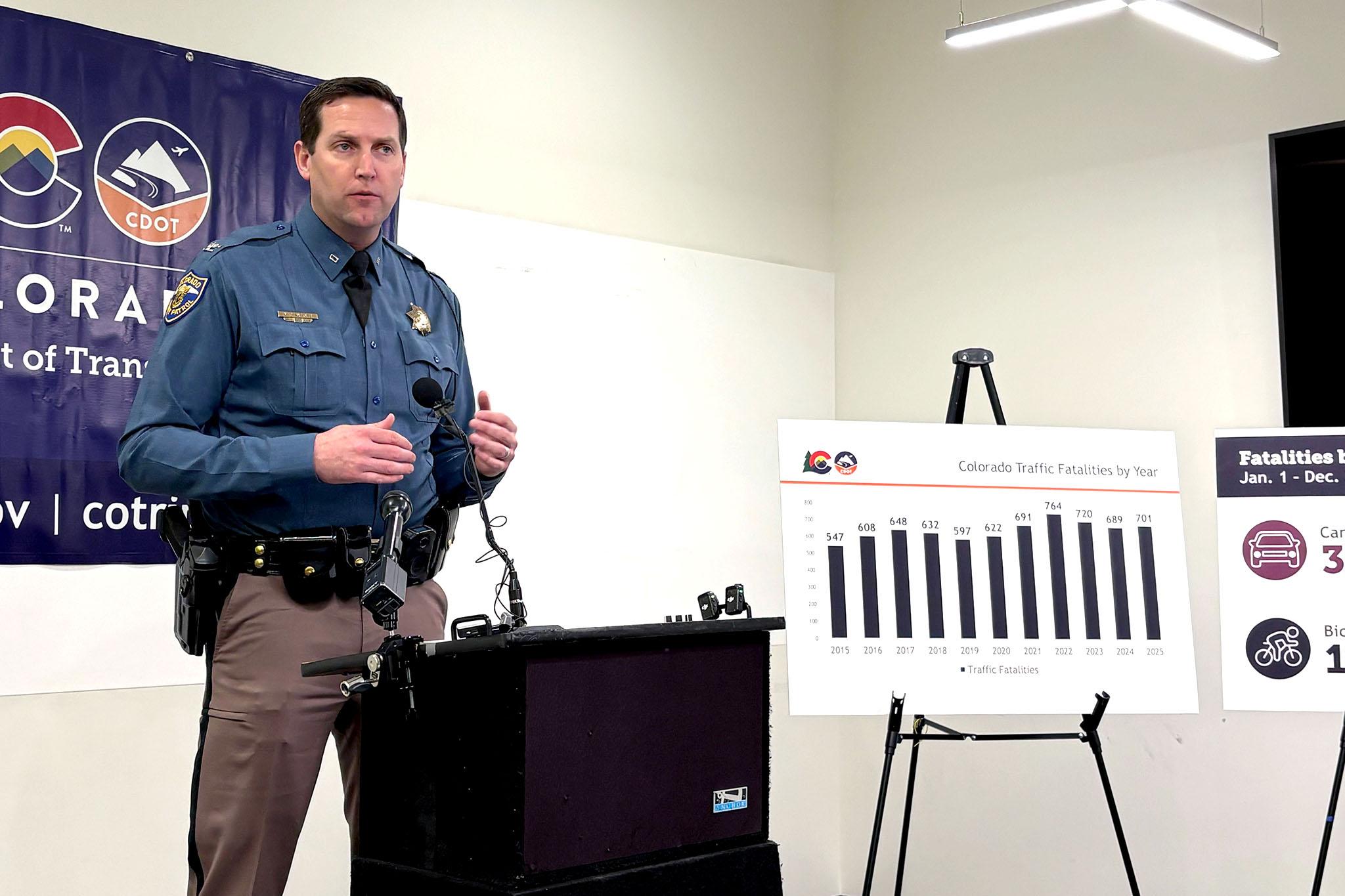
More drivers were on Colorado roads toward the end of last year due to the unseasonably warm weather. According to the Colorado Department of Transportation (CDOT), that led to a slight increase in traffic fatalities in 2025.
In preliminary data released by CDOT on Friday, there were 701 traffic deaths on Colorado roads last year. That’s a 2 percent increase from the previous year. Before last November, Colorado was on track to have a third consecutive year of declining traffic fatalities.
“Up until November, we were looking at a 7 percent decline in traffic deaths,” said Shoshana Lew, CDOT executive director. “And then, as we all know, the weather was unusual. It stayed warm with more people out and traffic deaths hit near records.”
Colorado saw its fourth-warmest fall ever recorded. Through November, it was its 9th warmest year overall. In those final two months, traffic deaths jumped 70 percent compared to the same period in the previous year. This includes motorcycle deaths, which spiked by 167 percent from a year ago.
“It is honestly and truly with a heavy heart that we stand before you today to see that we have yet again surpassed 700 as the number of people that have lost their lives on Colorado's roadways,” said Col. Matthew Packard, chief of the Colorado State Patrol.
The number of deaths on Colorado roadways was on the decline between 2022 and 2024. Those numbers fell below 700 last year for the first time since 2021, when there were 691. Packard cited speed as a significant factor in most traffic crashes.
“The science is easy on this. The slower you are going, the more time you have to react to an unexpected distraction, an unexpected event on the roadway in front of you. Slow down and be attentive,” Packard said.
Most of those traffic deaths came from passenger deaths — 392. Impaired driving deaths also continue to account for over a third of fatalities on Colorado roads. There were 235 last year, which was up 11 percent from the previous year. There were also significant increases in other areas, such as pedestrian and bicycle deaths.
“We find examples of where the pedestrian or the cyclist was at fault. And we also find examples where the driver of the motor vehicle was at fault, too,” Packard said. “This is not a problem that we can point a single finger at the one cause. This is a systemic issue that we all need to lean into and recognize that it is all of our responsibility to solve these problems.”
There were 5 percent more pedestrian deaths last year than in the previous year. There were only 18 bicycle deaths in 2025. But those that saw the biggest increase among traffic deaths at 29 percent.
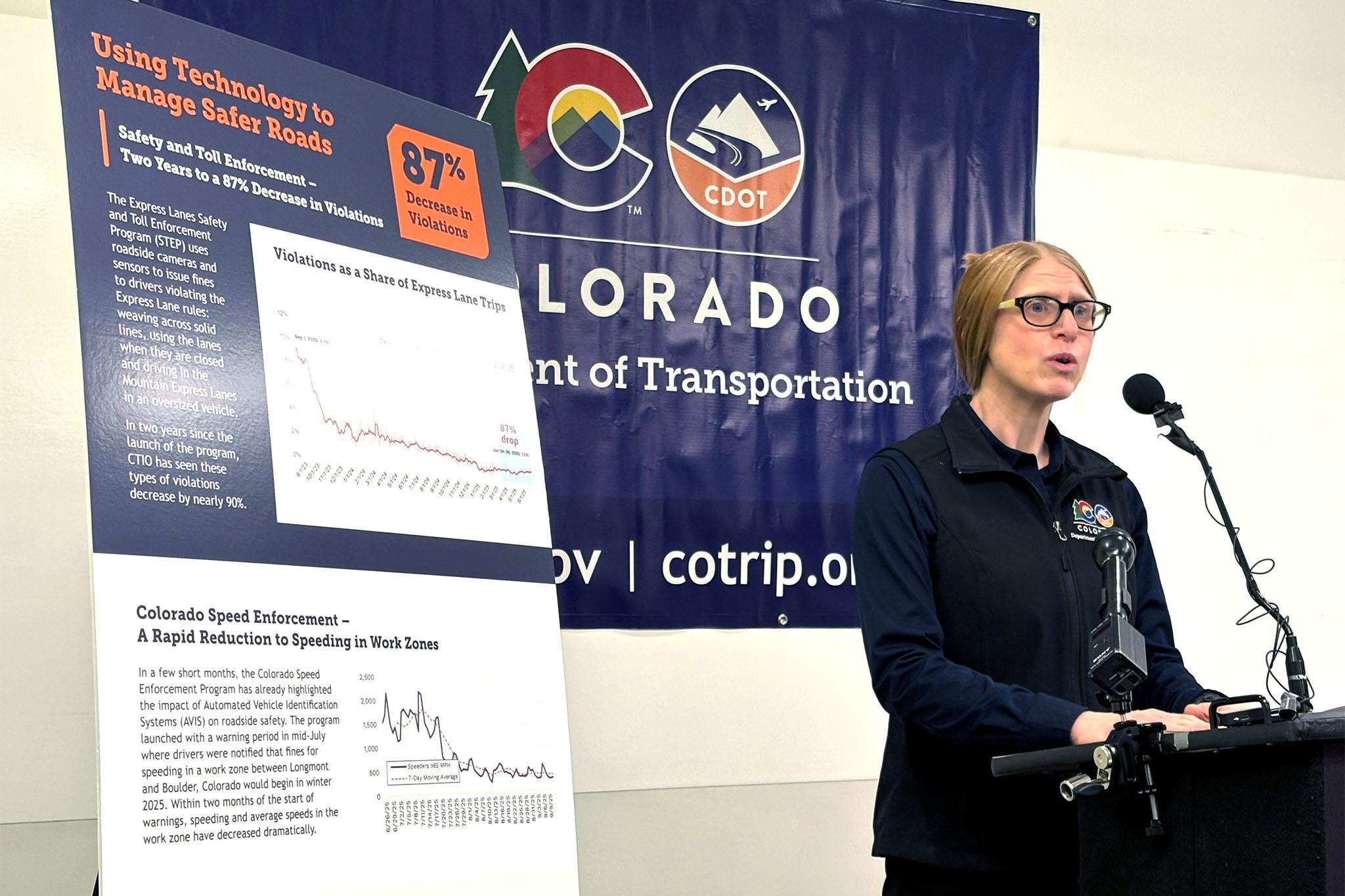
Construction zone deaths were trending in a different direction. Only nine such deaths were recorded, which is a 70 percent decrease from the previous year.
“We've worked hard to focus on work zone safety this past year, implementing a range of new measures such as better visibility around work zones and the new automated speed enforcement program,” Lew said. “The improvements in this area of work zone safety show why we must stay focused on this issue and that these kinds of efforts can make a difference overall.”
Last July, CDOT launched the first automated speed enforcement cameras on Highway 119 between Longmont and Boulder. CDOT plans to expand the cameras to other work zones in the state as part of its Strategic Transportation Safety Plan. The overall goal is to reduce fatalities and serious injuries by 5 percent per year or 22.6 percent by 2030.