This story was produced as part of the Colorado Capitol News Alliance. It first appeared at coloradosun.com.
By Jesse Paul, The Colorado Sun
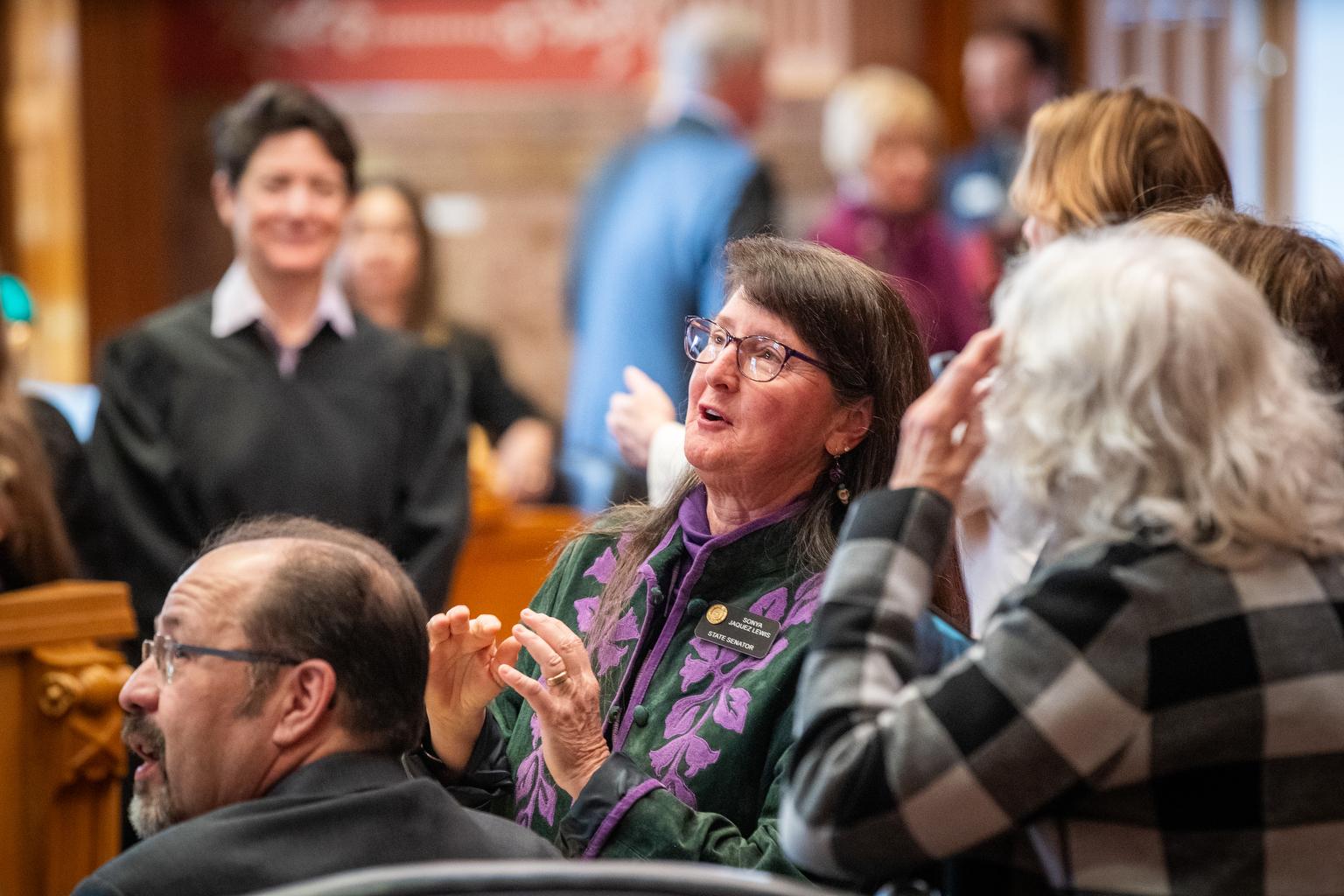
A former state senator was convicted Wednesday of attempting to influence a public servant and multiple counts of forgery for fabricating letters of support to the Colorado Senate Ethics Committee to try to avoid sanctions amid an investigation into her alleged mistreatment of Capitol aides.
A jury found former state Sen. Sonya Jaquez Lewis, a Boulder County Democrat, guilty of four counts — one count of attempting to influence a public servant and three counts of forgery.
The jury deliberated for about four hours before announcing its verdict.
Attempting to influence a public servant is the most serious charge Jaquez Lewis was convicted of. It’s a Class 4 felony, punishable by up to six years in prison and a $500,000 fine. Forgery is also a felony, though it’s a lower-level offense and carries a maximum penalty of three years in prison per count.
Sentencing was set for Feb. 27. Prosecutors said they planned to ask that Jaquez Lewis be sentenced to probation.
Jaquez Lewis resigned from the legislature in February 2025 amid the Senate Ethics Committees’ investigation into allegations that she mistreated her Capitol aides.
She stepped down when the committee announced that Jaquez Lewis had submitted at least one fabricated letter of support, purported to be from a former aide, to the panel. The aide whose name was on the letter told legislative investigators that she didn’t write it and that she had not been in touch with Jaquez Lewis for roughly a year before the missive was sent.
When confronted, Jaquez Lewis told legislative investigators that she was relaying information she had gathered from conversations with the former aide in years past. The letter, however, appeared on letterhead with the aide’s name on it and was written in the first person.
Prosecutors found that Jaquez Lewis had actually written multiple letters purporting to be from former aides.
During a three-day trial this week, Jaquez Lewis admitted to writing the letters of support. But she denied that they were fabrications, saying they were based either on information that was relayed to her previously and, in one instance, that she misattributed a letter to the wrong former aide.
Chief Deputy Denver District Attorney Robert Nitido told the jury that Jaquez Lewis’ explanation was not credible.
“She was afraid of losing her job. She was backed into a corner, and she decided to do the only thing she knew to do,” he said. “She wrote letters in their name, acting as if they wrote the letters.”

Nitido said Jaquez Lewis clearly intended to influence the Senate Ethics Committee’s findings and prevent the panel from levying sanctions as severe as recommending that she be expelled from the legislature.
In trying to defend herself against allegations of mistreating aides, Nitido said, Jaquez Lewis mistreated more aides by fabricating letters of support from them.
Jaquez Lewis’ attorney, Craig Lewis Truman, painted a picture of a busy, overwhelmed senator making mistakes while trying frantically to contend with serious allegations before the Senate Ethics Committee, which he called “a kangaroo court.”
He said Jaquez Lewis was “under the gun and did the very best she could.” He said that while she shouldn’t have written the letters, she wasn’t trying to deceive the Senate Ethics Committee. Rather, he argued, Jaquez Lewis was making a good-faith effort to defend herself.
Separately, Jaquez Lewis, last year, agreed to pay nearly $3,000 to the Colorado Secretary of State’s Office to settle allegations that she violated campaign finance laws. She admitted to failing to report campaign spending on several occasions. She also admitted to using campaign funds to hire a staffer to campaign on behalf of another candidate, which is prohibited.

Colorado Capitol Alliance
This story was produced by the Capitol News Alliance, a collaboration between KUNC News, Colorado Public Radio, Rocky Mountain PBS, and The Colorado Sun, and shared with Rocky Mountain Community Radio and other news organizations across the state. Funding for the Alliance is provided in part by the Corporation for Public Broadcasting.