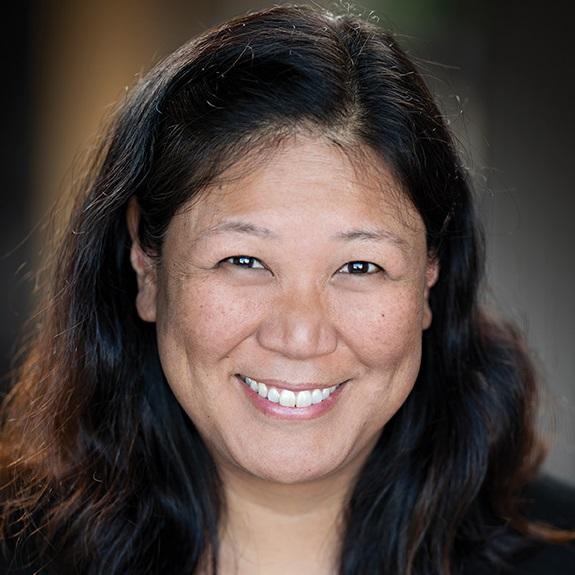
“Have you shown works by other South Asian artists?” is a question that Bala Thiagarajan always poses to people she meets in the art world.
“I ask anybody, everybody. Venues, curators, art centers, galleries,” she said.
Thiagarajan founded the Colorado South Asian Artists Group last year, but the idea has been floating around in her mind since she moved to Colorado 4 years ago.
“I show up to institutions and don't find anybody else in that space that looks like me and their programming excludes me,” she said. “And the answer is, ‘Oh, but Colorado is 99 percent white.’ I'm like, ‘No, it's not.’ And when you tell me that to my face, you basically tell me I'm invisible. You just don't even see me standing in front of you.”
Representation of South Asians in Colorado’s arts scene is a key reason why Thiagarajan started the group.
“There are so many of us in Colorado, but we needed some kind of community visibility and infrastructure,” she said. “Now this is a space where we connect, we share opportunities, we mentor each other, and also we're seen as a part of Colorado's arts landscape.”
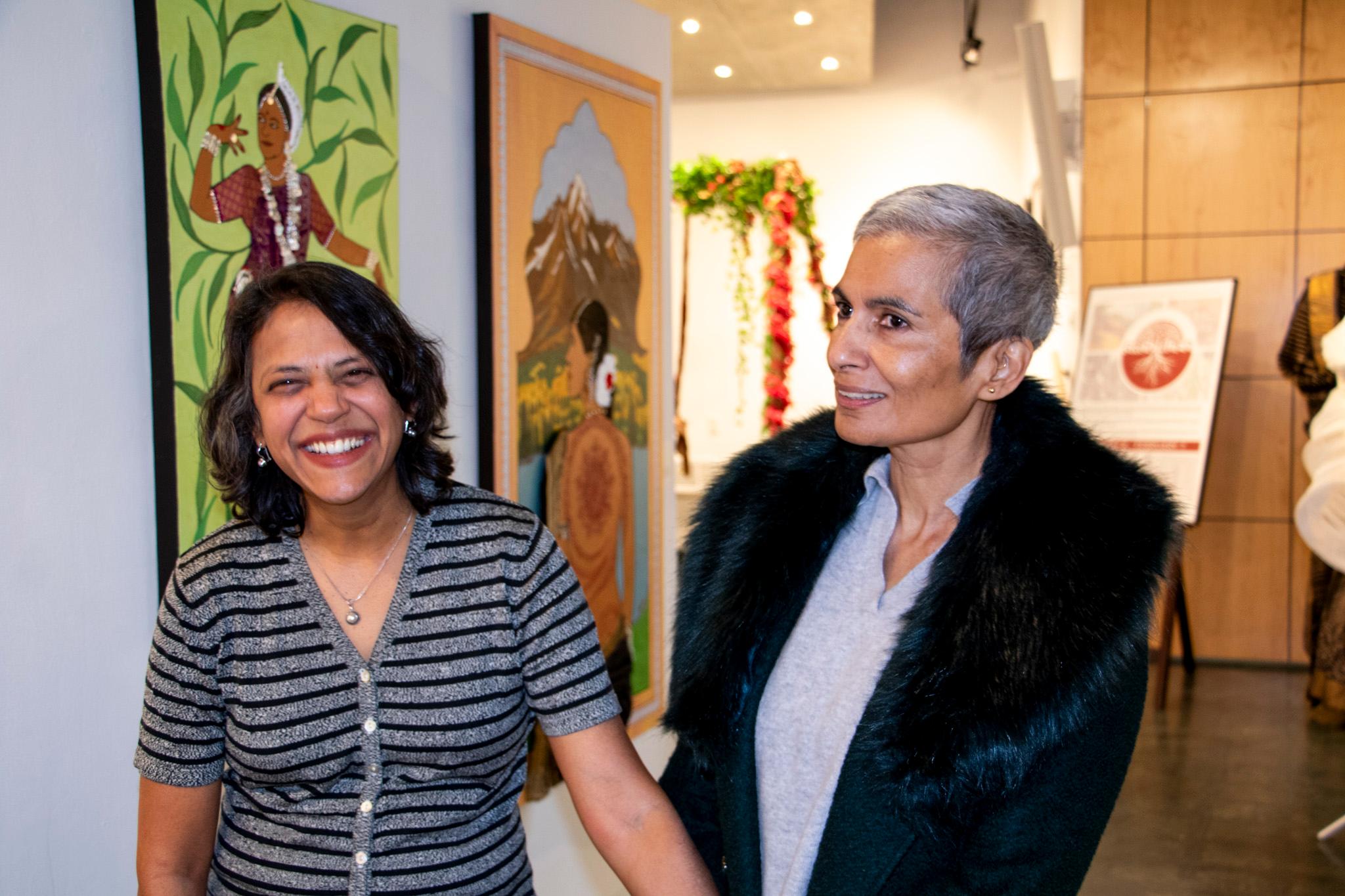
The group’s second-ever exhibition — titled “Grounded” — is showing until Feb. 7 at the Center for the Arts Evergreen, a venue not usually known for its culturally diverse exhibitions.
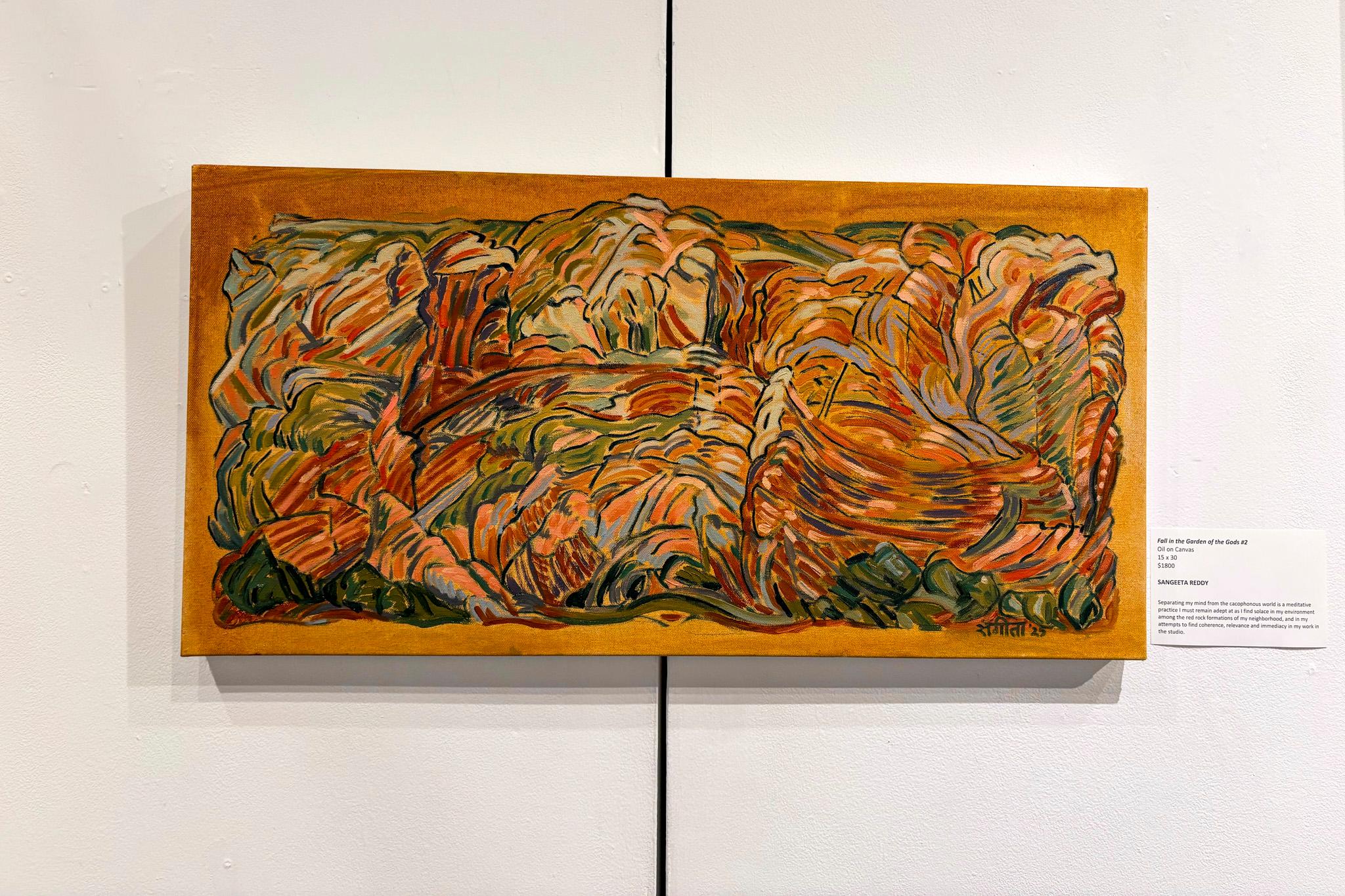
“We love our landscapes, our Aspen landscapes, our portraits of elk around here in Evergreen, and you're never really going to get away from that,” said Chris Stevens, the Director of Exhibitions at the CAE. “But we also want to expose the Evergreen community to different forms of art, different cultures, different ways of looking at things.”
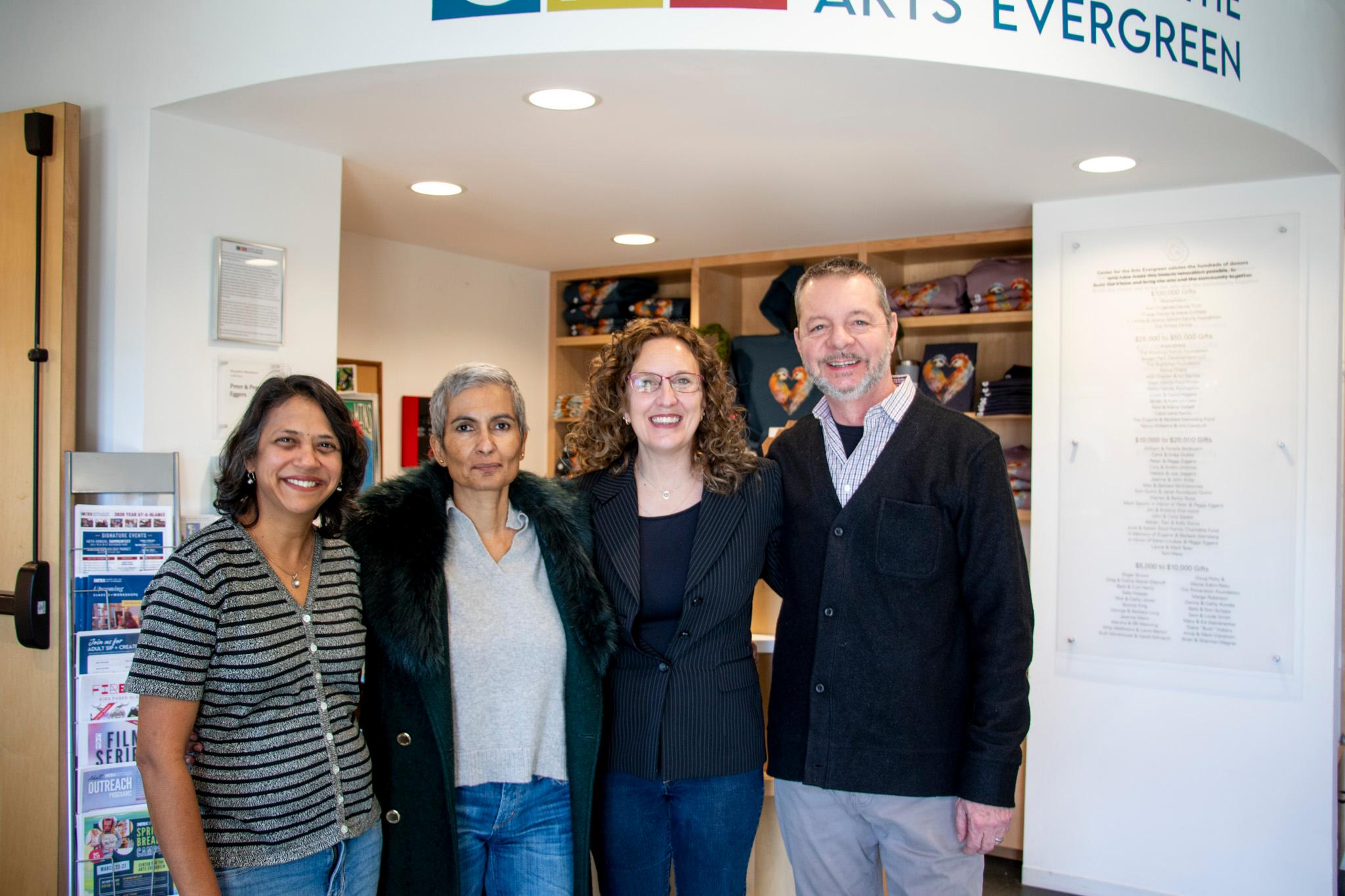
On the opening night of “Grounded,” Thiagarajan created an artwork that was designed to disappear.
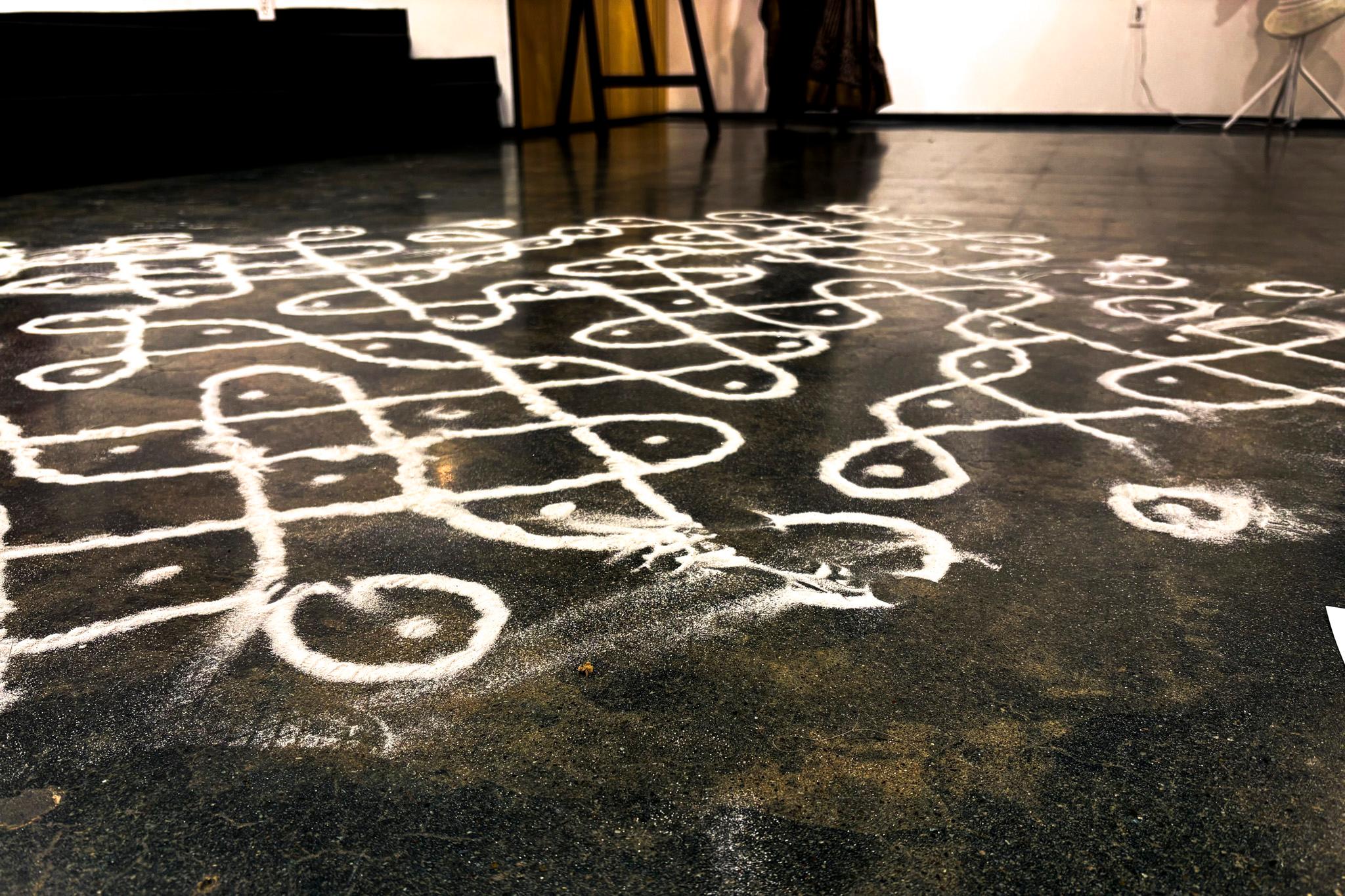
The piece is called “Sikku Kolam.” On the artwork’s label, Thiagarajan writes that a “Sikku Kolam (or Chikku Kolam) is a complex, traditional South Indian floor art from Tamil Nadu, characterized by intricate, continuous, interlaced lines forming knots or loops around a grid of dots, representing life’s flow and resilience.”
She drew it with sand in front of a live audience on the opening night of the exhibition.
“It's about practice and actually showing what grounding looks like as a lived experience,” Thiagarajan said. “Not showing something that was already done in a studio space, but bringing it into the public realm. And it's not about perfection, it's about just being in that moment.”
The collective started with 6 artists, but has grown to almost 50 within its first year. Thiagarajan said there are artists of Indian, Pakistani, Nepali, and Indo-Caribbean descent in the group.
“What it shows is that there was a need for the community, for the artist, and also the need for us to be present in the community in the broader Colorado arts landscape,” she said. “Having a group is not just about showing work or being in a space, but it's also about building belonging and changing that idea of representation and who gets to be seen and who gets to be seen where.”
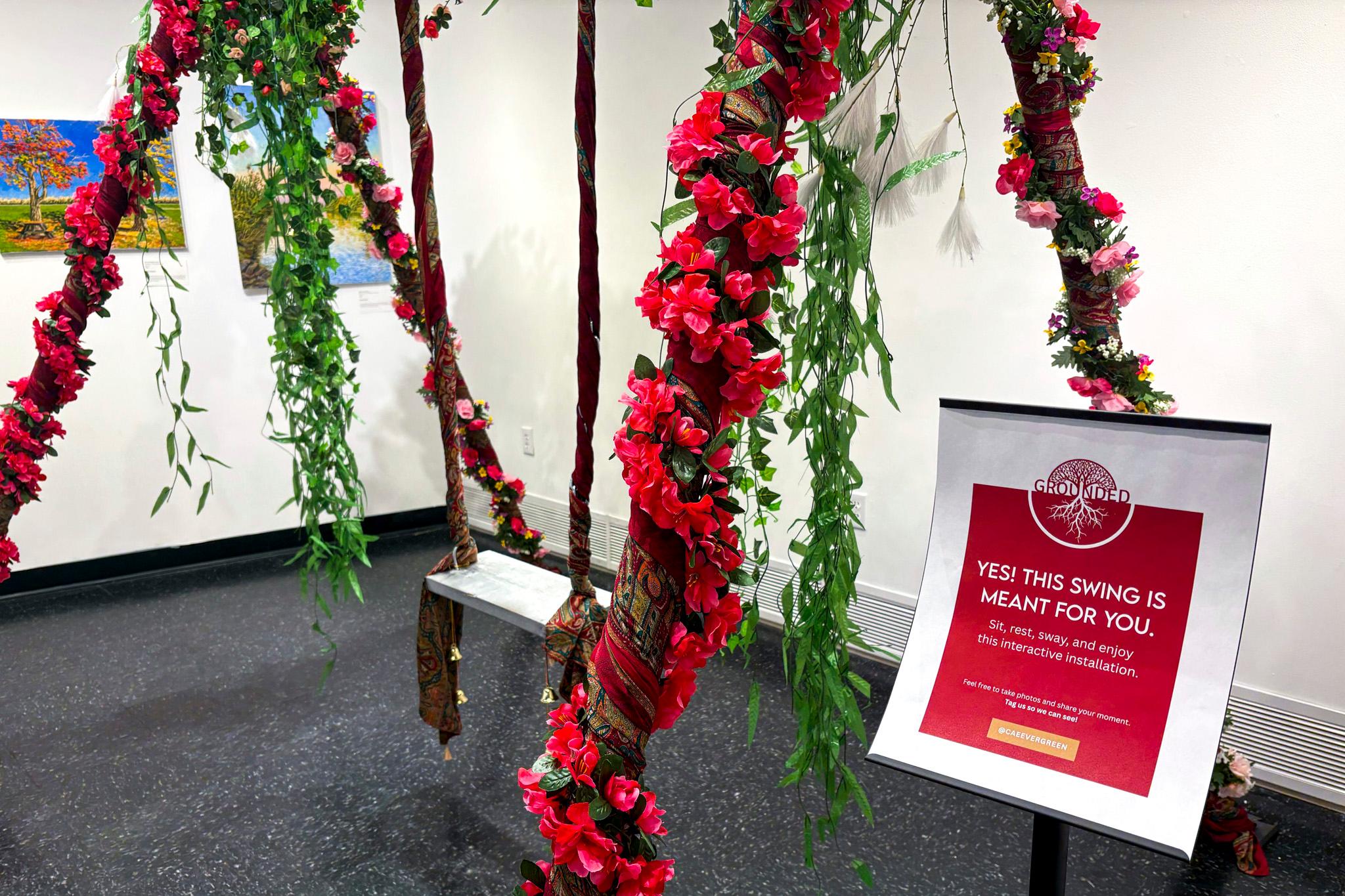
There are works of all different mediums represented in “Grounded.” The exhibition’s centerpiece is a fully-functional swing, decorated with flowers, cloth, and bells.
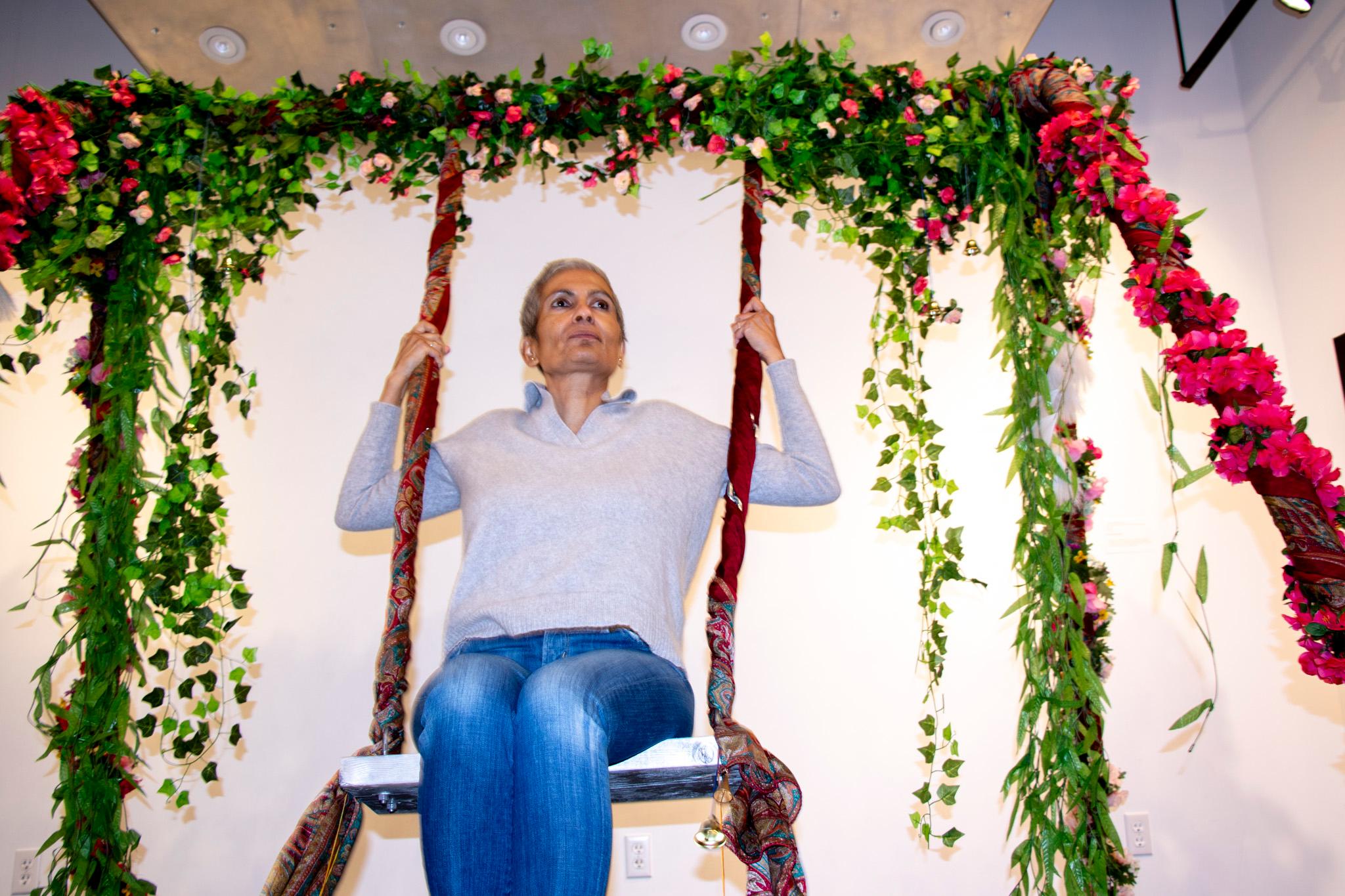
It was created by Renluka Maharaj, an artist who was born in Trinidad and Tobago. The installation is titled “ Rest Your Weary Soul.”
“I think it's so important now because of how upside-down this world seems to feel,” Maharaj said. “How beautiful is it to interact with a piece of art, to embody being a piece of the art? Because when you sit there, you become a piece of the art as well.”
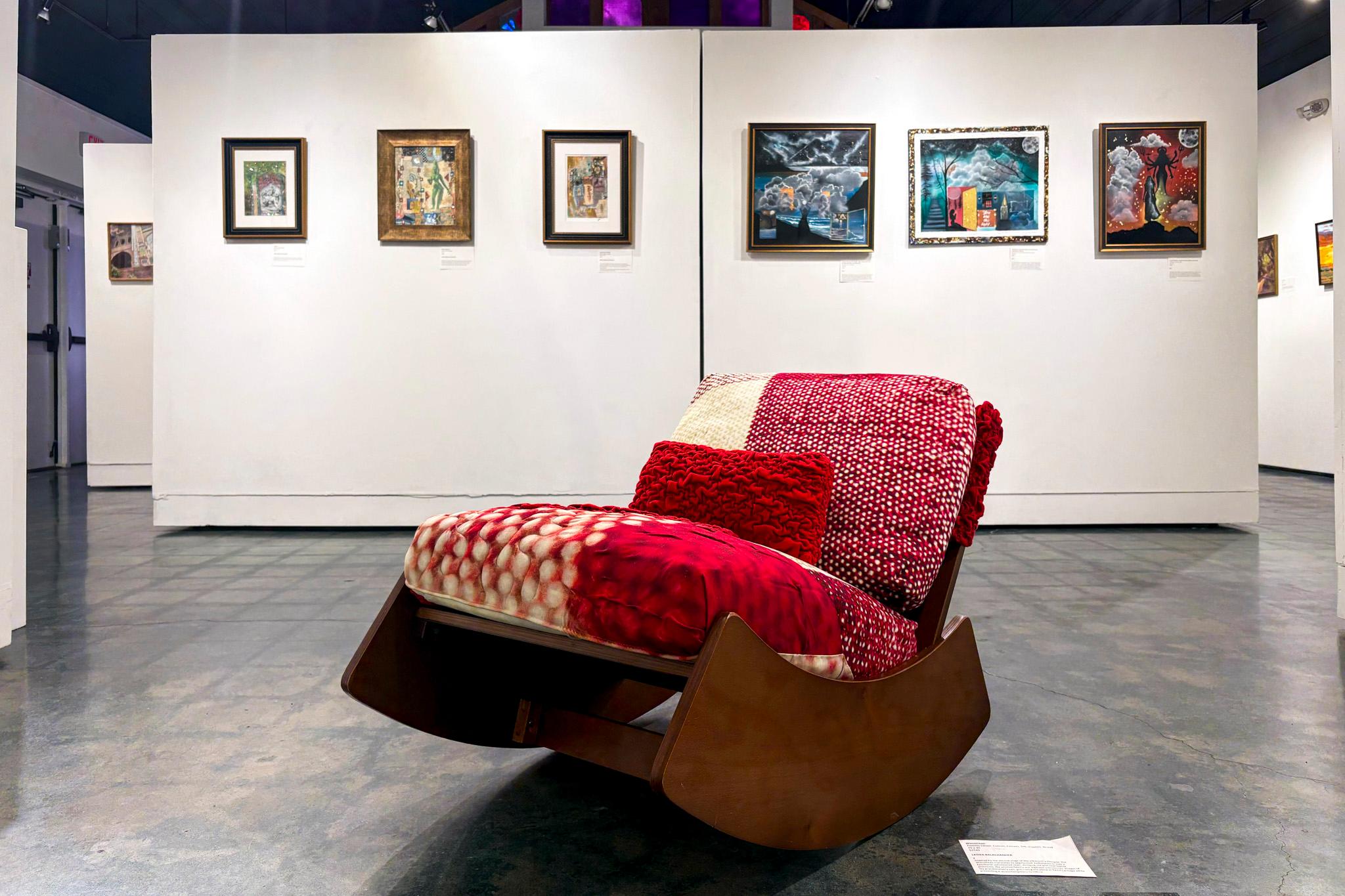
Other unconventional art pieces in the show include a three-piece series of textile works from Denver-based fashion designer Latika Balachander. Two of the pieces resemble clothing, and one is a piece of furniture. Balachander says it represents the life cycle of a silkworm.
“I actually kept a little silk worm in my studio space and watched it build its cocoon, and it was kind of draping itself around this material,” she said. “For me, that was exactly the same as the sari, which was this long continuous material that was being wrapped around the body.”
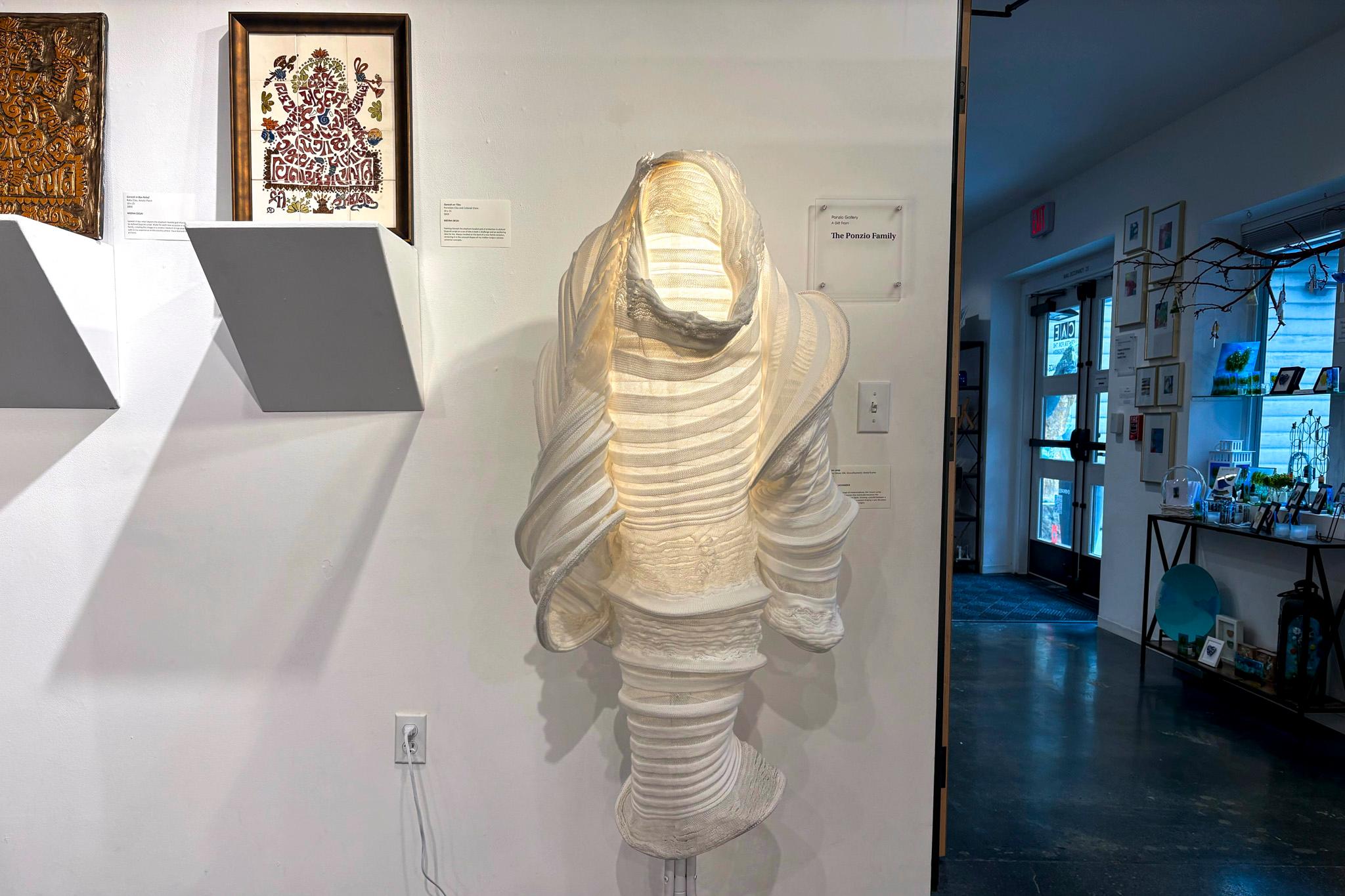
Balachander’s family is from South India, near the city of Kanchipuram, which is a historical site of silk weaving and producing saris.
“I began this whole thesis of mine studying the Indian sari,” she said. “Weaving culture was a really big part of growing up.”
Thiagarajan said the exhibition did not only result in creating space for South Asian artists, but people of color who usually don’t usually visit art galleries.
“There are people of color who never go to galleries or art shows or art exhibits,” she said. “They drive all the way from Centennial, Littleton, Parker, or wherever because they have something they can relate to that they never get to see before. This ‘making space’ is not just for artists, it's also for people in the community that we are inviting into those spaces to actually be a part of this ecosystem.”
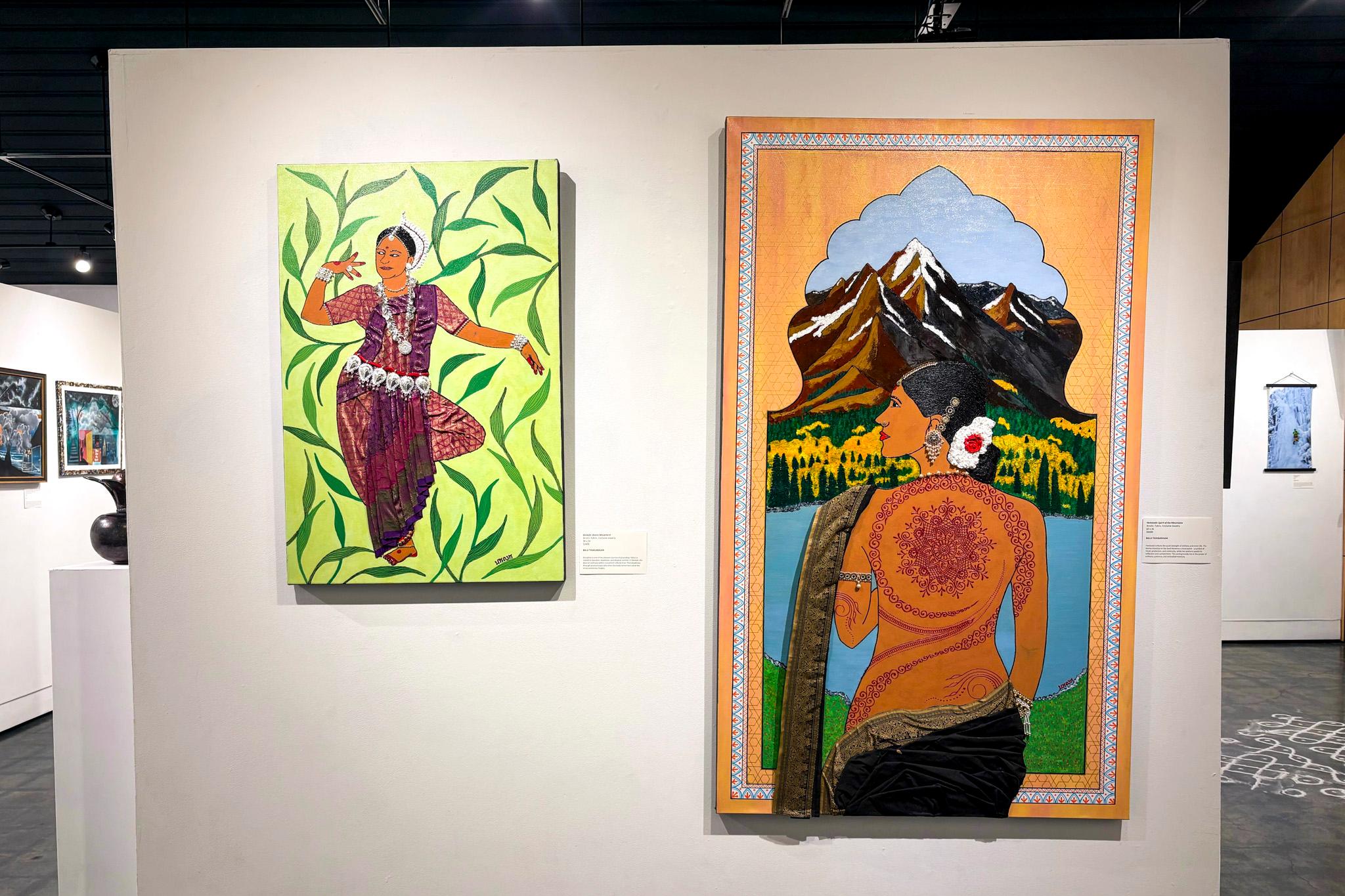
Thiagarajan also noted the invisible labor that artists of color have to do besides just producing work. She hopes the collective will help make that behind-the-scenes work easier.
“It's not just creating works that get shown somewhere,” she said. “We have to do the networking. We have to go talk to people, we have to build the spaces where the work can be seen. And so all of us are doing that work, and it gets exhausting, and finding those places where we actually feel like we belong.”
This Saturday is closing night of “Grounded,” and it will also be the one-year anniversary of the group. They have plans to show at the Alto Gallery in RiNo in April and at Boulder’s Bus Stop Gallery in May.
“We all would love to have our own spaces where we are not dependent on leases and paying rent and doing fundraising to maintain the overhead of the space,” Thiagarajan said. “But for me, as of now, we are just a collective. A group of artists coming together to show the works, trying to support each other, and do some professional development activities.”