
Sometime later this week, after they’ve completed their short program or free skate, Danny O’Shea and Ellie Kam will sit on a little bench in the Milano Ice Skating Arena in Milan, Italy, keeping as completely still as their jangling nerves will allow, and wait for the scores that will determine if they’ll win Olympic medals.
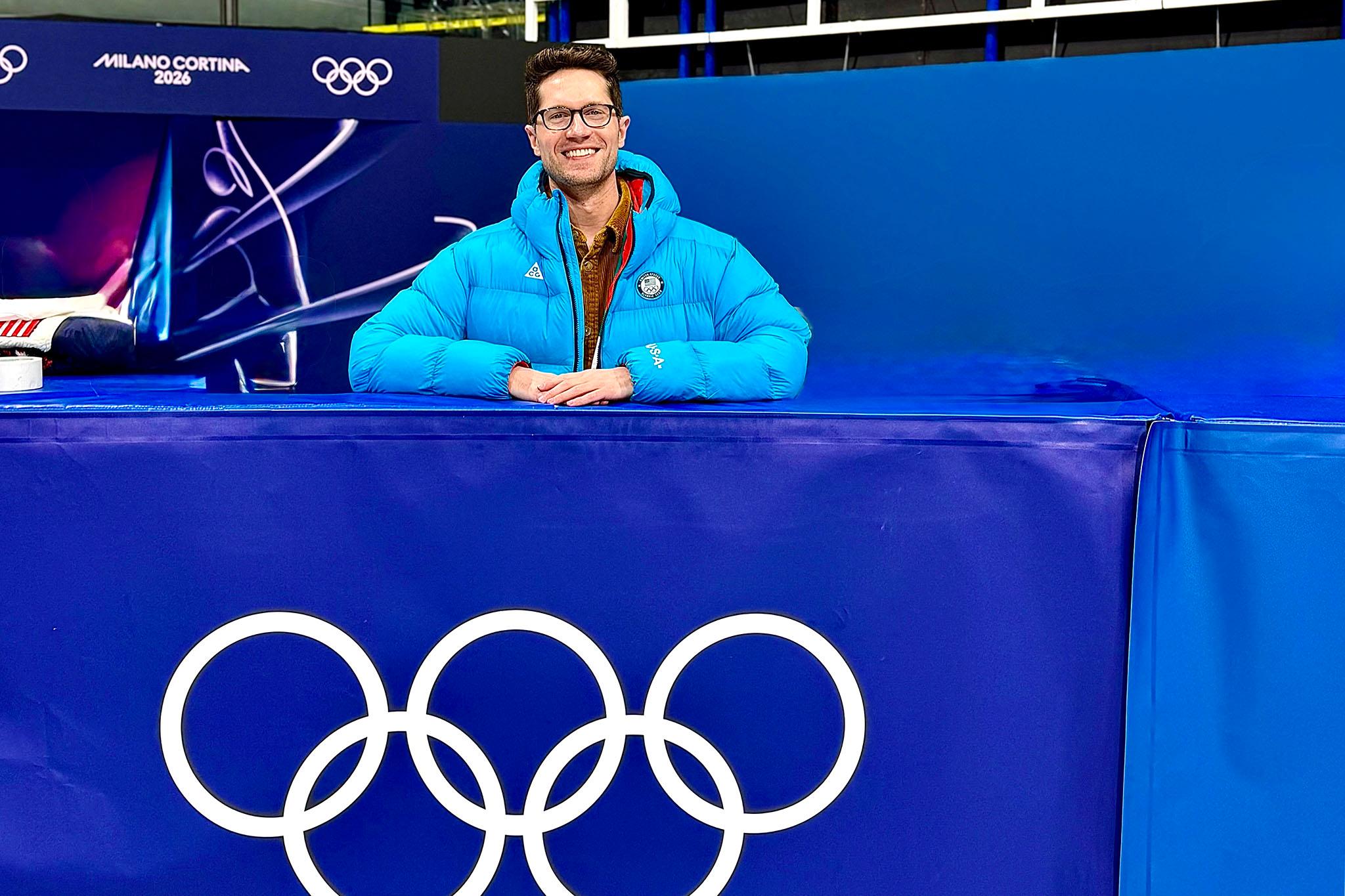
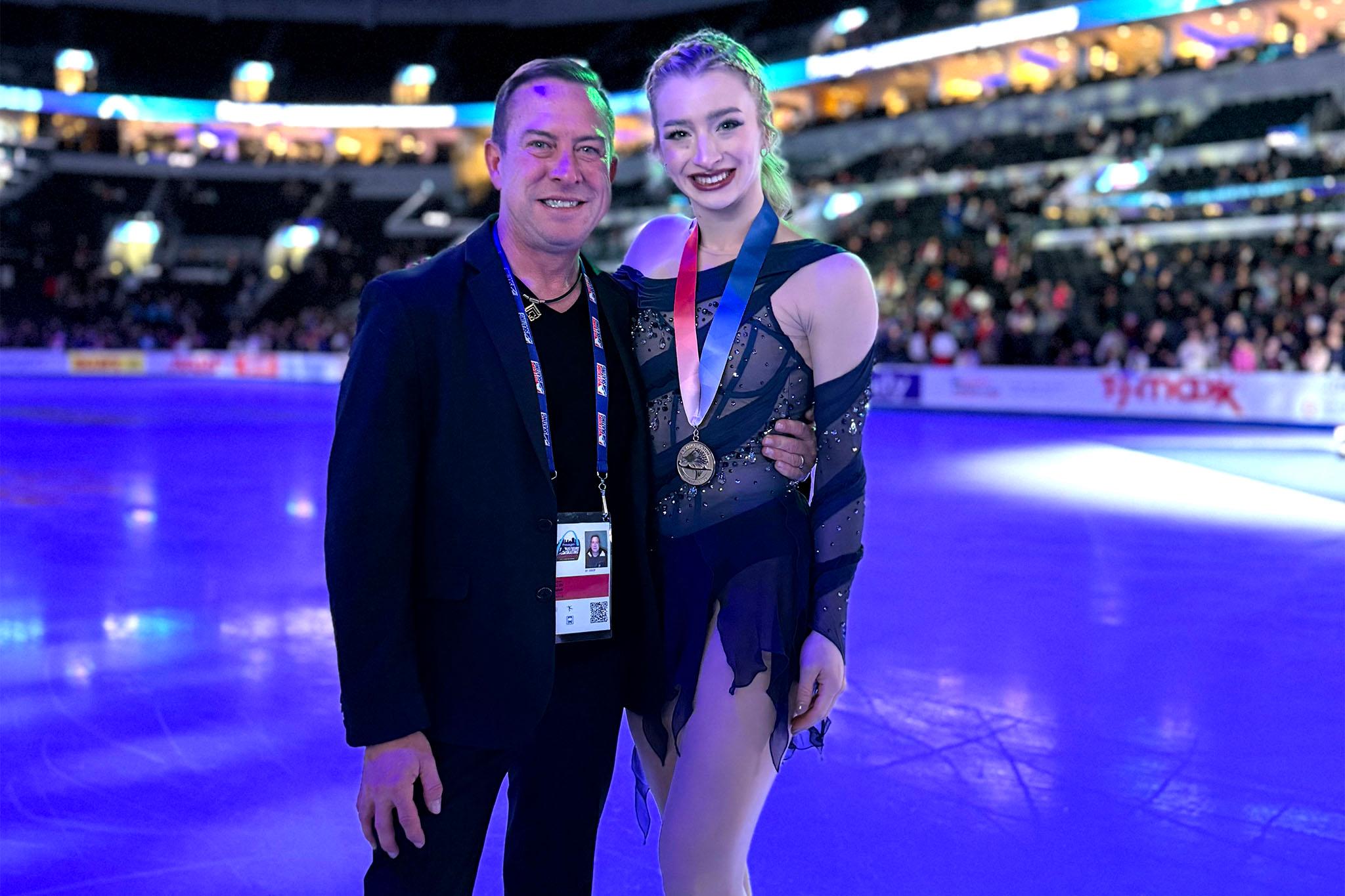
Chances are, Drew Meekins will be right there as well, straddling the worlds between coach and anxious father figure.
“As a great head coach, we have to take into account both sides of the sport: the art, and also the athleticism,“ Meekins said. “But beyond that, I’m really trying intentionally to spend my time with the people that I’m surrounded by in a way that’s meaningful and in a way that, I don’t know, has a bit of a greater purpose, if you will.”
“I don’t have kids. I don’t know if I will or not, but in a way I feel like my relationship with some of my athletes is a bit parental because I do kind of get to guide them through a lot of things that come up in life in a sense.”
If there was a sport that lends itself to “a lot of things coming up,” it might well be figure skating, where the competitors try to win over judges eyeballing every twitch and muscle spasm to register marks based on some mysterious combination of disciplined technique and subjective artistry. Based in Colorado, Meekins spoke with Colorado Matters about his work with O’Shea, a graduate of the University of Colorado Colorado Springs, and Kam, who’s currently a student at UCCS.
Meekins spoke of the many pieces that go into solving the puzzle that is Olympic competition — everything from costumes to choreography to the music that plays during performances are fair game.
“Most people would say (they choose) the music first, but in my case as a choreographer, sometimes it is actually the moves,” he said. “Because I work with Ellie and Danny as their technical coach as well, I kind of know their movement style to a degree that maybe most choreographers wouldn’t.
“And sometimes I see them do something, and that one move can inspire a whole program and guide me towards a direction or genre of music… I study their movements so closely every day, and so it’s like I have this sort of idea of how I can shape them and also, frankly, how I can't. And so that really will help me figure out which style of music will suit them well.”
Meekins was joined in the conversation by Damon Allen, who coaches Amber Glenn, regarded as a contender for a gold medal in Milan after recently winning a third consecutive U.S. national championship. During his time as a competitive figure skater, one of Allen’s coaches used to tell him, “Be the best when the best is needed.” That mantra serves him well with Glenn, whose path to the Games hasn’t always been as smooth as the glassy ice she skates on.
A little more than a decade ago, as a teenager, Glenn stepped away from the sport after a series of mental health challenges. Now that she’s back, Allen says keeping Glenn centered is a crucial aspect of his role as coach.
“After last season, we had to take a little step back and figure (some things) out,” he said. “She was 100 percent well-trained, doing clean programs every day, but then she would get to an event and make one mistake and kind of derail — we had to figure something different.
“And her sports psychologist gave us an idea of adding some neurotherapy into the whole aspect of it and trying to get her to find new techniques of how she can stay in her zone. And it literally has been a game changer for her; she’s got these breathing techniques, she’s got mental games that she works on every day and has really helped her see how to channel her anxiety into that zone.”
Indeed, things have gone so well that the pair can joke with each other about Glenn’s perfectionism.
“She’ll do a beautiful triple flip, triple toe, and she’ll come over to me and be like, ‘Yeah, but I didn’t really like how my feet were,’ Allen said. “But it was still amazing… so now we just call it the ‘Shut Up Amber’ moment. I use it with my other athletes too; when I look at them and they get picky about something, they’re like, ‘Oh, that’s right – shut up, Amber.’
“It’s become kind of a thing.”