Editor’s note: This story deals with issues of self-harm. Reader discretion advised.
In Idaho Springs, near where Interstate 70 climbs through the mountains, a few men shuffle into the Club Hotel.
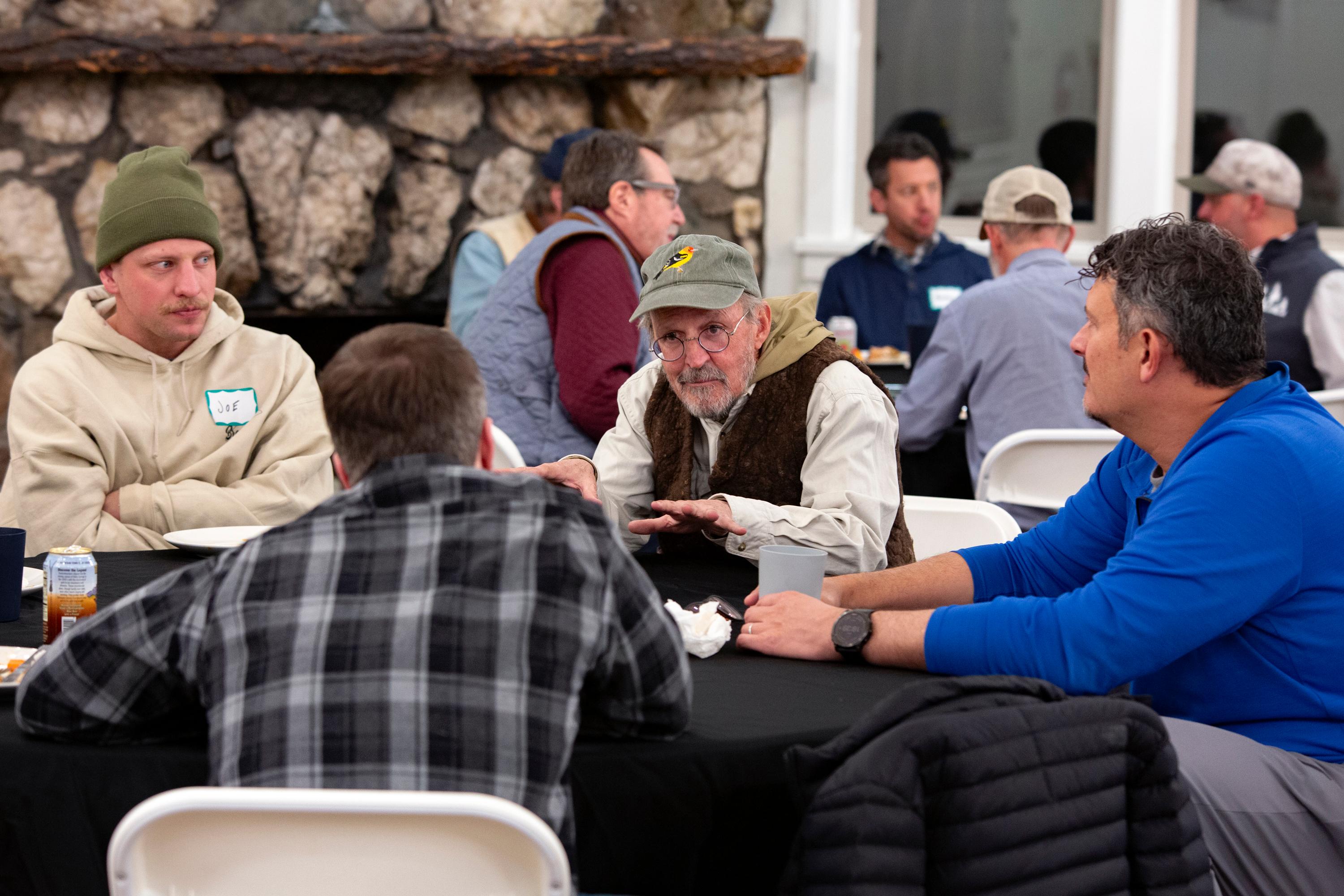
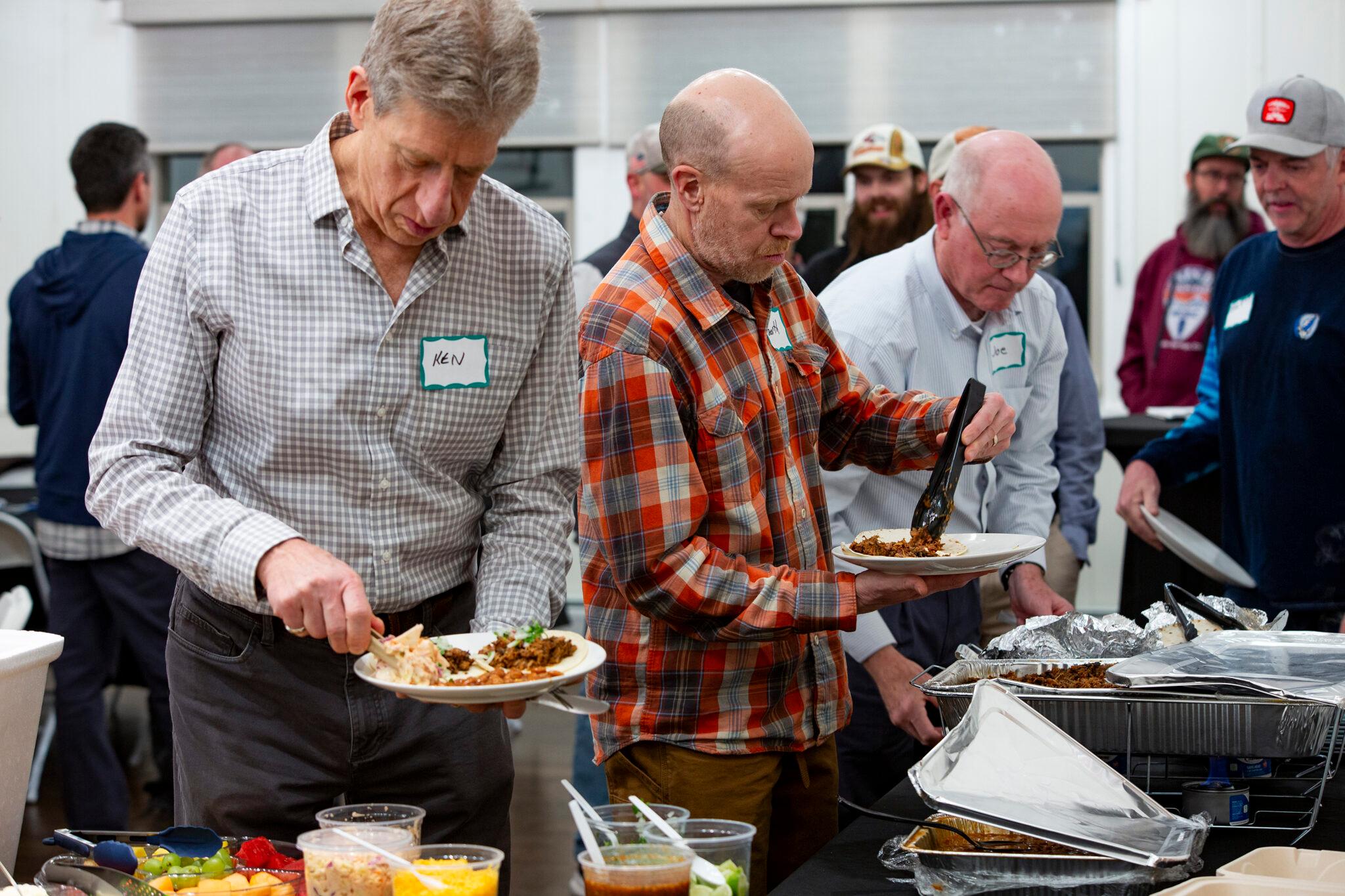
In a dining room with log beams, they set up some tables, as guys line up for dinner, supplied by Smokin’ Yards BBQ, a local restaurant.
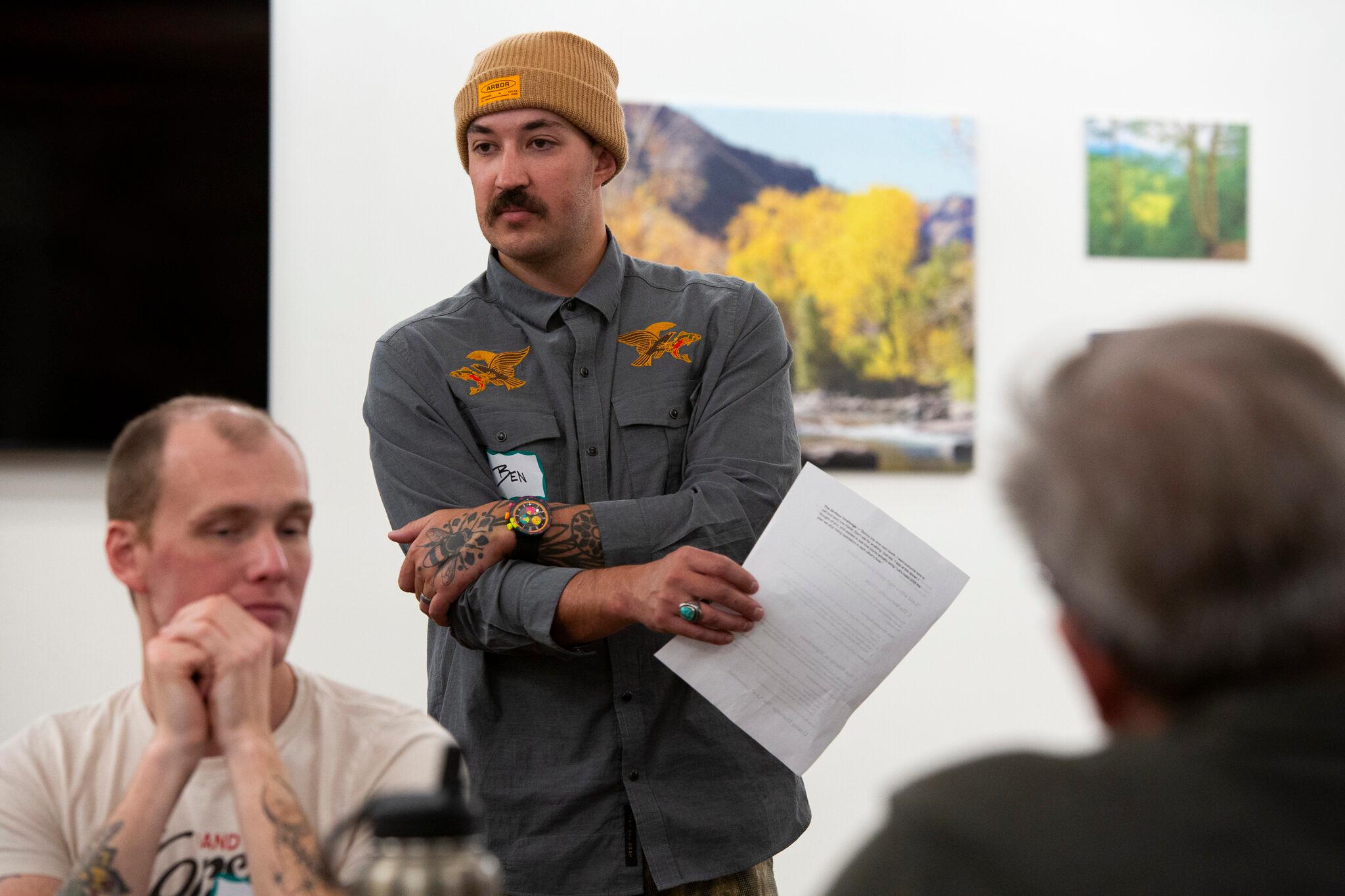
“I think dudes like barbecue,” said Ben Shay, a teacher at nearby Clear Creek High School. He is one of the organizers of this event — what they’re calling Dude Talk Dinners.
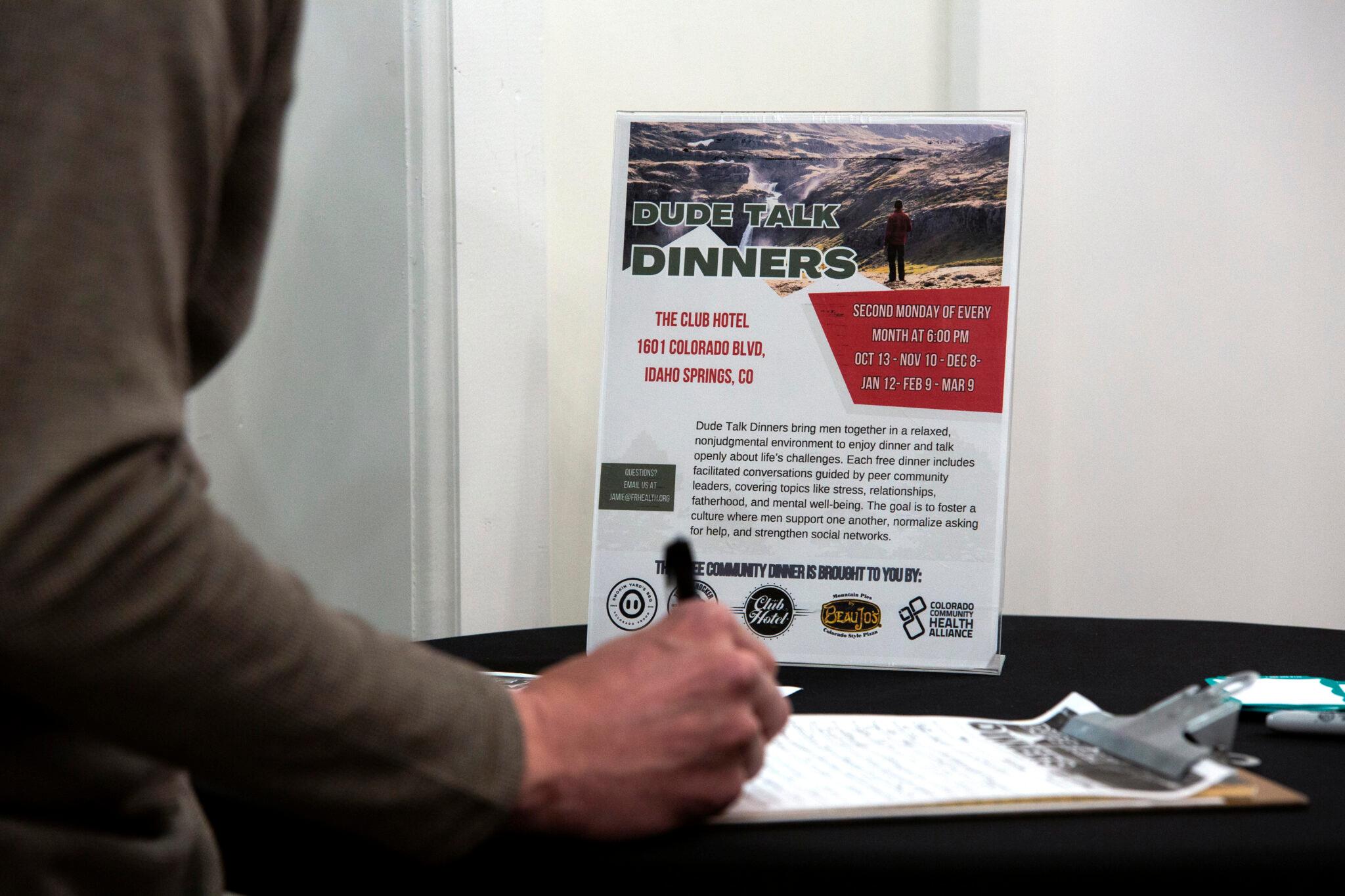
Since October, the second Monday of every month, they’ve been holding a free community dinner, to talk openly about life’s challenges, according to the flyer.
Shay said the idea is for men to simply bond over a meal somewhere other than online.
“Have conversations that aren't keyboard warriors,” he said, “and having conversations that feel really authentic and very human.”
The dinners sprang up first in Gunnison County, launched by a group called Brothers Helping Brothers, out of a desire by community and health leaders to find a collaborative, informal, nonjudgmental way to tackle social seclusion.
Men don't often seek help with mental health, Shay said, making them “more prone to addiction, self-harm, suicidal ideation, and suicide. And so that's especially true here in rural communities.”
The statistics tell a sobering story. Nationwide, men account for nearly 80 percent of all suicides, according to the federal Centers of Disease Control and Prevention. Colorado’s rate is almost that high.
Metro Coloroado counties, like Denver, El Paso, Adams, Arapahoe, Douglas, Jefferson, have the highest absolute numbers of deaths, but the highest rates of suicide are seen in rural, mountain, and southern regions of the state.
The risk in rural areas is even greater, organizers of the dinner said, due to isolation, stigma, and a lack of accessible mental health resources. Plus, studies show that men are less likely than women to seek mental health support. Many struggle in silence, they said.
Despite that, men made up the majority of callers to Colorado’s mental health crisis line in 2024, with most calls coming from people ages 26 to 39, according to a one-year analysis of the state’s new “988” line.
Culture of asking for help
The discussions at the dinners are guided by trained peer leaders who try to foster a culture where men support one another, normalize asking for help and strengthen their social networks.
Trevor Selkirk, wearing a green baseball cap, is here. He said he's traveled a rough road, addicted to drugs and alcohol before rehab and becoming a peer recovery coach.
“Eighty percent of suicides in a small town are men,” said Selkirk, who is also one of the organizers. He noted when you're young you go out to bars and party, but that can lead to addiction, drinking solo, isolating, not socializing.
“So things like this are great. So you just don't feel alone,” he said. “You're not stuck at home sitting, eating a TV dinner by yourself. And looking at all the people on TV have friends, but you don't have any.”
The men talk about jobs and dogs, fly fishing, guitar. And sports, of course. Before a big playoff football game, there’s lots of prognosticating about the Denver Broncos vs. Buffalo Bills.
Politics did not come up.
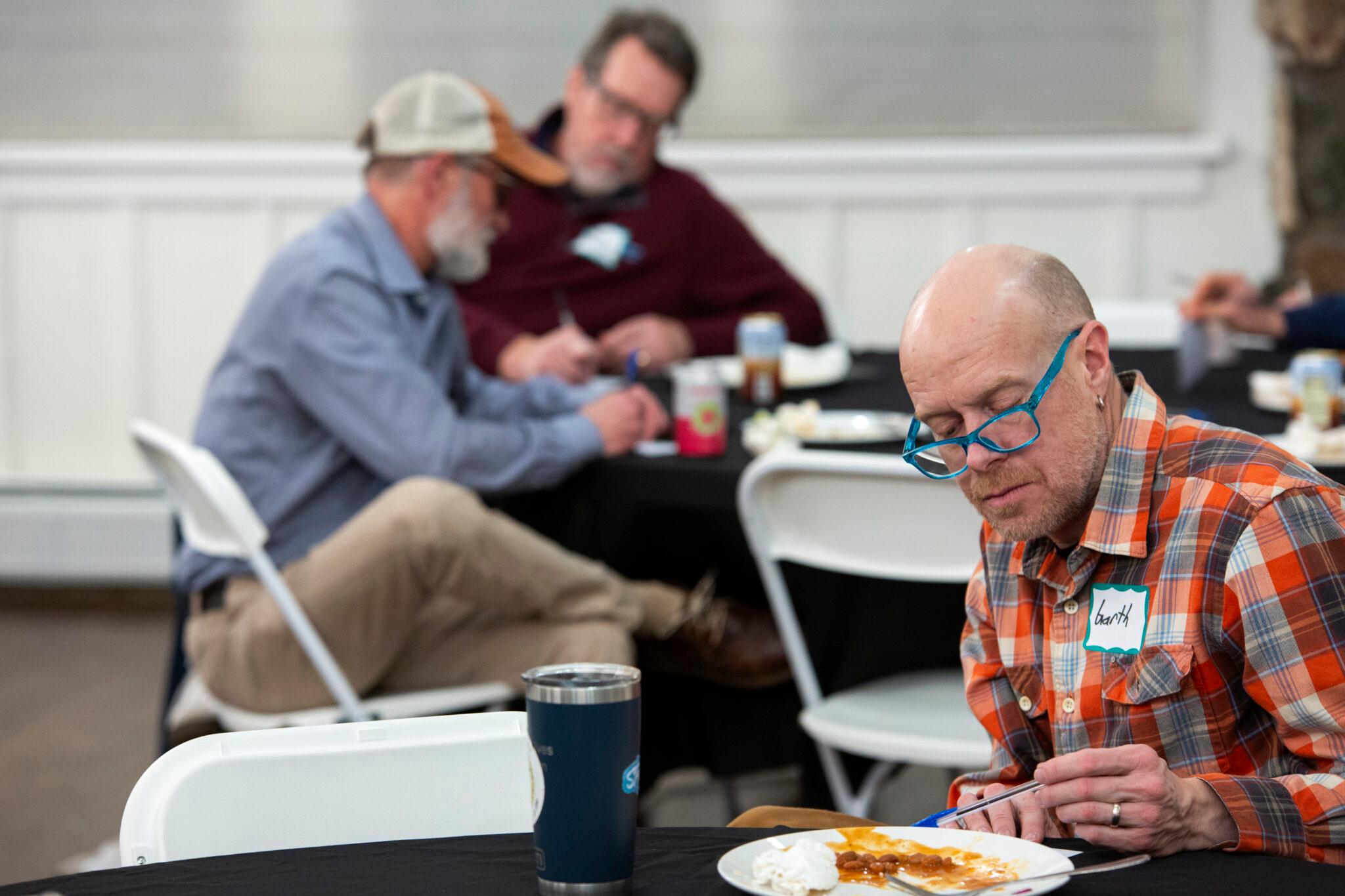
“We set up the conversation, I think, around topics that bring men together and are not really divisive,” said another organizer Andrew Wolff, who said he’s a career educator and nature-connected life coach. “So far it hasn't been an issue.”
As the men finished eating, Shay started moderating.
"This is just open for anything you have in your life,” he begins, offering prompts like “share a high and a low” or discuss mentoring experiences.
Questions get deeper
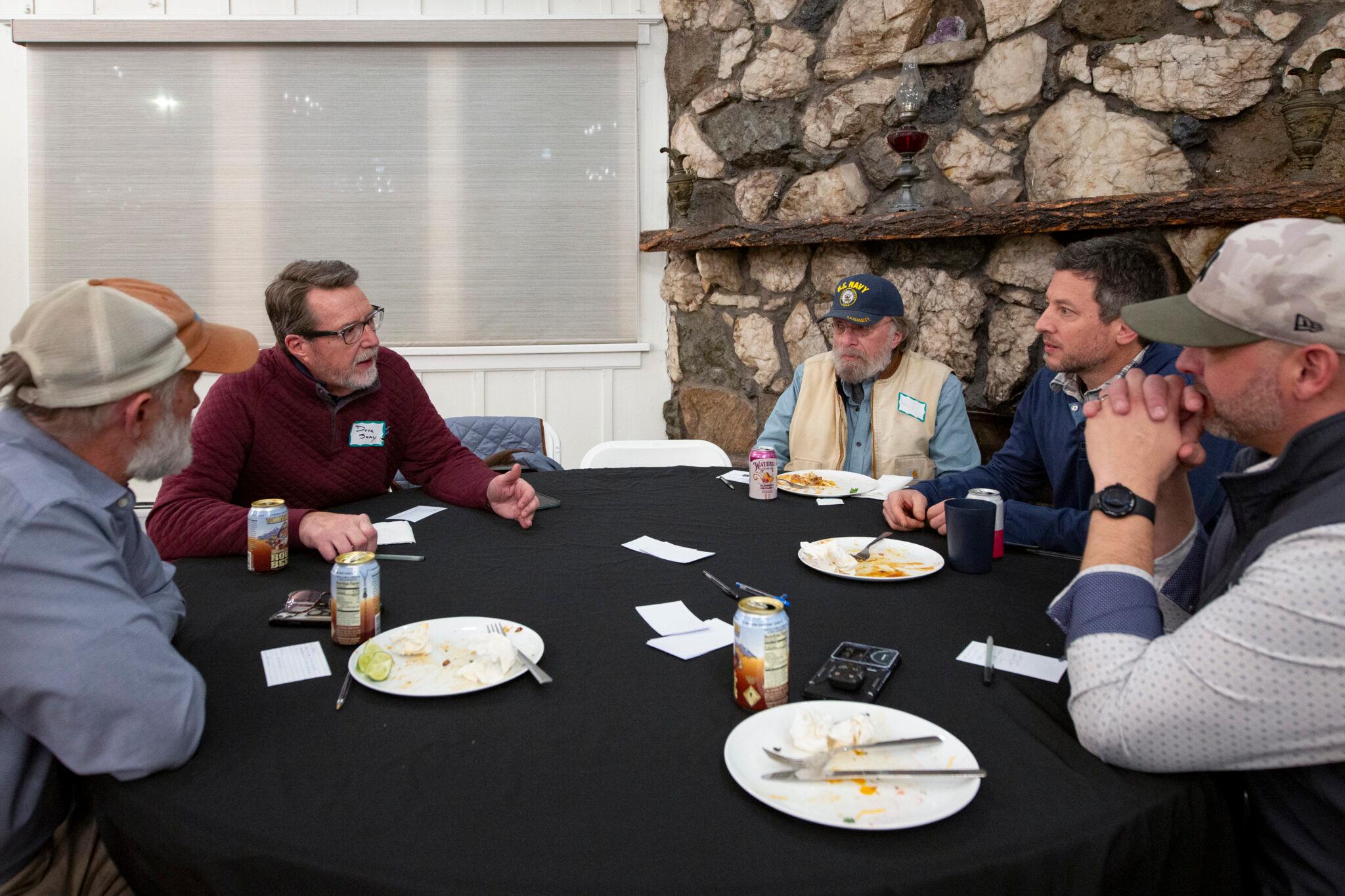
Eventually, things turned more serious. A man named Doug says he retired after a very active 45-year career.
“All of a sudden to call it done. You need to plan before that happens, to find purpose,” he said, noting he’s contemplating meditation to fend off depression and anxiety.
“Yeah, you can go to the gym three days a week, but the mental part is really critical. I think more needs to be done for men, because men don't want to admit that they have mental challenges,” Doug said, adding with a chuckle, “I’d also like to improve my golf game.”
Another man named Ken talked about providing support to a niece, a mom of two, who lost her 43-year-old husband to suicide.
“Supposedly, everybody was just like, no clue that anything was awry up until the moment he left work in tears with a pistol from home,” Ken said, as the others listened intently. “Walked into a park in Missouri. Took them a week to find him.”
Chris Gould, a retired high school principal, one of the organizers, said the group includes guys of all ages and backgrounds, but they wrestle with similar questions.
“They're talking about ‘how do I relate to my kids? How do I better understand the younger or older generation?’” Gould asked. “‘I have aging parents, I'm lost. How do I figure that out? You know, what's masculinity mean?’”
Mental health funding
Tim Ryan, director of Public and Environmental Health in Clear Creek County, said grassroots efforts like Dude Talk Dinners are critical in an era when public health funding is scarce.
The gatherings are providing mental health help without the money.
“It's about preventing things from happening, preventing depression from setting in, preventing suicidal ideations and thoughts, et cetera,” Ryan said. “The best way to do that is here in community, sharing a meal with others, knowing that you're not the only person who feels like that, or knowing you're not the only person who's going through whatever it is you're going through.”
Local businesses are stepping up to help.
The Club Hotel has given the group free use of their event space for the dinners, plus utensils/flatware, tables, chairs and staff help. Besides Smokin’ Yard’s BBQ, Beau Jo’s has provided pizza and Tommyknocker Brewery & Pub has provided root beer.
Meeting some good people
As things winded down, the group cleared the tables, as some grabbed leftover barbecue to take home.
A pair of military veterans lingered and continued their discussion. They said they were glad they came and got to discuss real life.
“I think men have that wall up and that guard up naturally and, and sometimes it takes finding a commonality to kind of start to take that down,” said Ronnie DeManna. He’s a married dad of two daughters, a business banker and Marine veteran.
DeManna said the chitchat about hobbies, sports and football playoffs were good icebreakers.
“Then as soon as other people start pushing that line a little bit further and they open up a little bit more and they share something that exposes a little bit of vulnerability and they can go past that,” DeManna said. “The first thing that you start thinking is, ‘It's OK to start to share something that maybe makes myself look vulnerable.’ And then the next step goes a little bit further. I think it really feeds off of each other.”
Retiree Dennis Gimbel said he had met some good people that evening. Gimbel said he worked 40 years as an industrial electrician at the nearby Henderson molybdenum mine and is a Navy veteran.
“Being a veteran, I am in a brotherhood and first time meeting Ronnie, he's a Marine,” Gimbel said. “And I guess I'm learning what I'm gonna get out of this.”
Gimbel said he looked forward to the next event, in a month.
Clear Creek is one of four rural Colorado counties hosting Dude Talk Dinners, along with Gilpin, Park and Gunnison Counties.
Others are in the works in another four other locations: Buena Vista, Fairplay, Durango and Mesa County.
For more information, contact [email protected].
If you or someone you know is considering suicide or other acts of self-harm, please visit 988Colorado.com, or call or text 988 from your cell phone, for free, confidential, and immediate support.