President Donald Trump’s recent comments about nationalizing elections is just one more thing that Colorado’s beleaguered county clerks have to worry about.
In a podcast interview, the president told former Deputy FBI Director Dan Bongino “the Republicans ought to nationalize the voting.”
“The Republicans should say, we want to take over, we should take over the voting in at least many 15 places,” Trump said.
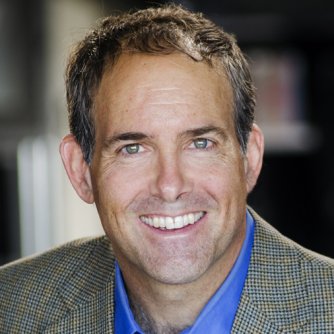
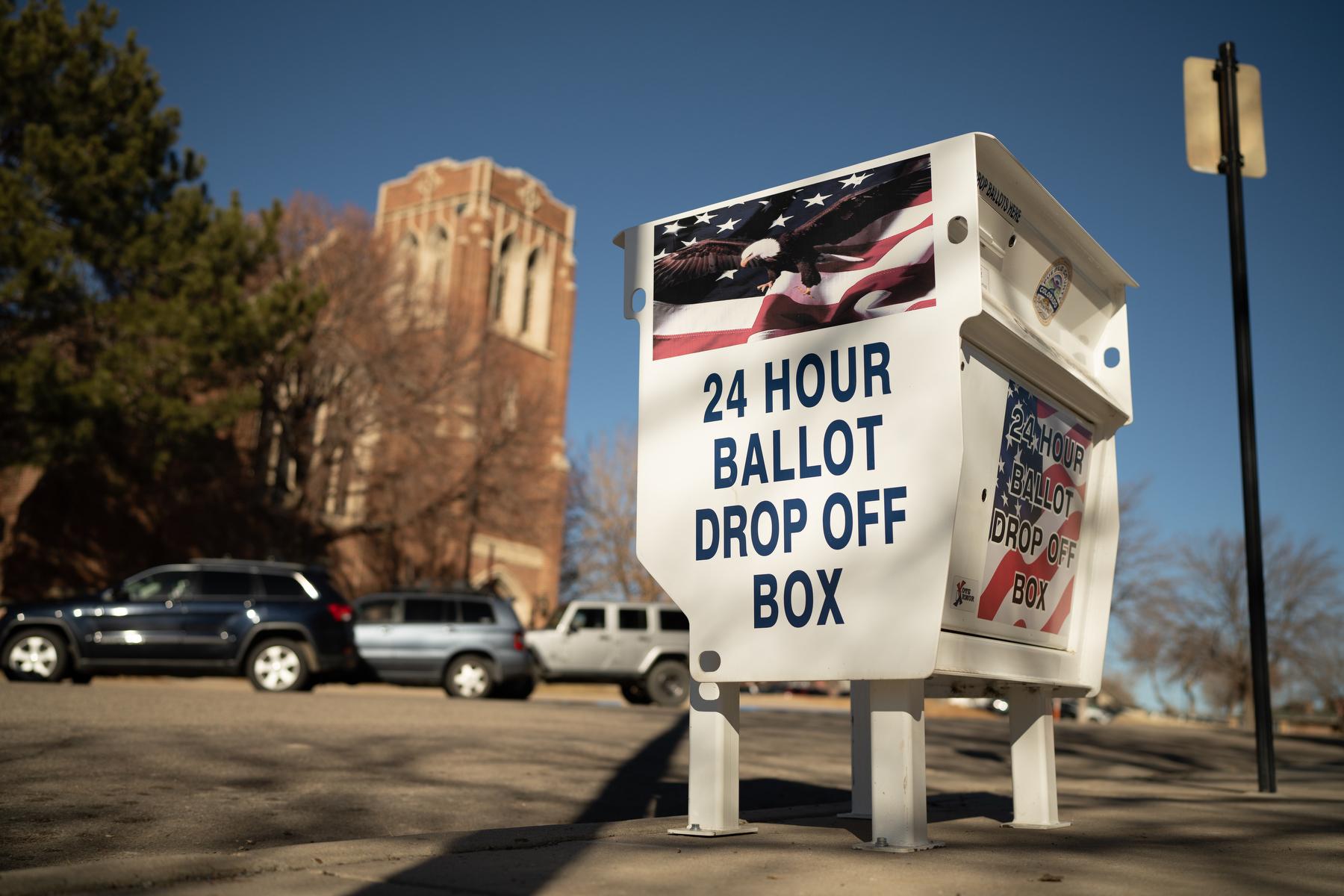
In the past, Trump has also criticized Colorado’s mail-in voting system. Matt Crane, a former Republican County Clerk who now heads the Colorado County Clerks Association, says much of what the president is asking for is unconstitutional.
“That Constitution's a pesky thing,” Crane told Colorado Matters Senior Host Ryan Warner. “And what's really concerning to me as a Republican, as we've always said: We need to live by the Constitution and we believe in states' rights and government power coming from the states and going up to the federal government, not the other way around. So there's a lot to be concerned about there.”
Just this week, Axios Denver reported that Colorado election officials have been leaving their jobs at a high rate over the past five years.
Crane spoke with Colorado Matters about the President’s comments, threats to election workers and Congressional action aimed at election law.
This interview has been edited for length and clarity
Ryan Warner: You heard the president calling into a podcast hosted by his former FBI deputy director. What's your level of concern with what we just heard?
Matt Crane: Well, I think we have a lot of concern about it. First of all, the president has said he is going to do executive orders, that kind of thing, which are wholly unconstitutional to change how we do our elections. That Constitution's a pesky thing. And what's really concerning to me as a Republican, as we've always said: We need to live by the Constitution and we believe in states' rights and government power coming from the states and going up to the federal government, not the other way around. So there's a lot to be concerned about there.
Warner: And just underscoring that the Constitution primarily gives this power to the states and then says if the federal government's going to change stuff, it's Congress, not the executive branch, just to underscore, but continue.
Crane: That's right. So there's a bill in Congress called Make Elections Great Again that would try to go to one-day voting, severely limit absentee balloting, strong photo ID requirements there, that's a more appropriate place to have that debate. And if it goes there, then we will be heavily engaged in that debate because ultimately this should be a state decision, how we run our elections.
Warner: Do you operate from the idea that Colorado is on the president's radar when he says things like we should take over voting in 15 places?
Crane: Yes, I do believe that in large part because of the Tina Peters Mesa County affair, which he continues to opine on, unfortunately, and get just about everything wrong when he does speak about that. So I think it's a mix. One, Colorado was a blue state, and then you have Tina Peters on top of that, and I think we're squarely in his aim.
Warner: This is the former Mesa County clerk who's imprisoned in Pueblo. Was her sentence related to her official duties too harsh?
Crane: Well, there's been a lot of debate about that. She was sentenced to, I think, less than half of what she could have been sentenced for, and I was there that day to testify at her sentencing hearing, so I had a chance to hear everything that the judge said. She had been very dismissive of judge orders throughout the trial. She was unapologetic. She actually kind of got into a back-and-forth with the judge during the sentencing period. She was unapologetic, admitted no wrongdoing, and I think all of those things led the judge to give her what was a little bit harsher penalty than she might've gotten otherwise.
Warner: I want to go back to this matter of state versus federal control of elections. Why is it important that states have jurisdiction? I mean, in addition to it being spelled out in the Constitution, what are the benefits of that?
Crane: Well, first of all, having different election models in different states is actually security enhancement for our elections. If everyone did everything the same with all of the same equipment, with all of the same materials, it would be much easier for nefarious actors to do something across state lines all across the country. So the fact that we have a model that's different from Utah or that's different from Kansas or Florida, that's actually good for our election security.
Warner: Would you say that is the case as well among and between counties?
Crane: Yes. Although not as much. I think inside a state, it makes sense to have a little more uniformity.
Warner: A little more uniformity.
Crane: Yes, a hundred percent. But the other thing too is that I think is really important: Florida, after 2000, our colleagues and friends in Florida do an amazing job running elections. They're in-person with early voting and some absentee balloting. Here in Colorado, we do an amazing job running elections and we're all mail ballot delivery still with robust in-person voting opportunities. But what's important, and what I think people forget is that we developed our model based on voter behavior.
In 1998, we went to no-excuse absentee voting. In 2005, we went to permanent mail-in voting, which means that if you wanted to vote by absentee ballot in all elections, you could sign up on a list and then in perpetuity you would be able to vote that way unless you changed it. By the time 2013 came with House Bill 1303, when we moved to all mail ballot delivery, well over 70 percent of Colorado voters had chosen to get a mail ballot in perpetuity. We were responding to what citizens wanted. And that's what's great about leaving this power, these decisions, at the state level because we can respond and build a model based on what Coloradans want. And it's still very popular today despite a lot of the disinformation and false narratives out there. Well over 90 percent of both Republicans and Democrats vote by mail.
Warner: After Trump's remarks. His press secretary seemed to amend his comments saying that they were about voter ID. So there's this bill in Congress, the SAVE Act (Safeguard American Voter Eligibility) that would require proof of citizenship to register to vote. Matt, do non-citizens vote in Colorado's elections?
Crane: If they do, it's extremely rare. What we have found is that there may be a time when, through a voter registration drive or something like that, a non-citizen ends up registering to vote and they don't want to be registered to vote because they don't want to do anything that's going to impact their being here or their ability to have a path towards citizenship if there is one. And so there's not this rush of non-citizens to get on the voter rolls. That's just not true. There is no data to support that.
Warner: And so if someone erroneously is registered or walks through the door at the early stage, are there safeguards in place between that and when they would cast a ballot?
Crane: Well, if somebody gets registered, then they'll be mailed a ballot in advance. But what we have a lot of times is if somebody realizes they are registered, we'll hear from an attorney or hear from them directly, “take me off the list.” The other thing we do too here in Colorado, and a lot of states do this across the country, we run our voter registration list against the Federal SAVE database trying to get immigration information about people who are registered so that we can make sure that it's only eligible citizens who are on our voter registration list.
Warner: In which case you would do the kicking off.
Crane: A hundred percent.
Warner: Does any part of you believe that these are good faith efforts to make for better election systems?
Crane: I think that for some people who don't know and all they hear are those false narratives coming from the president and some of the grifters who have really seized on the opportunity to scare people for votes and money, I think, well, we have concerns and why wouldn't we want proof of citizenship? Why don't we want these things?
I do think there's a lot of people out there who just want to improve things. But for the people that are driving this, I certainly don't think that President Trump is coming from a place of fact when he talks about elections. And that was obvious the way he talks about Mesa County or the way he talks about what happened in 2020. And I don't think people around him, they're either ignoring it or being willfully ignorant or just doing it to curry favor with the president. All three are bad and dangerous to democracy in our elections, but I'm very cynical about those in power right now when they talk about elections.
Warner: You mentioned 2020. It seems that the president is still trying to prove that the election was stolen from him. It was not. The FBI raided a Georgia election office last week. Are you preparing clerks here for a similar knock on the door?
Crane: We do talk a lot about what's happening in other parts of the country, and so we do have clerks working with their county attorneys. We encourage them to work with their county attorneys, with the Secretary of State's office, with their district attorneys, the whole legal apparatus, just to be sure. Before 2020, I would've said, we don't need to worry about that. But now, in these times, we can't summarily dismiss anything and we have to prepare for everything.
Warner: So you can imagine that the relationship right now between county clerks and county attorneys is pretty close.
Crane: Yes.
Warner: I can't help but notice that the three cities the president cited — Atlanta, Philly, Detroit — have some of the country's largest Black populations. And I'm reminded of an interview I did with Carol Anderson, author of “One Person, No Vote” who finds that the history of voter suppression is often couched as protecting the vote.
Crane: That's exactly right. And I think that's one of the things to be concerned about here. When you have people who say, and we have people here in Colorado who say, “We should go back to one day voting, get rid of mail ballots,” it’s not just coming from the president. But I do think that a part of that, at least for some people, is the idea that they know that people will turn out less. You will see voter suppression happening, and there are some people who I firmly believe think the only way they can win elections is if that happens, which is disgusting. People fought and died for this right Ryan. So the fact that we have people who are trying to undermine our elections like this and suppress voter turnout is completely un-American.
Warner: We're nine months from the midterms, important races before that in primaries. What beyond the ordinary are clerks preparing for in the last few moments?
Crane: Well, we're focused on a lot of different things. One, what happens if there is an executive order or some federal law that comes in and tries to change things before the midterms? There's some concern right now about, does ICE go to the polling places as a way to intimidate voters, that kind of thing.
So we're worried about all of these things, which is a lot because running elections is not an easy job. It's very complicated. There's a lot that goes to it. We work on this every day, every year to try to get better, both in terms of access and integrity. And so all of these things coming on top of it make what's already a complicated environment even more. It makes it more complicated and quite frankly, dangerous because people hear things and then they will threaten clerks. Remember, we had an election office firebombed in 2025, here in Colorado, Archuleta County. And so these things have moved from threats to actual violence. So it's very concerning and we're doing our best to prepare for all of it the best we can.