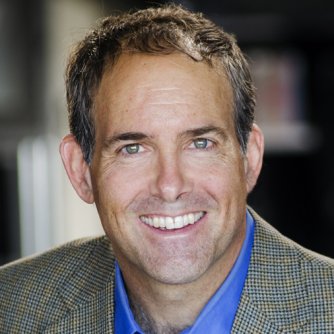
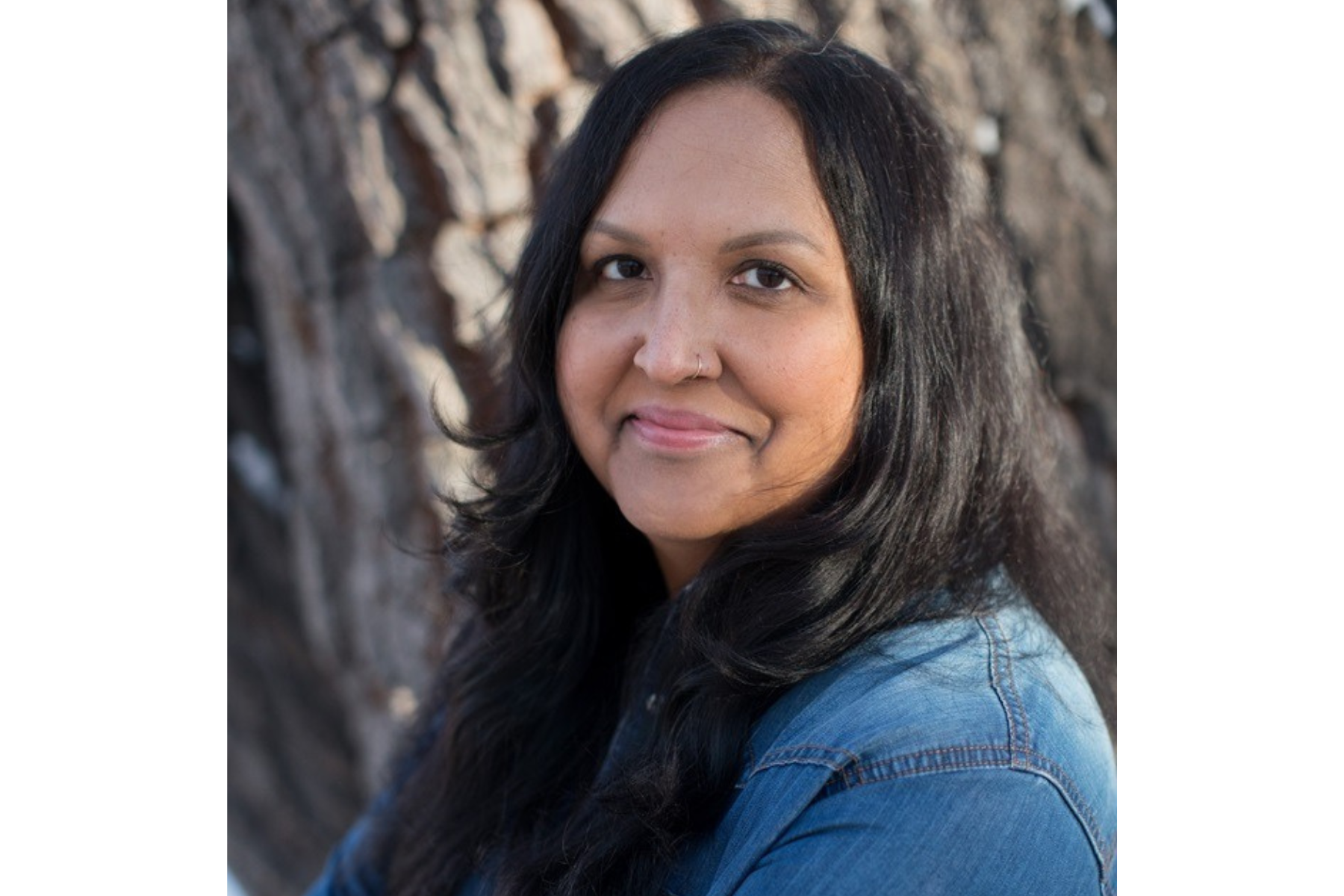
Today, we “Raise the Curtain” on local playwright Nina McConigley. The Fort Collins author has been busy this year with a new novel, a forthcoming book of essays, earning tenure, and more. Read and listen to more from our series highlighting Colorado’s vibrant theatre scene here.
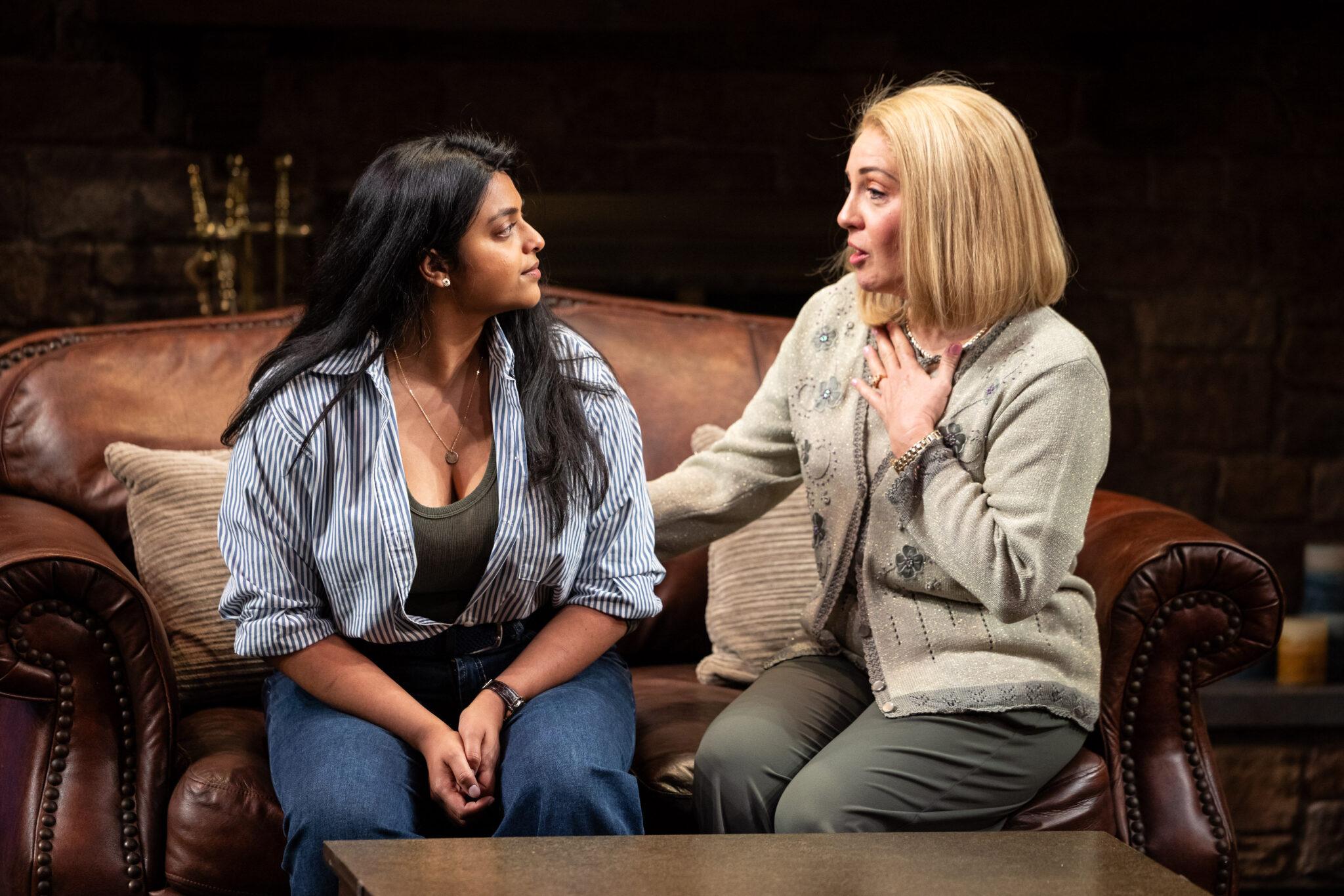
McConigley just celebrated the world premiere of her new play “Cowboys and East Indians” underway at the Denver Center for the Performing Arts. She co-wrote the play based on her book of the same name with Wyoming playwright Matthew Spangler, known for his adaptation of “The Kite Runner” from novel to the stage.
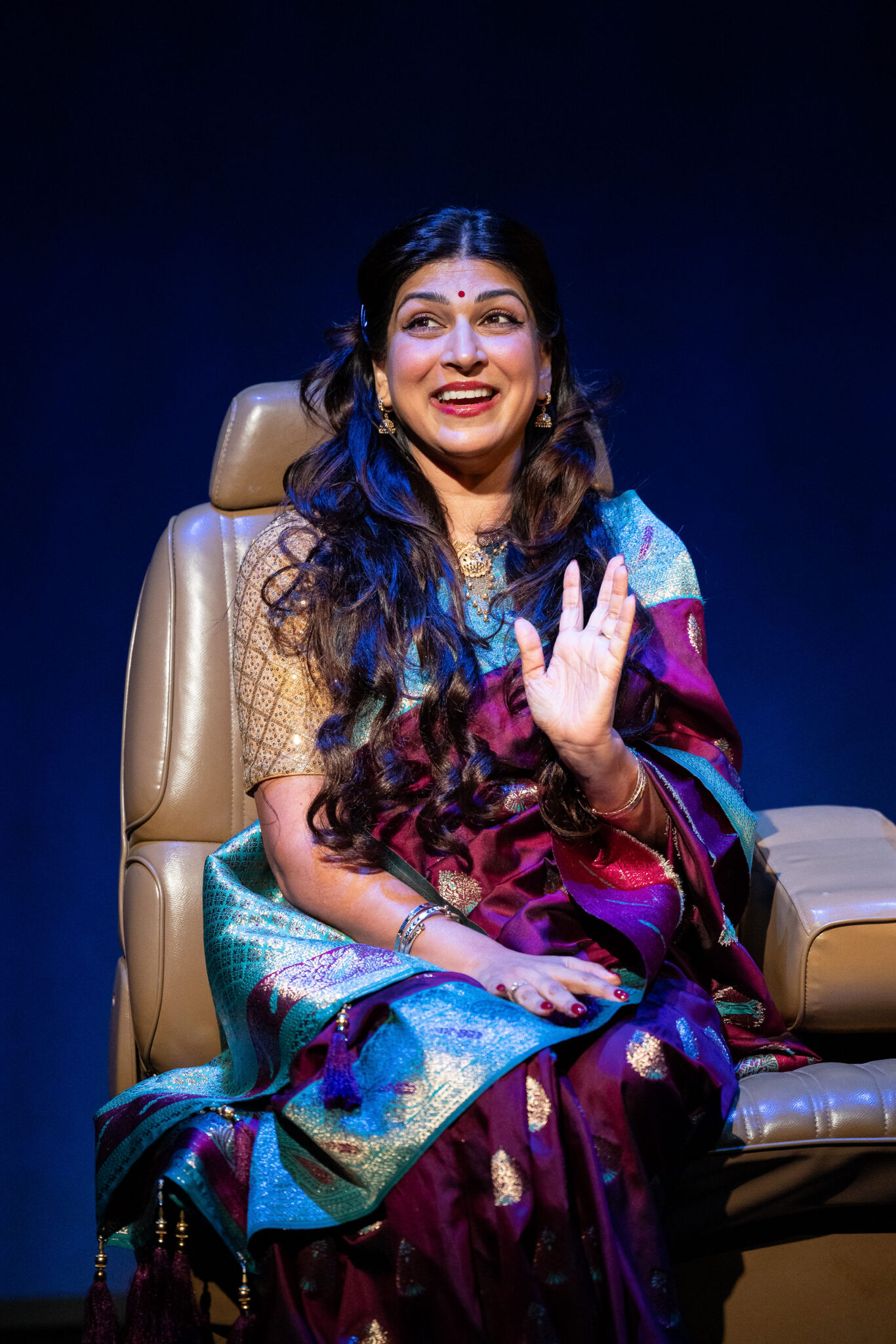
“Cowboys and East Indians” is set in Casper and revolves around the family of Lakshmi Sen, who often has to explain herself as an Indian immigrant living in Wyoming. The story delves into masculinity and the rural immigrant experience in the West, cultural collision, and what it means to be “a good Indian daughter.”
The following are highlights from our conversation. Moments have been edited for clarity on the page.
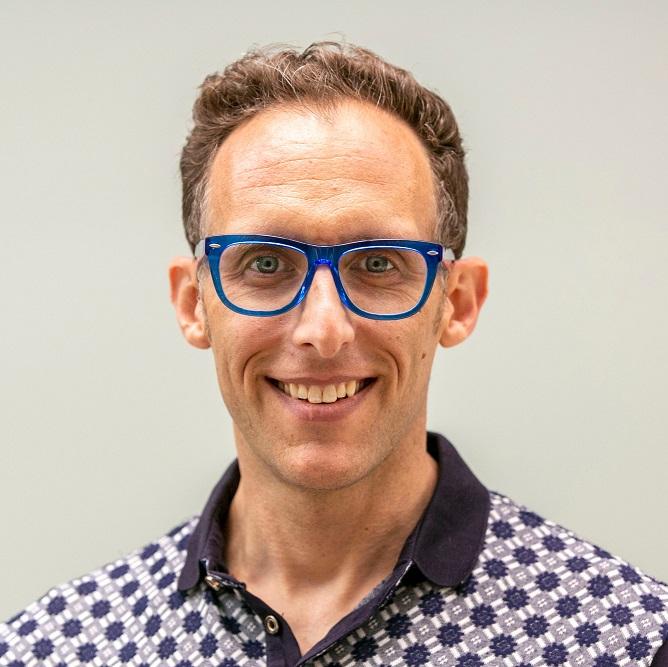
Ryan Warner: A refrain we hear is you must be two things at once. What does that mean to you?
Nina McConigley: Growing up in Casper, I felt that very deeply. We moved to Wyoming. My dad was a petroleum geologist when I was 10 months old. So for me, I've only known Wyoming, but we moved from Singapore.
Wyoming has always been my home, but I do walk into almost every room in Wyoming, and I never see a reflection of myself. I never see other Indians. I didn't grow up knowing other Indians. We drove to Denver to get our groceries, to have Indian food. So I kind of learned pretty quickly as a kid that, yeah, I'm Indian, but I'm also pretty Wyoming.
That sense of displacement, I think, followed me into my adulthood, which is probably why I wrote the book.
Warner: Do you remember saying, “Not that kind of Indian?”
McConigley: I look back on my growing up in the 80s and we would go to Fort Casper quite a bit and dress up.
I always, of course, dressed as an (American) Indian. Now I look back and cringe a bit when I see photos, but there was a brief moment when I was younger that I would just say I was Arapaho — which I don't even know what I was thinking.
I just thought it was easier to explain because when I'd say India, no one really knew what that meant. I just wanted to belong to something and I thought at least that makes me belong in a funny sort of way.
Warner: That's a really vulnerable thing to admit.
McConigley: Yeah. I mean, I look back and I kind of cringe a little bit. But also, I wanted a group; I wanted other people. And most kids feel that way.
It just felt very hard sometimes growing up in Wyoming.
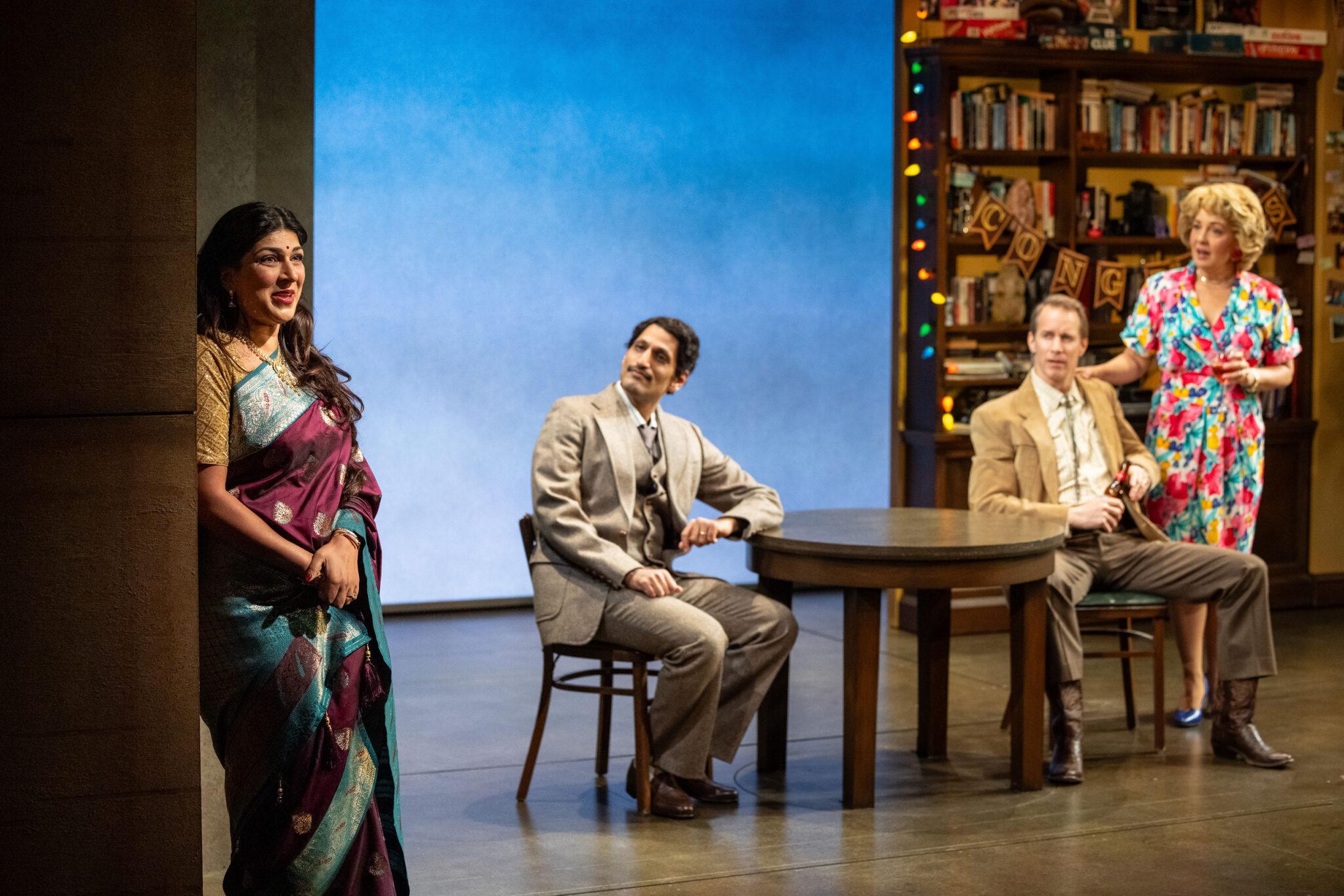
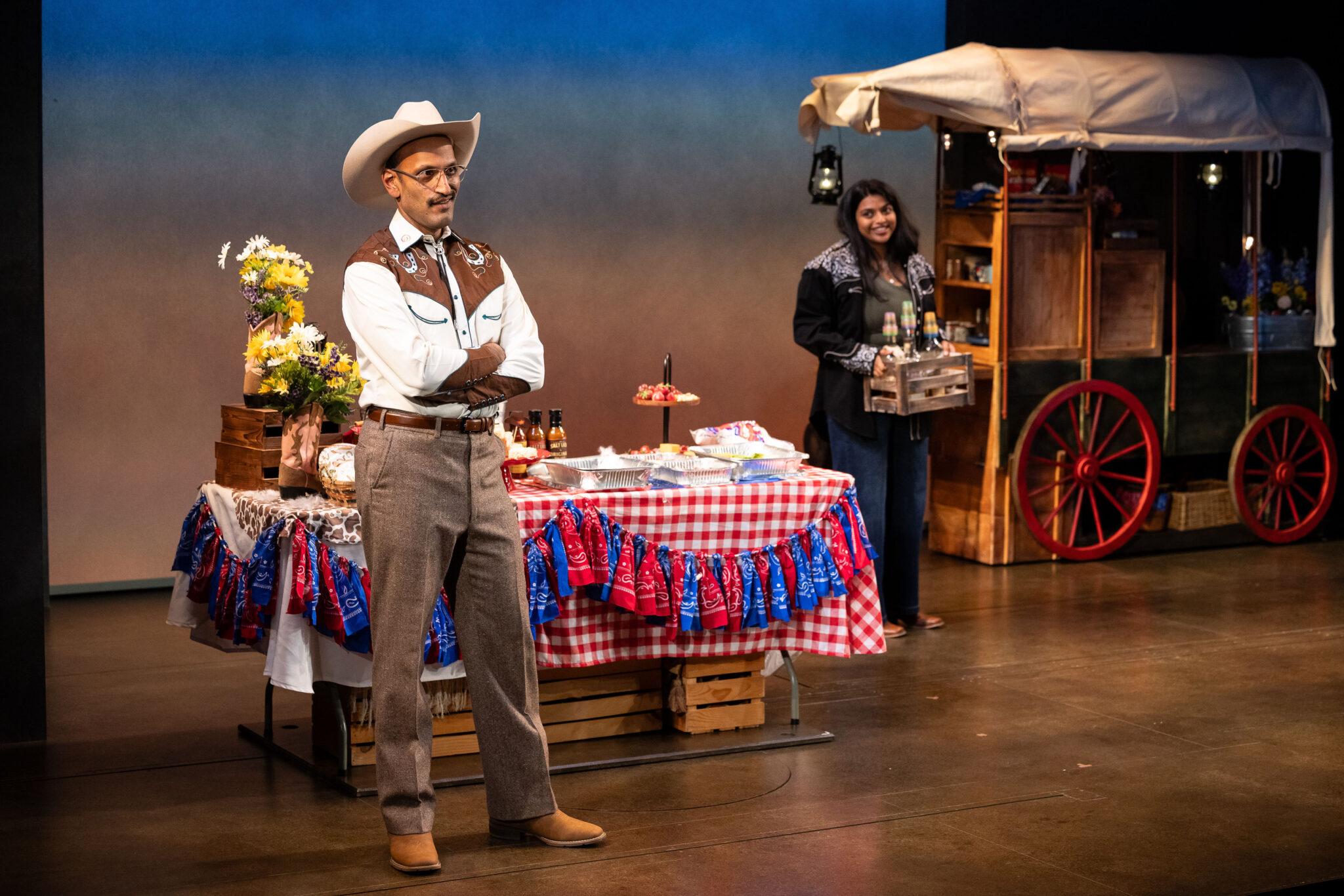
Warner: There's something so lovely about the ensemble (on stage) of saree’s and cowboy boots — or saree’s and snap buttons.
McConigley: There is, but that's been my growing up. I definitely wore cowboy boots. To be fair, I probably dress a lot more Western. I don't wear sarees very often. I'm not going to lie, with the Wyoming wind, (they are) a little impractical and here in Colorado, (they’re) not the warmest. So I don't even wear them that often. But I love the contrast on stage — the colors and the cowboy boots are really pretty fantastic.
Warner: The concept of home is core to “Cowboys and East Indians.” Lakshmi has never been to India. She asks herself, “What is home? Is home a place you have to the have gone?” Let me ask that of you: Is home a place you have to have been?
McConigley: I don't know because both my parents are immigrants. I'm biracial. My dad grew up in Ireland. My mom grew up in India. And we didn't go to those places.
I didn't go to India until I was in my twenties. It was always something my mom talked about and evoked a lot in our home. I felt like we knew it through food. I felt like we knew it through occasionally wearing sarees and the way my mom told stories.
But to me, Wyoming does feel like home, and now Colorado feels like home. We moved here almost four years ago, and I do think of Colorado as my second state just because we grew up going to Denver almost once a month.
I think of the West as my home.
I love to think of myself as a more urban person, but I really love living somewhere where I can see a horizon — the mountains and open space.
Even though that maybe does come at a cost. I don't often always see people that look like me, but for me.
Perhaps home is more rooted in landscape and place the older I get.
Warner: You indeed wrote this collection of short stories, cowboys and East Indians, and I think of that as maybe a more solitary affair than a stage production, which is such a team effort. How was it to share creative control?
McConigley: It was actually really fun. I mean, we're not actors. I wasn't a theater kid in high school, so I kind of missed out on all that. And it's really fun to sit in a room and read out loud and rewrite scenes and then the magic of having actors and set designers and music and lighting — and you see how all of that tells a story. It's just fascinating because I'm not used to that at all. I'm used to writing a story, seeing it in a book or magazine and that's it.
Warner: Without giving much of anything away, I want to know if you believe in interventionist, ghosts. Do the dead influence the living?
McConigley: I think they do.
I think for me in two ways, I think being Asian and Indian. I believe very much in my ancestors and thinking about ancestors when telling stories, especially since so much of my work is influenced by colonialism and post-colonialism.
I was thinking a lot about Wyoming and what it means to be from Wyoming and how masculinity is performed in the American West.
I went to school with Matt Shepherd and we were actually in church youth group together. We were a year apart. We were both torch bearers.
I think a lot about how rural places can be really hard for kids that are different. And that's something that I think I carry with me in my writing.
And I was definitely thinking of Matt when I wrote one of the short stories that the play is based on. I wanted to explore issues of identity and what it means to be just a little bit different in a state like Wyoming.
Warner: Matthew Shepherd, who was tortured, tied and left for dead outside of Laramie.
McConigley: When he died, his mom had wanted everybody from our church to come to the funeral, because that was people she knew.
I drove my mom there, and I will never forget that day because it was the first time I'd ever seen the Westboro Baptist Church people. They really terrified me.
It was dumping snow, and I dropped my mom off — and I just ended up parking and waiting for her.
I didn't go in because I was kind of scared of them.
The thing I think about Matt the most is that we had a church lock-in — you spend the night in the church all night.
I just remember at 1 a.m. a group of us got the brilliant idea to go eat a bunch of communion. We thought that was funny.
And I just remember Matt wouldn't do it. We were all standing there at the altar, and he didn't do it.
He was a good kid.
He was actually in plays with my sister. They played brother and sister in a local production.
And when the Laramie project premiered at the Denver Center, that was when I realized the Denver Center was sort of interested in telling these non-traditional stories of the American West.
They have a history of telling stories from the West that are not the stories we have maybe come to expect of the Marlboro man or cowboy myths.
Warner: Is there a predominating feeling you want people to leave with when they see “Cowboys and East Indians?”
McConigley: When I went to a lot of book clubs when Cowboys came out as a book, I did a lot of book clubs around Wyoming and in rural places. And a lot of people told me, I've never thought about race in Wyoming. And I thought, “That's because you haven't had to,” right? It's a privileged position to not do that.
And I have had to think about it. I've had to grow up thinking about it all the time. And there are many of us that — through our sexuality, through our race, through all the things — we've had to think about hard things.
I think I want the play to ask people to walk around in somebody else's shoes, to think about what it is like to be different in a rural space and what it's like to be an immigrant in a rural space.
I hope people walk out of the play with a little bit of empathy and a little bit of kindness and just thinking about the ways that people make do in the places that they have learned to call home.
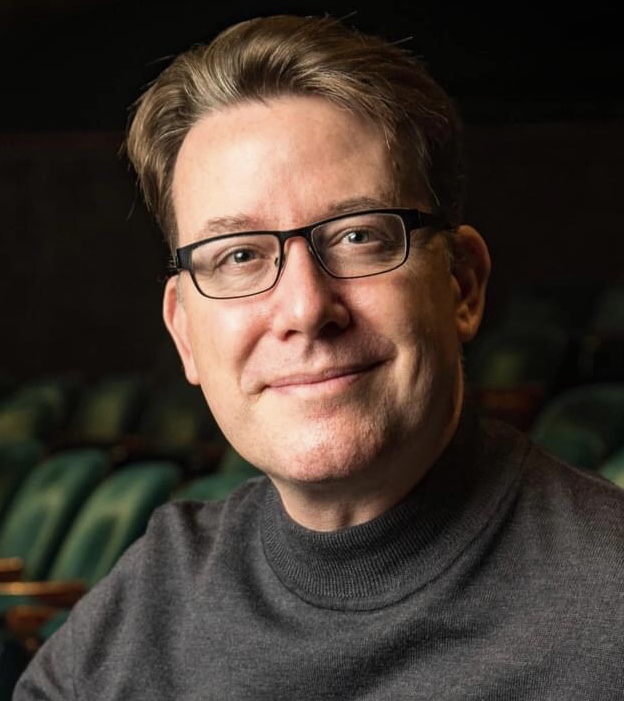
| Alejandro A. Alonso Galva is the lead editor of our “Raise the Curtain” series. Stephanie Wolf provided editorial guidance. Ryan Warner is the senior host of Colorado Matters. Carl Bilek is the executive producer of Colorado Matters. Kevin Beaty is the visual editor. Alex Scoville and Shelby Filangi are the digital producers. Pete Creamer was our on-site sound engineer. |